


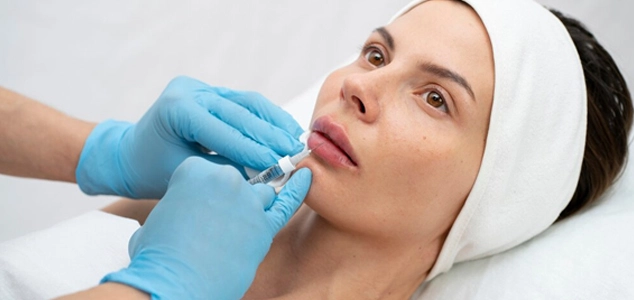
Botox injections reduce targeted muscle activity to soften movement-related facial lines and alter specific muscle-driven features. Cosmetic treatment includes FDA-approved areas such as glabellar lines, crow’s feet, forehead lines, and platysma bands, while clinicians also use botulinum toxin off-label for concerns such as gummy smiles, masseter prominence, and lip positioning. BOTOX Cosmetic contains onabotulinumtoxinA, starts affecting injected muscles within 1–2 days, and produces effects that commonly last approximately 3–4 months.
People considering Botox also need to understand dosage, treatment timing, side effects, provider qualifications, realistic before-and-after results, and total treatment cost. Botox does not restore lost facial volume or correct every type of wrinkle. Treatment selection depends on whether muscle contraction is the primary cause of the visible concern. At Dr Syra Aesthetics, patients considering Botox treatment in NYC can discuss their facial anatomy, treatment goals, expected movement reduction, and appropriate treatment areas with Dr. Syra Hanif before deciding whether Botox matches their concern.
What Are Botox Injections?
Botox is a prescription botulinum toxin type A product containing onabotulinumtoxinA. Botox injections place controlled doses into selected muscles to inhibit acetylcholine release, reduce localized muscle contraction, and temporarily soften facial lines associated with repeated expressions such as frowning, squinting, smiling, or raising the eyebrows.
BOTOX Cosmetic contains a purified Clostridium botulinum type A neurotoxin complex. Each vial also contains human albumin and sodium chloride. The vacuum-dried product is reconstituted with sterile saline before injection. BOTOX Cosmetic is supplied in 50-unit and 100-unit single-dose vials.
Botox reduces muscle contraction rather than filling wrinkles from underneath the skin. OnabotulinumtoxinA binds to motor nerve terminals and inhibits acetylcholine release. Reduced acetylcholine signaling decreases contraction of the targeted muscle and reduces the movement that forms dynamic wrinkles.
Cosmetic Botox is used for facial and neck concerns driven by muscle activity. BOTOX also has separate medical indications, including chronic migraine, cervical dystonia, spasticity, overactive bladder, and severe primary axillary hyperhidrosis. This page focuses primarily on cosmetic Botox injections.
What Are the Types of Botox Injections?
The types of Botox injections patients commonly compare are Botox, Dysport, Xeomin, Jeuveau, and Daxxify, although only Botox is the BOTOX brand. The other products are separate botulinum toxin type A prescriptions with different active ingredients, FDA indications, formulations, doses, and product-specific potency units.
| Product | Active ingredient | Current U.S. cosmetic indication highlights | Labeled glabellar dose |
| Botox Cosmetic | OnabotulinumtoxinA | Glabellar lines, lateral canthal lines, forehead lines with glabellar treatment, platysma bands | 20 units |
| Dysport | AbobotulinumtoxinA | Glabellar lines | 50 units |
| Xeomin | IncobotulinumtoxinA | Glabellar lines, horizontal forehead lines, lateral canthal lines | 20 units |
| Jeuveau | PrabotulinumtoxinA-xvfs | Glabellar lines | 20 units |
| Daxxify | DaxibotulinumtoxinA-lanm | Glabellar lines | 40 units |
BOTOX Cosmetic’s current U.S. label covers glabellar lines, lateral canthal lines, forehead lines, and platysma bands. Dysport’s cosmetic labeling includes glabellar lines at a 50-unit dose. Jeuveau carries a 20-unit labeled glabellar dose, while Daxxify uses a 40-unit labeled glabellar dose.
Xeomin’s U.S. labeling was expanded and, as of 2026, includes upper facial lines consisting of glabellar lines, horizontal forehead lines, and lateral canthal lines. Treatment of all 3 labeled upper-face areas uses 64 Xeomin units under its prescribing information.
The most important difference between Botox, Dysport, Xeomin, Jeuveau, and Daxxify is that their units are not interchangeable. A 20-unit Botox treatment does not equal 20 Dysport units or 20 Daxxify units. Each manufacturer uses a product-specific potency assay, so direct unit conversion is not supported by product labeling.
CDC’s April 2026 guidance also identifies Letybo as an FDA-approved cosmetic botulinum toxin product. The comparison above focuses on the 5 products most relevant to this page.
What Are Botox Injections Used For?
Botox injections are used to reduce muscle-driven facial lines, alter selected facial muscle activity, and treat specific medical conditions. Cosmetic Botox primarily targets dynamic wrinkles and muscle-related features, while therapeutic BOTOX has separate indications involving excessive muscle activity, nerve signaling, sweating, migraine, and bladder function.
Cosmetic BOTOX Cosmetic is FDA approved for moderate-to-severe glabellar lines associated with corrugator or procerus activity, lateral canthal lines associated with orbicularis oculi activity, forehead lines associated with frontalis activity, and platysma bands associated with platysma activity.
Off-label aesthetic uses include facial concerns such as eyebrow positioning, bunny lines, gummy smiles, masseter prominence, lip positioning, chin dimpling, and downturned mouth corners. These treatments use the same muscle-relaxing mechanism, but BOTOX Cosmetic does not carry FDA cosmetic approval for each of these individual uses.
Medical BOTOX has separate therapeutic applications, including chronic migraine prevention, cervical dystonia, spasticity, overactive bladder, blepharospasm, strabismus, and severe underarm sweating. Medical dosing and injection patterns differ substantially from cosmetic dosing.
How Do Botox Injections Work?
Botox works by blocking neuromuscular transmission between motor nerves and targeted muscles. OnabotulinumtoxinA enters motor nerve terminals and inhibits acetylcholine release. Reduced acetylcholine signaling decreases localized muscle contraction, which reduces repetitive movement and softens dynamic facial lines over the treated muscles.
Acetylcholine is a neurotransmitter that carries signals from motor nerves to muscles. BOTOX Cosmetic interrupts this communication by cleaving SNAP-25, a protein involved in acetylcholine release from nerve endings. Without the normal acetylcholine signal, the targeted muscle contracts less strongly.
Reduced muscle activity changes the mechanical force acting on the overlying skin. Forehead lines soften when frontalis contraction decreases. Glabellar lines soften when corrugator and procerus activity decreases. Crow’s feet soften when targeted orbicularis oculi contraction decreases.
Botox does not remove facial sensation because sensory nerve signaling is different from the motor signaling targeted by cosmetic botulinum toxin treatment. AAD states that botulinum toxin treatment does not eliminate the ability to feel the treated skin.
The effect is temporary because neuromuscular function gradually recovers. The BOTOX Cosmetic label describes evidence of reinnervation after treatment, which progressively reverses the localized chemical denervation created by onabotulinumtoxinA.
What Areas Can Botox Treat?
BOTOX Cosmetic is FDA approved for glabellar lines, lateral canthal lines, forehead lines treated with glabellar lines, and platysma bands. Providers use Botox off-label in other facial areas when excessive muscle activity contributes to the concern.
Common off-label applications include the brows, bunny lines, masseter muscles, gummy smile, lip flip, chin dimpling, and downturned mouth corners. These treatments do not use one universal injection pattern because each concern involves different muscles, movement patterns, and treatment goals.
That anatomical difference is why understanding the specific Botox areas of the face matters before choosing a treatment. The dedicated guide explains which muscles are treated in each area, which uses are FDA approved or off-label, and what each treatment is designed to change.
For example, a gummy smile caused by excessive upper-lip elevation can respond to muscle-directed treatment, while gummy smiles caused by dental, gingival, or skeletal factors require a different approach. Patients researching that specific concern can review how gummy smile Botox works and when it fits the underlying cause.
Who Can Give Botox Injections?
Botox injections require a properly licensed healthcare professional with training in facial anatomy and injection technique. Dr. Syra Hanif evaluates the muscles creating the concern, the amount of movement to preserve, and whether Botox or another treatment better matches the underlying cause before planning Botox treatment in Manhattan.
Who Is a Good Candidate for Botox Injections?
A good candidate for cosmetic Botox is an adult whose visible concern is driven primarily by targeted muscle activity, including frown lines, forehead movement, crow’s feet, or platysma contraction. Candidacy also requires appropriate medical screening, realistic treatment goals, and anatomy that supports the planned injection pattern.
Dynamic wrinkles have the strongest direct relationship with Botox because they develop or deepen during facial movement. Examples include horizontal forehead lines during eyebrow elevation, glabellar lines during frowning, and crow’s feet during smiling or squinting.
Static lines remain visible when the face is at rest. Botox reduces the muscular component contributing to these lines, but established dermal creases, volume loss, pigmentation, skin laxity, and textural damage involve additional mechanisms. Botox does not restore lost facial volume. Treatment planning also depends on muscle strength, brow position, eyelid anatomy, facial asymmetry, prior surgery, previous botulinum toxin treatment, and the amount of movement the patient wants to retain.
A Botox consultation at Dr. Syra Aesthetics allows Dr. Syra Hanif to evaluate these factors before matching treatment to the patient’s facial anatomy and aesthetic objective.
Who Should Not Get Botox Injections?
People with a known hypersensitivity to a botulinum toxin preparation or an infection at the proposed injection site must not receive BOTOX Cosmetic. Other medical conditions, medications, pregnancy status, breastfeeding status, existing muscle weakness, and prior botulinum toxin exposure require clinical review before treatment.
BOTOX Cosmetic labeling lists hypersensitivity to a botulinum toxin preparation or formulation component and infection at the proposed injection site as formal contraindications.
Neuromuscular disorders require additional caution because pre-existing problems with neuromuscular transmission can increase susceptibility to clinically significant toxin effects. Existing ptosis, muscle weakness, atrophy, or inflammation near the injection area also changes treatment planning.
Medication history matters. Aminoglycoside antibiotics, drugs that interfere with neuromuscular transmission, anticholinergic drugs, muscle relaxants, and other botulinum toxin treatments can affect risk or treatment response.
Patients must also disclose previous cosmetic procedures and botulinum toxin injections. Mayo Clinic specifically advises informing the treating clinician about botulinum toxin received during the preceding 4 months and about blood-thinning medications. Prescribed medication must not be stopped unless the prescribing clinician gives that instruction.
What Happens During a Botox Injection Procedure?
A Botox injection procedure begins with medical screening and facial muscle assessment, followed by targeted injections using a fine needle. The provider selects injection points according to anatomy, muscle activity, treatment goals, and dose. Cosmetic treatment is performed in an outpatient medical setting without surgical incisions.
At Dr. Syra Aesthetics, the treatment discussion with Dr. Syra Hanif focuses on the relationship between facial movement and the patient’s concern before injection points and treatment goals are determined.
What Should You Do Before Botox?
Botox preparation starts with disclosure of medical history, medications, supplements, previous surgeries, prior cosmetic procedures, pregnancy status, and previous botulinum toxin treatment. AAD specifically recommends telling the treating clinician about prescription medicines, over-the-counter medicines, vitamins, herbs, and previous procedures.
Patients taking aspirin, anticoagulants, or other medications associated with bleeding or bruising need individualized medical guidance. A cosmetic injector must not independently direct a patient to discontinue medically necessary medication without coordination with the prescribing clinician.
Facial assessment occurs at rest and during movement. Frowning identifies glabellar muscle activity. Eyebrow elevation demonstrates frontalis activity. Smiling reveals lateral orbicularis oculi activity. These movement patterns determine where muscle activity occurs and which muscles need to remain active.
What Happens During the Injections?
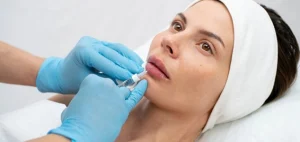
Botox injections use a thin needle to deliver small amounts of reconstituted botulinum toxin into selected muscles. The number of injection sites depends on the treatment area and injection pattern. Mayo Clinic describes Botox as an office-based procedure using a thin needle to place small amounts into targeted skin or muscle.
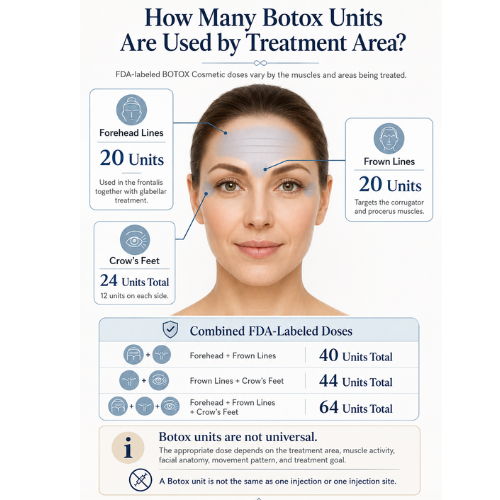
FDA-labeled BOTOX Cosmetic patterns use multiple injection sites rather than one large injection. Glabellar treatment, for example, distributes 20 units across 5 sites, while lateral canthal treatment distributes 24 units across 6 sites.
What Should You Avoid After Botox?
Botox aftercare primarily aims to avoid unnecessary manipulation of the injected muscles and surrounding tissue. AAD advises avoiding rubbing or massaging treated areas and waiting 2 hours before strenuous physical activity.
Mayo Clinic advises avoiding rubbing or massaging treated areas for 24 hours and avoiding lying down for 2–4 hours after treatment. Aftercare protocols differ between medical sources and individual practices, so the instructions given by the treating clinician take priority for the specific procedure.
How Many Units of Botox Do You Need?
Botox dosage depends on the treatment area and treatment goal. FDA-labeled BOTOX Cosmetic doses are 20 units for glabellar lines, 24 units for crow’s feet, 40 units for forehead plus glabellar lines, and 26, 31, or 36 units for platysma bands.
These labeled doses apply to approved cosmetic indications and do not determine how many units every patient requires. Muscle size, contraction strength, facial anatomy, asymmetry, previous treatment response, and the amount of movement being preserved all influence Botox dosage across different treatment areas.
Off-label treatments require separate dosing decisions because FDA-approved cosmetic dose schedules do not exist for these uses. For example, masseter Botox treats a comparatively large chewing muscle, so muscle size and strength strongly influence the required dose. A Botox lip flip has a different objective, using targeted orbicularis oris relaxation to alter upper-lip positioning rather than reduce muscle bulk.
BOTOX Cosmetic units are product-specific and cannot be directly compared with or converted into units of other botulinum toxin products.
How Long Does Botox Take to Work?
Botox begins producing chemical denervation approximately 1–2 days after injection, with the effect increasing during the first week. Visible cosmetic changes often begin within 1–3 days, while the complete treatment effect takes approximately 1 week or longer to become apparent.
The BOTOX Cosmetic prescribing information states that initial doses induce chemical denervation within 1–2 days and that the effect increases in intensity during the first week.
Visible onset and final assessment are different time points. Early muscle weakening does not mean every treated muscle has reached its settled response. A 2026 American Family Physician review notes that cosmetic botulinum toxin effects can take approximately 2 weeks to fully develop.
Patients therefore need to avoid judging treatment solely from the appearance during the first 48–72 hours.
What Results Can You Expect Before and After Botox Injections?
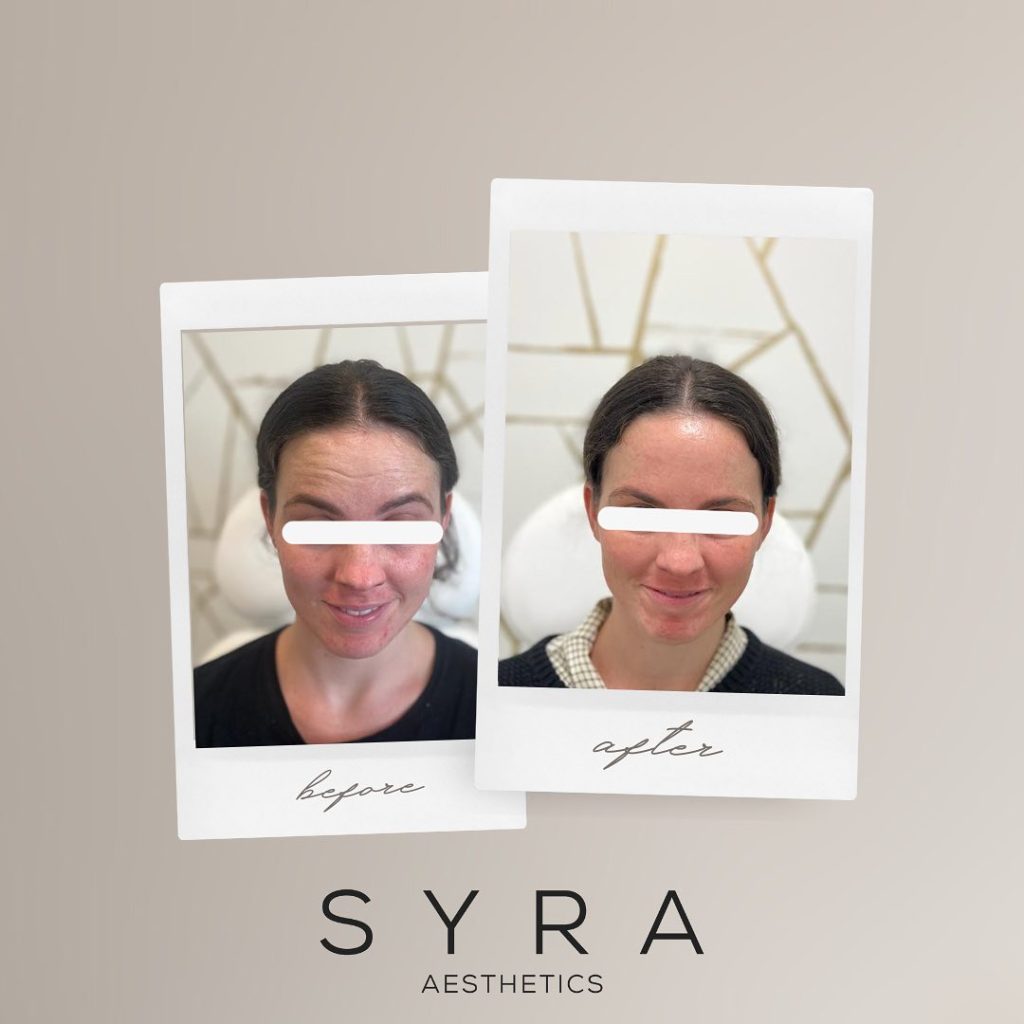
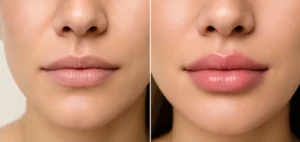
Botox before and after results show reduced movement in the targeted muscles and softer dynamic lines after treatment. The clearest comparison uses matching photographs at rest and during maximum expression, because Botox changes muscle contraction rather than adding facial volume or resurfacing the skin.
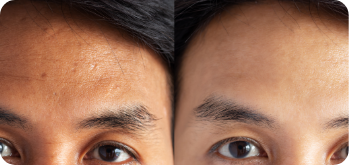
Forehead before-and-after assessment compares horizontal lines while the eyebrows are elevated. Botox reduces frontalis contraction, which decreases the depth of movement-related forehead lines.
Glabellar before-and-after assessment compares the lines between the eyebrows during maximum frown. Reduced corrugator and procerus activity decreases the muscular force creating these vertical lines.
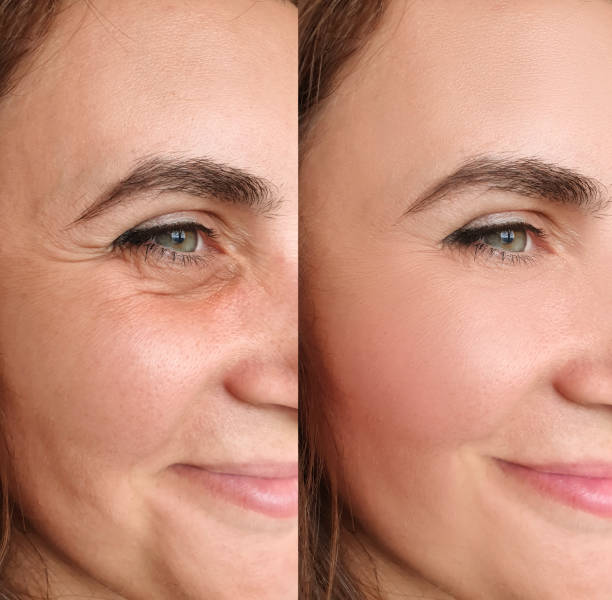
Crow’s-feet before-and-after assessment compares lateral eye lines during maximum smile. Reduced orbicularis oculi contraction softens the radiating lines associated with smiling and squinting.
Botox injection points follow facial muscle anatomy rather than the visible wrinkle alone. The provider treats the muscle responsible for creating the line. BOTOX Cosmetic labeling, for example, places glabellar injections into the corrugator and procerus and lateral canthal injections into the lateral orbicularis oculi.
Standardized before-and-after photography works best when lighting, camera distance, head position, treatment interval, and facial expression remain consistent. Comparing only a relaxed “before” image with a relaxed “after” image does not show the full effect of a treatment designed primarily to modify muscle movement.
Static lines that remain visible without expression do not always disappear completely. Facial wrinkles reflect both repeated muscle contraction and structural skin changes, so established resting lines have a different treatment relationship than purely dynamic wrinkles.
How Long Do Botox Injections Last?
Botox duration is approximately 3–4 months for BOTOX Cosmetic glabellar treatment under current product labeling. As neuromuscular signaling gradually recovers, targeted muscle contraction returns and movement-related lines become more visible again. Botox does not permanently stop facial muscle activity. BOTOX Cosmetic’s label states that the duration of effect for glabellar lines is approximately 3–4 months. ASPS also describes cosmetic botulinum toxin improvement as lasting approximately 3–4 months. Botox does not suddenly expire on a specific day. Muscle activity gradually returns as neuromuscular function recovers. Lines associated with that movement progressively return toward their pretreatment appearance.
What Affects How Long Botox Lasts?
Botox longevity depends on treatment area, dose, muscle activity, individual response, and treatment history. Duration is therefore an attribute of the complete treatment plan rather than a fixed property that produces exactly the same number of months in every patient or anatomical area.
Treatment area changes the muscles involved and their patterns of use. Muscles with different strength, size, and functional demands do not necessarily recover at identical rates.
Dose influences the extent and duration of neuromuscular effect within a treatment area. Dose cannot be interpreted independently from the product because Botox, Dysport, Xeomin, Jeuveau, and Daxxify use different potency-unit systems.
Muscle activity also changes individual treatment requirements. Stronger or more frequently activated muscles create different mechanical demands than weaker muscles.
Treatment history affects muscle behavior over time. Research examining repeated botulinum toxin treatments has documented changes in muscle function and, in some contexts, muscle structure, although long-term cosmetic evidence remains more limited than short-term efficacy evidence.
A review of facial aesthetic botulinum toxin duration found that facial area, dose, formulation, sex, baseline wrinkle severity, and repeated treatment can influence observed longevity.
How Often Can You Get Botox Injections?
BOTOX Cosmetic treatment is not established for administration more frequently than every 3 months. The current prescribing information states that the safety and effectiveness of dosing more often than once every 3 months have not been clinically evaluated.
Retreatment is based on the return of muscle activity, recurrence of the treated concern, previous response, and clinical assessment. Receiving additional toxin before the initial treatment has fully developed can also make dose assessment less accurate.
Treatment frequency must account for botulinum toxin received for other cosmetic or medical indications. The treating provider needs to know the product, dose, areas, and approximate timing of previous botulinum toxin injections.
What Are the Benefits of Botox Injections?
Botox temporarily reduces muscle-driven facial lines, modifies selected muscle activity, requires no surgery, involves little interruption to routine activities, and can treat multiple appropriate areas during the same session.
Botox works directly on muscles responsible for dynamic expression lines rather than adding material beneath the skin. This makes it relevant for concerns created by repeated activity of muscles such as the frontalis, corrugator, procerus, orbicularis oculi, and platysma.
Treatment is performed with injections rather than incisions, tissue removal, or implanted materials, and routine activities can generally resume soon afterward. The effect is also temporary, allowing future dosing and injection patterns to be adjusted according to treatment response.
These changes in muscle activity produce the wrinkle-softening and facial-expression effects that make up the main benefits of Botox, including how results appear across treated areas and change after treatment.
Botox does not restore facial volume, replace lost fat, remove pigmentation, or resurface damaged skin because those concerns involve different anatomical mechanisms.
What Are the Side Effects and Risks of Botox Injections?
Botox side effects range from localized injection reactions and temporary headache to unwanted muscle weakness, eyelid or brow ptosis, and rare serious systemic symptoms. Current BOTOX Cosmetic labeling also carries a boxed warning for distant spread of toxin effect, making proper product sourcing, dosing, and injection technique important.
What Are the Common Side Effects?
Common or clinically observed Botox side effects include injection-site discomfort, bruising, redness, swelling, headache, and temporary weakness affecting adjacent muscles.
BOTOX Cosmetic clinical-trial adverse-event rates differ by labeled indication:
| Treatment context | Selected labeled adverse reaction |
| Glabellar lines | Eyelid ptosis: 3% |
| Lateral canthal lines | Eyelid edema: 1% |
| Forehead + glabellar lines | Headache: 9% |
| Forehead + glabellar lines | Eyelid ptosis: 2% |
| Forehead + glabellar lines | Brow ptosis: 2% |
These percentages come from different BOTOX Cosmetic clinical-study populations and must not be interpreted as one combined risk rate.
What Are the Serious Risks and Complications?
Botulinum toxin products carry a boxed warning concerning distant spread of toxin effect. Reported symptoms include generalized weakness, double or blurred vision, eyelid drooping, difficulty speaking, difficulty swallowing, and breathing difficulties.
The BOTOX Cosmetic label also provides important context: it states that no definitive serious adverse-event reports of distant toxin spread have been associated with dermatologic use of BOTOX/BOTOX Cosmetic at specified labeled cosmetic doses, including 20, 24, 40, 44, and 64 units. The boxed warning still applies to botulinum toxin products.
Counterfeit or mishandled toxin creates a separate safety issue. CDC’s 2024 investigation identified 17 people with harmful reactions, 13 hospitalizations, and no deaths after exposure to counterfeit products, unverified products, or injections involving people who were not following applicable requirements.
When Should You Seek Medical Attention?
Seek urgent medical evaluation after botulinum toxin treatment for symptoms such as difficulty breathing, difficulty swallowing, trouble speaking, progressive generalized weakness, or significant vision changes. CDC and product labeling identify these symptoms as potential signs of clinically significant toxin effects.
New localized asymmetry, brow heaviness, eyelid drooping, or an unexpected smile change warrants contact with the treating clinician for assessment even when emergency symptoms are absent.
How Much Does Botox Cost in NYC?
Botox in NYC costs about $12–$25 per unit, with total treatment costs commonly ranging from a few hundred dollars for a single area to $1,000+ when multiple areas are treated. Dr. Syra Aesthetics in Manhattan currently prices Botox at $19 per unit.
The final cost depends primarily on the number of units required. At $19 per unit, 20 units would cost $380, while 40 units would cost $760. Treatment involving additional areas increases the total because more units are required. Anatomy, muscle strength, treatment goals, and the number of areas treated determine the dose, which makes total treatment cost more useful than comparing per-unit prices alone.
Does Insurance Cover Botox Treatment?
No, cosmetic Botox treatment is not covered by standard health insurance because wrinkle reduction and other appearance-focused injections are elective cosmetic services rather than medically necessary treatment. Insurance coverage becomes a different question when BOTOX is prescribed for an eligible medical condition.
Medical botulinum toxin treatment for conditions such as chronic migraine, severe hyperhidrosis, cervical dystonia, spasticity, or overactive bladder follows different insurance rules. Coverage depends on the diagnosis, insurer, policy benefits, authorization requirements, previous treatment history, and medical-necessity criteria.
AAD states that signs-of-aging treatments are not covered by insurance, while treatment for medical conditions such as excessive sweating can receive partial coverage depending on the plan.
What Is the Difference Between Botox and Fillers?
Botox reduces targeted muscle activity, while dermal fillers restore or add tissue volume. Botox therefore addresses concerns driven primarily by facial movement, while fillers address volume loss, contour deficits, and selected folds or structural enhancement.
The distinction matters because similar-looking facial concerns can come from different anatomical causes. A line created mainly by repeated muscle contraction requires a different treatment strategy from a fold or hollow caused by volume loss, and some areas involve both mechanisms.
That difference in muscle activity versus volume loss determines why Botox and fillers are used for different treatment goals. The comparison becomes relevant when deciding whether a concern requires muscle relaxation, volume restoration, or a combination of both.
What Is the Difference Between Botox and Dysport?
Botox and Dysport are botulinum toxin type A treatments that reduce targeted muscle contraction, but they contain different active preparations and use product-specific dosing units. Botox contains onabotulinumtoxinA, while Dysport contains abobotulinumtoxinA.
The dosing difference is important because the number printed in Dysport units cannot be directly compared with the number of Botox units. For glabellar lines, for example, the FDA-labeled dose is 20 units of BOTOX Cosmetic versus 50 units of Dysport, even though both treatments target the same general muscle-driven concern.
Because formulation, labeled dosing, approved cosmetic indications, and treatment planning differ between the products, understanding how Botox and Dysport compare for the same treatment goal is more useful than comparing their unit numbers alone.
Frequently Asked Questions
Are Botox Injections Safe?
Botox injections have an established safety record when an FDA-approved product is administered at appropriate doses by a licensed, trained healthcare professional. BOTOX Cosmetic still carries contraindications and a boxed warning for distant toxin effects, so proper patient screening, dosing, product sourcing, and injection technique remain essential.
What Happens After 10 Years of Botox?
Ten years of repeated Botox does not automatically produce treatment failure or permanent facial paralysis. Long-term muscle behavior can change with repeated treatment, but high-quality long-duration cosmetic evidence remains limited. Treatment effects still require periodic reassessment according to anatomy, response, dose, and treatment goals.
A 2025 retrospective study followed 50 patients receiving consecutive cosmetic onabotulinumtoxinA treatment for an average of 15.04 years, covering 1,098 treatment cycles. The study reported no evidence of treatment failure or diminished duration in that cohort. However, it was a single-center retrospective study rather than a randomized long-term trial.
A separate systematic review found that some muscle composition and functional changes persisted beyond the usual cosmetic duration, but concluded that long-term evidence remains insufficient to fully define the effects of repeated cosmetic botulinum toxin over many years.
Does Botox Hurt?
Botox produces brief needle-related discomfort rather than prolonged procedural pain for most facial treatments. The procedure uses a thin needle and small injection volumes. Mayo Clinic states that most people do not experience substantial pain, although ice, topical anesthetic, or other comfort measures can be used when needed.
Is There Downtime After Botox?
Botox does not require surgical recovery or routine downtime. Most patients return to normal daily activities immediately after cosmetic treatment. Patients still need to follow post-treatment instructions, including avoiding rubbing or massaging treated areas and observing the clinician’s guidance regarding exercise and positioning.
Can Botox Be Reversed?
Botox cannot be instantly dissolved or reversed after onabotulinumtoxinA has produced its neuromuscular effect. Unlike hyaluronic-acid filler, Botox has no hyaluronidase-style dissolving treatment. Neuromuscular function returns gradually as nerve signaling recovers and the toxin effect declines.
Unwanted aesthetic effects such as asymmetry or excessive weakness therefore require clinical evaluation and, in many cases, time for muscle function to recover.
Will Botox Make You Look Frozen?
Botox does not require complete elimination of facial expression. A natural result depends on which muscles are treated, the amount administered, injection placement, baseline anatomy, and how much movement the treatment plan is designed to preserve.
Excessive or poorly balanced muscle weakening can create heaviness or unnatural movement. Targeted treatment reduces selected contractions while leaving other facial muscles active. At Syra Aesthetics, this balance between wrinkle reduction and retained facial movement can be discussed with Dr. Syra Hanif during treatment planning.
Can You Get Botox During Pregnancy or Breastfeeding?
Cosmetic Botox is not recommended as a routine aesthetic treatment during pregnancy or breastfeeding because adequate human pregnancy data are unavailable and lactation data do not establish whether BOTOX Cosmetic is present in human milk or affects a breastfed infant.
The BOTOX Cosmetic label states that adequate human developmental-risk data during pregnancy are unavailable. For lactation, the label states that no data establish the presence of BOTOX Cosmetic in human or animal milk, its effects on a breastfed child, or its effects on milk production.

Written & Medically Reviewed by
Dr. Syra Hanif, M.D.
Board-Certified Primary Care Physician
Dr. Syra Hanif, M.D., is a board-certified physician specializing in aesthetic medicine, longevity, and preventative wellness. As Medical Director of Dr. Syra Aesthetics & Longevity Institute in NYC, she focuses on aesthetics, healthy aging, and overall wellness.
Read More