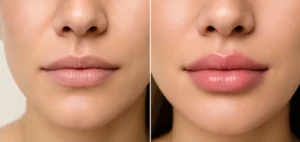




A gummy smile can happen when the upper lip rises too high, excess gum tissue is visible, or dental and skeletal factors affect the balance of the smile. Botox for a gummy smile works best when overactive upper-lip muscles are the main cause. By temporarily relaxing these muscles, Botox reduces how far the upper lip lifts and makes less gum visible when smiling.
However, Botox treatment is not the right solution for every gummy smile. The best treatment depends on the underlying cause, facial anatomy, and treatment goals. This guide explains how gummy smile Botox works, how many units may be needed, how long results last, possible risks, cost, and how it compares with other forms of gummy smile correction.
Key Takeaways
- Botox works best for muscle-related gummy smiles caused by excessive upper-lip movement.
- Botox temporarily reduces how high the upper lip rises, helping decrease visible gum during smiling.
- There is no standard Botox dosage for every gummy smile; units depend on muscle strength, anatomy, symmetry, and treatment goals.
- Botox duration varies, with published research reporting effects lasting roughly 12 to 36 weeks.
- Botox does not remove excess gum tissue, reposition teeth, or change the structure of the upper jaw.
- Gummy smile Botox and a Botox lip flip are different treatments with different goals and muscle targets.
- Proper assessment is important because muscular, dental, gingival, and skeletal gummy smiles may require different treatment approaches.
What Is a Gummy Smile?
A gummy smile, medically referred to as excessive gingival display, describes a smile in which a noticeable amount of gum tissue appears above the upper teeth.
There is no single smile that is considered ideal for everyone. Some people naturally show more gum than others, and the amount of visible gum can change depending on facial anatomy, tooth proportions, lip length, and how strongly the upper lip moves.
A gummy smile is a cosmetic concern rather than a disease. Treatment focuses on improving the balance between the upper lip, gums, teeth, and overall smile.
What Causes a Gummy Smile?
The causes of a gummy smile can be muscular, gingival, dental, skeletal, or a combination of several factors. Common causes include:
- Hyperactive upper lip muscles: Overactive muscles lift the upper lip too high when smiling, exposing more gum tissue. This type often responds well to Botox because treatment reduces excessive muscle activity.
- Hypermobile or short upper lip: A short upper lip or one that moves excessively upward during a full smile can increase gum exposure, even when the teeth and gums are normally proportioned.
- Excess gum tissue: Gum tissue may cover more of the natural tooth crowns, making the teeth appear shorter and the smile look more gummy. Botox does not reshape or remove gum tissue.
- Tooth position and dental factors: Tooth eruption, alignment, and tooth proportions can influence how much gum is visible. Dental or orthodontic treatment may be more appropriate when these factors are the main cause.
- Vertical maxillary excess: Increased vertical development of the upper jaw can create greater gingival display. Botox may reduce the muscular component, but it does not change the underlying jaw structure.
Mixed Causes
Some people have more than one contributing factor.
For example:
- Hyperactive upper-lip muscles
- Excess gingival display
- Tooth-position differences
may occur together.
In these cases, Botox can improve the muscular component while another treatment addresses the dental, gingival, or skeletal component.
Can Botox Fix a Gummy Smile?
Yes, Botox can reduce a gummy smile when excessive upper-lip muscle movement is the main cause. It temporarily relaxes the muscles that lift the upper lip, so the lip rises less during smiling and exposes less gum.
Botox works best for muscle-related gummy smiles. It does not remove excess gum tissue, reposition teeth, or change the structure of the upper jaw. If dental, gingival, or skeletal factors are responsible, another form of gummy smile correction may be more appropriate.
The results are temporary, and the amount of improvement depends on the cause of the gummy smile, facial anatomy, muscle strength, and treatment plan.
Who Is a Good Candidate for Gummy Smile Botox?
A good candidate typically has a gummy smile with a significant muscular or upper-lip movement component.
Botox may be appropriate when:
- The upper lip rises excessively during smiling
- Overactive upper-lip muscles contribute to gum exposure
- You want a nonsurgical treatment
- You understand that the results are temporary
- You want a subtle reduction rather than a structural change
- Your treatment goals are realistic for your anatomy
A clinical assessment should evaluate both the amount of gum visible and why it becomes visible.
When Botox May Not Be the Best Treatment
Botox may provide limited correction when the gummy smile is primarily caused by:
- Excess gum tissue
- Altered tooth eruption
- Tooth-position problems
- Significant vertical maxillary excess
- Other structural dental or skeletal factors
In these situations, reducing muscle activity does not address the primary anatomical cause.
How Does Botox for a Gummy Smile Work?
Botox for a gummy smile works by temporarily reducing activity in the muscles that lift the upper lip. When these muscles relax, the upper lip does not rise as high during smiling, which reduces the amount of visible gum.
The treatment mainly targets excessive upper-lip movement rather than changing the gums, teeth, or jaw. The goal is to create a more balanced smile while preserving natural facial expression.
Results develop gradually over the following days as the targeted muscles begin to relax.
Where Is Botox Used for a Gummy Smile?
Gummy smile Botox focuses on the muscle groups responsible for elevating the upper lip.
The exact treatment areas depend on factors such as:
- Smile pattern
- Facial anatomy
- Muscle activity
- Gum exposure
- Natural asymmetry
- Desired correction
Several injection approaches have been studied, which is one reason different practitioners may use different treatment patterns. A 2024 systematic review specifically found variation in both injection sites and dosing protocols used for gummy smile treatment.
What Is the Yonsei Point?
The Yonsei point is an anatomical concept used in some approaches to gummy smile treatment. It relates to an area where several muscles involved in upper-lip elevation interact.
It represents one possible treatment approach rather than a universal injection point for every patient.
Smile anatomy varies, so treatment should be based on individual muscle movement rather than following one identical injection map for everyone.
How Many Units of Botox Are Needed for a Gummy Smile?
There is no universal Botox dosage for a gummy smile because the number of units needed varies from person to person.
The appropriate dose depends on:
- Amount of gingival display
- Upper-lip movement
- Muscle strength
- Facial anatomy
- Smile symmetry
- Treatment goals
- Previous response to Botox
- Injection technique
Research reviews have found considerable variation in doses and injection strategies used for gummy smile treatment.
This is why seeing one number online does not mean that the same amount is appropriate for your smile.
Why Do Gummy Smile Botox Unit Recommendations Vary?
Two people can show a similar amount of gum while having completely different underlying anatomy.
One person may have strong upper-lip elevator muscles, while another has a combination of muscle movement and gingival or dental factors.
Treatment therefore needs to balance enough muscle relaxation to improve gum exposure without removing too much natural lip movement.
BOTOX Cosmetic Units are also specific to the product and are not directly interchangeable with units of other botulinum toxin formulations.
What Happens During Gummy Smile Botox Treatment?
Treatment begins with an evaluation of your smile rather than simply identifying where your gums show.
The provider assesses:
- Your smile at rest and during full expression
- Amount of gingival display
- Upper-lip movement
- Facial symmetry
- Likely cause of the gummy smile
- Relevant muscle activity
- Desired degree of correction
Once the treatment plan is established, small amounts of Botox are placed into selected muscles responsible for excessive lip elevation.
The treatment itself is minimally invasive, and the larger consideration is selecting the right candidate, placement, and amount.
When Do Gummy Smile Botox Results Appear?
Gummy smile Botox results are not immediate.
Muscle activity gradually decreases after treatment, so changes develop over the following days.
Clinical studies commonly evaluate meaningful treatment response around the two-week point, when the reduction in gingival display is easier to assess.
A general progression looks like this:
First Few Days
Muscle activity begins to change, but the final smile result is still developing.
Around 1 to 2 Weeks
The reduction in upper-lip elevation becomes easier to evaluate.
This is also an important time to assess:
- Gum exposure
- Smile symmetry
- Natural movement
- Overall degree of correction
Following Months
The muscle-relaxing effect gradually decreases and normal movement returns.
How Long Does Gummy Smile Botox Last?
The Botox duration for a gummy smile is temporary and varies from person to person.
A systematic review found reported effects lasting approximately 12 to 36 weeks, showing that treatment longevity can differ significantly between individuals.
How long gummy smile Botox lasts can depend on:
- Muscle strength
- Individual metabolism
- Botox dosage
- Facial anatomy
- Previous Botox treatments
- Treatment technique
As the Botox effect gradually wears off, the upper-lip muscles regain activity and gum exposure can return. Repeat treatment may be needed to maintain the result.
Gummy Smile Botox Before and After: What Changes?
The most important change after successful gummy smile Botox treatment is reduced gum exposure during a full smile.
A balanced result can show:
- Less visible gum
- Reduced upward movement of the upper lip
- Improved smile proportions
- Maintained tooth visibility
- Preserved natural expression
- Balanced movement on both sides of the smile
The goal is generally not to completely eliminate gum visibility. A natural smile still requires movement.
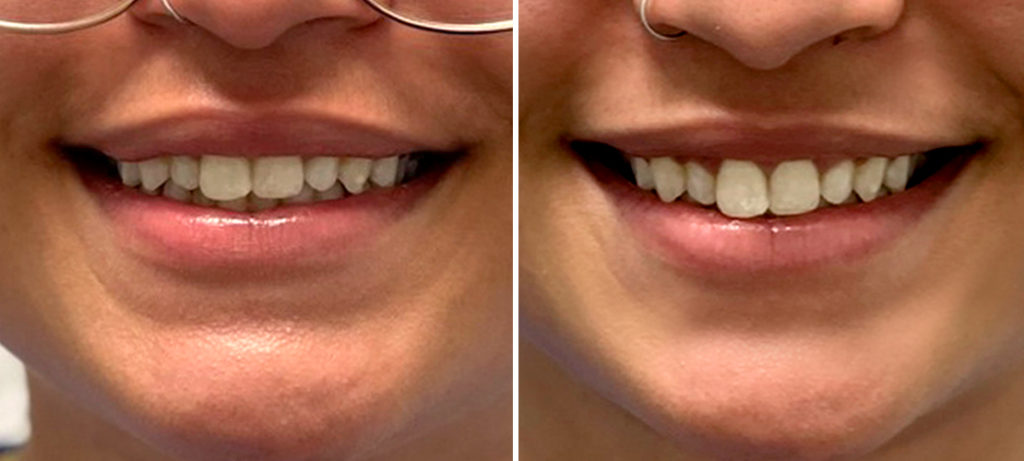
How to Evaluate Before-and-After Photos
When comparing gummy smile Botox before-and-after photos, look beyond the amount of visible gum.
Check whether both photos use:
- Similar lighting
- Similar camera angles
- Comparable smile intensity
- A full smile in both images
- A clearly stated follow-up period
Also look at smile symmetry and upper-lip movement, not just gum exposure.
Can Gummy Smile Botox Go Wrong?
Gummy smile Botox can produce an unsatisfactory result when the dose, placement, patient selection, or treatment expectations do not match the patient’s anatomy.
Research generally reports favorable results, but variable outcomes and temporary adverse effects have also been documented.
Too Little Muscle Relaxation
A conservative treatment can leave more gingival exposure than desired.
This does not necessarily mean Botox failed. The initial amount may simply produce a subtler correction.
Too Much Muscle Relaxation
Excessive relaxation can reduce upper-lip movement more than intended.
The smile may appear:
- Flatter
- Less expressive
- Different from the patient’s natural smile
This is one reason using more Botox does not automatically produce a better result.
Uneven Smile
Natural differences in muscle strength or uneven treatment response can cause one side of the upper lip to move differently from the other.
Pre-existing asymmetry should therefore be evaluated before treatment.
Botox Treats the Wrong Cause
This is one of the most important reasons for disappointing results.
Botox can work correctly on the targeted muscles but still create limited improvement when the primary cause of the gummy smile is dental, gingival, or skeletal.
In that situation, the treatment itself may not be technically unsuccessful. The problem is that muscle relaxation does not address the dominant cause.
Gummy Smile Botox Side Effects and Risks
Possible temporary effects associated with Botox injections can include:
- Redness
- Tenderness
- Swelling
- Bruising
- Headache
- Temporary asymmetry
- Unwanted changes in muscle movement
When Botox affects the upper-lip muscles more than intended, the appearance or movement of the smile can temporarily change.
BOTOX Cosmetic also carries important prescribing safety information, including rare but serious warnings involving spread of toxin effects. Patients should seek medical attention for symptoms such as difficulty swallowing, speaking, or breathing following treatment.
A qualified medical assessment should review your health history and determine whether treatment is appropriate.
Is Botox for a Gummy Smile FDA Approved?
Using BOTOX Cosmetic specifically to treat a gummy smile is an off-label use in the United States.
Current FDA-approved cosmetic uses include treatment of certain facial lines and platysma bands, while gummy smile treatment is not included among the labeled cosmetic indications.
Off-label use means the medication is being used for an indication that is not specifically included in its FDA-approved labeling. It does not mean that the treatment has not been studied.
Gummy Smile Botox vs Lip Flip
Gummy smile Botox and a Botox lip flip are often confused, but they are not the same treatment.
| Feature | Gummy Smile Botox | Botox Lip Flip |
|---|---|---|
| Main goal | Reduce visible gum | Increase visible upper-lip show |
| Problem addressed | Excessive upward lip movement | Upper lip rolling inward |
| Main muscle focus | Upper-lip elevator muscles | Muscle surrounding the lips |
| Visual effect | Less gum exposure | More visible upper-lip vermilion |
| Changes lip volume? | No | No |
A lip flip changes how the lip sits and rolls during expression.
Gummy smile Botox focuses primarily on how far the upper lip rises.
Can You Get a Lip Flip and Gummy Smile Botox Together?
The treatments address different aspects of upper-lip movement, so they can be considered together in selected patients.
However, combining treatments around the upper lip requires careful assessment because relaxing too many muscles can interfere with natural movement.
The decision should be based on anatomy and the desired result rather than automatically combining both treatments.
Botox vs Other Gummy Smile Treatments
The best gummy smile treatment depends on what is causing the gum exposure.
Botox vs Gum Contouring
Botox is better for a gummy smile caused by overactive upper-lip muscles, while gum contouring is better when excess gum tissue is the main cause. Botox reduces muscle movement temporarily, whereas gum contouring reshapes the gum line for a more structural change.
Botox vs Crown Lengthening
Crown lengthening exposes more of the natural tooth crown by changing the surrounding gum and, when necessary, supporting tissues.
It addresses a structural gingival or tooth-proportion issue rather than excessive upper-lip muscle activity.
Botox vs Lip Repositioning
Botox temporarily decreases upper-lip muscle activity.
Lip repositioning is a surgical approach designed to limit excessive upward movement of the lip.
Recent research comparing surgical lip repositioning with treatment involving botulinum toxin reinforces an important difference: botulinum toxin provides temporary neuromuscular effects, while surgical approaches aim for more durable structural control of lip movement.
Botox vs Orthodontic Treatment
Orthodontic treatment may be relevant when tooth position or dentoalveolar relationships contribute to excessive gingival display.
Botox cannot reposition teeth.
When Is Jaw Surgery Considered?
Significant vertical maxillary excess represents a skeletal cause of gummy smile.
Botox cannot shorten or reposition the upper jaw, so severe structural cases require a different type of assessment.
Which Gummy Smile Treatment Is Right for You?
| Main Cause | Does Botox Address It? | Treatment Commonly Considered |
|---|---|---|
| Hyperactive upper-lip muscles | Yes | Botox |
| Hypermobile upper lip | Often | Botox or lip-focused treatment |
| Excess gum tissue | Not directly | Gingival treatment |
| Tooth-position issue | Not directly | Orthodontic treatment |
| Vertical maxillary excess | Does not correct structure | Skeletal evaluation |
| Mixed causes | May address one component | Combination approach |
How Much Does Gummy Smile Botox Cost?
The cost of gummy smile Botox varies because treatment is individualized. Botox NYC cost can also differ based on the provider, location, and whether pricing is calculated per unit or per treatment area.
Pricing can depend on:
- Amount of Botox required
- Whether pricing is per unit or treatment area
- Complexity of the smile pattern
- Provider expertise
- Geographic location
- Follow-up or adjustment policies
A consultation provides the most accurate estimate because the required dose depends on your facial anatomy, muscle activity, and treatment goals.
Is Gummy Smile Botox Worth It?
Gummy smile Botox can be a worthwhile option for someone whose excessive gum exposure has a strong muscular component and who wants a nonsurgical, temporary treatment.
Its main advantages include:
- No structural surgery
- Targeted muscle relaxation
- Gradual improvement
- Temporary results that allow treatment to be adjusted over time
The temporary nature of treatment can also be a limitation for someone seeking permanent correction.
Botox may provide less value when the gummy smile primarily results from gum tissue, tooth position, or jaw anatomy because it does not correct those structures.
Questions to Ask Before Getting Gummy Smile Botox
Before treatment, consider asking:
- What is causing my gummy smile?
- Is my gum exposure primarily muscular?
- What can Botox realistically change in my smile?
- What will Botox not change?
- How will my natural smile symmetry be assessed?
- How much correction are you aiming for?
- When should the result be evaluated?
- What happens if my smile looks uneven?
- Are other treatments more appropriate for my anatomy?
These questions shift the focus from simply receiving injections to choosing the right treatment for the cause.
Why Proper Assessment Matters Before Gummy Smile Botox
A gummy smile is an appearance pattern, not a single condition.
Two people can show the same amount of gum while smiling for completely different reasons. One may have highly active upper-lip muscles, while another has excess gingival tissue, tooth-position differences, jaw anatomy, or several contributing factors.
That is why effective treatment starts with understanding the relationship between the lip, muscles, gums, teeth, and facial structure.
At Dr. Syra Aesthetics & Longevity Institute, gummy smile Botox treatment begins with an individualized clinical evaluation to determine whether reducing upper-lip muscle activity matches the patient’s anatomy and cosmetic goals. Treatment focuses on achieving a balanced reduction in gingival display while preserving natural facial movement.
Frequently Asked Questions
Is Botox for a gummy smile permanent?
No. Botox temporarily reduces muscle activity. Upper-lip movement gradually returns as the effect wears off, so maintenance treatment is needed to preserve the result.
Can Botox completely remove a gummy smile?
The degree of improvement depends on the cause and severity of the gummy smile. Botox can significantly reduce gum exposure in suitable muscular cases, but complete elimination is neither possible nor desirable for every patient.
Can gummy smile Botox make your upper lip look longer?
Reducing how far the upper lip rises can make the lip appear lower during smiling. Botox does not physically lengthen the lip.
Does gummy smile Botox affect talking or eating?
Properly planned treatment aims to preserve normal lip function. Excessive muscle relaxation can temporarily interfere with natural upper-lip movement, which is why conservative dosing and appropriate placement matter.
Can you smile normally after gummy smile Botox?
Yes. The treatment goal is to reduce excessive upper-lip elevation without eliminating normal smile movement.
Can gummy smile Botox correct an uneven smile?
Botox can sometimes help when muscular differences contribute to smile asymmetry. Structural or dental asymmetry requires a different treatment approach.
What happens when gummy smile Botox wears off?
Upper-lip muscle activity gradually returns, and gum exposure generally moves back toward its pre-treatment appearance.
Is gummy smile Botox painful?
Treatment involves small injections around the targeted facial muscles. Most patients experience only brief discomfort during the procedure rather than prolonged pain. The level of Botox injection pain is mild and can vary depending on individual sensitivity and the treatment area.

Written & Medically Reviewed by
Dr. Syra Hanif, M.D.
Board-Certified Primary Care Physician
Dr. Syra Hanif, M.D., is a board-certified physician specializing in aesthetic medicine, longevity, and preventative wellness. As Medical Director of Dr. Syra Aesthetics & Longevity Institute in NYC, she focuses on aesthetics, healthy aging, and overall wellness.
Read More