


The main types of peptide injections commonly discussed in metabolic, endocrine, sexual-health, and longevity medicine include incretin-based metabolic peptides, growth-hormone-pathway peptides, melanocortin peptides, and investigational tissue-signaling peptides. Their uses, evidence, FDA status, and safety profiles differ substantially, which is why medically supervised peptide therapy in NYC should be based on the specific compound, the strength of available evidence, and the individual patient’s health profile rather than a universal peptide protocol.
At her Manhattan clinic, Dr. Syra Hanif, a board-certified physician, uses a patient-centered approach that emphasizes medical evaluation, transparency, safety, and individualized treatment planning. Her broader clinical work also includes non-invasive aesthetic treatments such as Botox, dermal fillers, microneedling, PRP therapy, and skin rejuvenation, while treatment decisions are tailored to each patient’s medical history, goals, and clinical needs.
Key Facts
- Peptide injections contain short amino-acid chains that act through specific biological targets.
- Different peptides have different mechanisms, indications, and safety profiles.
- Some peptide medications have FDA-approved uses, while other compounds discussed in peptide therapy remain unapproved or investigational.
- Evidence for established metabolic peptide medications is substantially stronger than for many peptides promoted for recovery or longevity. (Mayfield et al., 2026; Mendias & Awan, 2026)
- Treatment selection depends on the specific compound, patient health profile, medications, and monitoring requirements.
What Are Peptide Injections?
Peptide injections are injectable preparations containing short chains of amino acids that act as biological signaling molecules in the body. Depending on the specific peptide, these signals influence processes such as appetite regulation, glucose metabolism, hormone activity, vascular function, growth, and cellular communication.
Synthetic peptide medications are designed to reproduce or modify naturally occurring signals. Their structure can also be altered to improve stability, extend activity, reduce enzymatic breakdown, or increase selectivity for a particular receptor.
Injection is used for many peptide medications because digestive enzymes can break peptides down before an effective amount reaches circulation. Subcutaneous administration bypasses much of the digestive system and provides predictable absorption for many formulations. However, peptide-based medications are also delivered through oral, topical, intranasal, intravenous, and other routes depending on the drug.
A peptide refers to the molecule itself, while peptide therapy refers to the therapeutic use of a peptide-based compound. Because individual peptides act on different biological targets, they do not share one universal mechanism, benefit, dosing schedule, or safety profile.
How Do Peptides Actually Work?
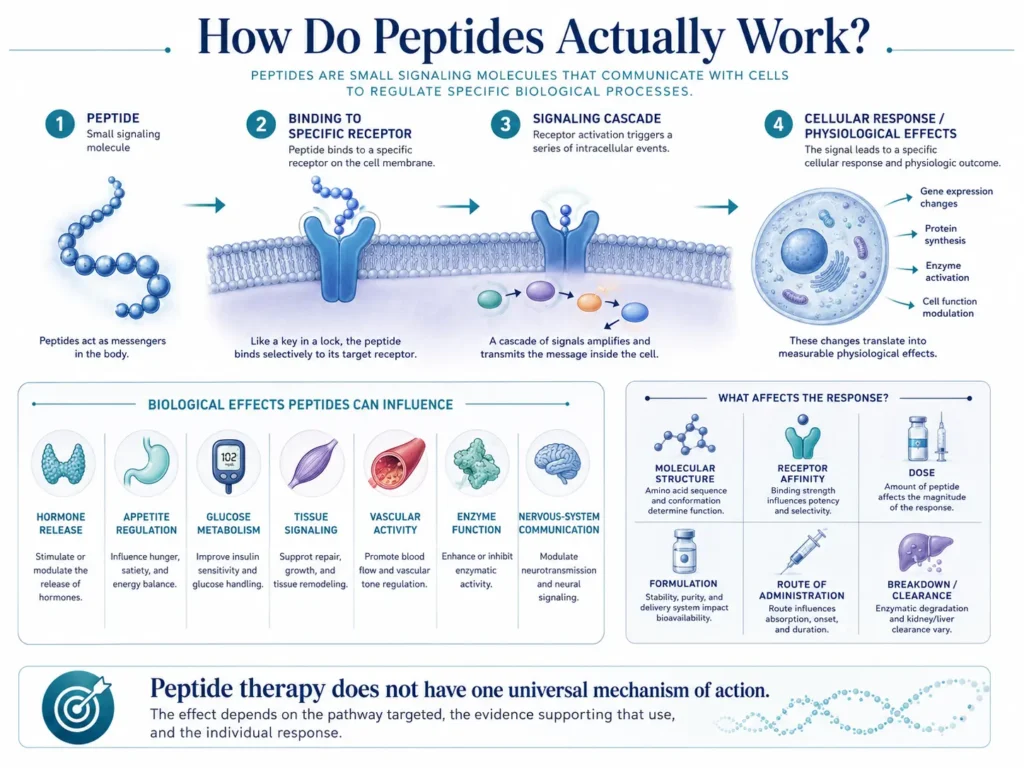
Peptides work by acting as signaling molecules that interact with specific receptors or biological pathways in the body. When a peptide binds to its target, it can trigger a cellular response that influences processes such as hormone release, appetite, glucose regulation, tissue signaling, vascular activity, enzyme function, and nervous-system communication.
The effect of a peptide depends on which receptor or pathway it targets. Different receptors control different physiological functions, which is why peptide medications can produce very different effects even though they all belong to the same broad molecular category. After receptor binding, the signal is transmitted into the cell through a series of biochemical steps known as a signaling cascade. This cascade can change enzyme activity, hormone secretion, gene expression, cellular metabolism, or communication between tissues.
The strength and duration of the response can also depend on factors such as the peptide’s molecular structure, receptor affinity, dose, formulation, route of administration, and how quickly it is broken down or cleared from the body. Some peptides are designed to mimic naturally occurring signaling molecules, while others are modified to remain active longer or interact more selectively with a biological target. These structural differences can affect how often a medication is administered and how consistently it produces its intended effect.
Because each peptide acts through its own biological target, peptide therapy does not have one universal mechanism of action. The clinically relevant effect depends on the specific pathway being influenced, the evidence supporting that use, and how the individual patient responds to treatment.
What Are The Different Types of Peptide Injections?
The main peptide injections commonly discussed in metabolic, endocrine, sexual-health, recovery, and longevity medicine include GLP-1/GIP receptor agonists such as semaglutide and tirzepatide; growth-hormone-pathway peptides such as tesamorelin and sermorelin; melanocortin peptides such as bremelanotide; and unapproved or investigational compounds such as BPC-157, TB-500, CJC-1295, ipamorelin, and injectable GHK-Cu.
| Category | Examples | Main biological target | Current evidence/status |
| Incretin-based metabolic peptides | Semaglutide, liraglutide, tirzepatide | GLP-1 and/or GIP receptors | FDA-approved products exist |
| Growth-hormone-pathway peptides | Tesamorelin, sermorelin, CJC-1295, ipamorelin | GHRH/GH/IGF-1 or ghrelin signaling | Mixed |
| Melanocortin receptor peptides | Bremelanotide | Melanocortin receptors | FDA-approved for a specific indication |
| Investigational tissue-signaling peptides | BPC-157, TB-500 | Proposed repair/signaling pathways | Unapproved; human evidence limited |
| Copper-binding peptides | GHK-Cu | Copper-dependent tissue signaling | Injectable human evidence limited |
Sources: FDA prescribing information; FDA compounding safety information; Mayfield et al. (2026); Mendias & Awan (2026).
Metabolic Peptides
Metabolic peptide medications influence pathways involved in appetite, blood glucose regulation, insulin signaling, digestion, and energy balance. Semaglutide and liraglutide activate GLP-1 receptors, while tirzepatide activates both GIP and GLP-1 receptors. FDA-approved products containing these medications have been evaluated in extensive clinical development programs for defined metabolic indications. (FDA, WEGOVY Prescribing Information, 2025; FDA, ZEPBOUND Prescribing Information, 2025; FDA, SAXENDA Prescribing Information, 2024)
Metabolic peptide medications should not be grouped with experimental “fat-burning peptides.” Their effects, indications, dosing, contraindications, and evidence come from medication-specific clinical research.
Semaglutide
Semaglutide is a GLP-1 receptor agonist with FDA-approved products for specific metabolic indications. Semaglutide affects appetite, glucose-dependent insulin secretion, glucagon secretion, and gastric emptying. Gastrointestinal adverse effects such as nausea, vomiting, diarrhea, constipation, and abdominal discomfort are commonly reported, and product-specific warnings and contraindications apply. (FDA, WEGOVY Prescribing Information, 2025) Patients commonly experience weight loss of 10% or more over several months, with full effects often observed within 12 to 24 weeks.
Semaglutide is FDA-approved under brand names such as Ozempic and Wegovy. It is administered via weekly subcutaneous injection, starting at 0.25 mg and titrated up to 2.4 mg depending on tolerance and therapeutic goals. Semaglutide is widely available through licensed prescribers and is often part of structured medical weight loss programs. Monthly treatment costs range from $800 to $1,200 when not covered by insurance.
Tirzepatide
Tirzepatide is a dual GIP and GLP-1 receptor agonist used in FDA-approved products for type 2 diabetes and chronic weight management. It influences appetite, glucose-dependent insulin secretion, glucagon signaling, and gastric emptying, which contributes to improvements in glycemic control and body weight. Tirzepatide is administered once weekly by subcutaneous injection, with dose escalation based on the specific product indication and patient tolerability. Clinical trials have shown substantial weight reduction in eligible patients, while common adverse effects include nausea, diarrhea, vomiting, and constipation. Medication-specific contraindications and precautions should be reviewed before treatment. (FDA, ZEPBOUND Prescribing Information, 2025)
Compared with unapproved peptides promoted for fat loss or body composition, tirzepatide has a substantially stronger human clinical evidence base. Treatment cost varies according to the prescribed product, insurance coverage, pharmacy, and available savings or coverage programs.
Liraglutide
Liraglutide is a GLP-1 receptor agonist used in FDA-approved products for type 2 diabetes and chronic weight management. It increases glucose-dependent insulin secretion, reduces glucagon activity, slows gastric emptying, and promotes satiety. Unlike semaglutide, liraglutide is administered by once-daily subcutaneous injection, with dose escalation based on the specific product indication and patient tolerability. For chronic weight management, dosing is gradually increased to the maintenance dose specified in the prescribing information. Common adverse effects include nausea, vomiting, diarrhea, constipation, and injection-site reactions, particularly during dose escalation. Medication-specific contraindications and warnings should be reviewed before treatment. (FDA, SAXENDA Prescribing Information, 2024)
Liraglutide belongs to the same broader GLP-1 receptor agonist class as semaglutide but differs in pharmacokinetics, dosing frequency, and treatment regimen. Its established human clinical evidence distinguishes it from unapproved peptides promoted for weight loss or body composition.
Growth Hormone Pathway Peptides
Growth hormone pathway peptides are commonly discussed in relation to body composition, recovery, and lean-mass goals, although the evidence differs considerably between compounds. The clinical and regulatory differences among peptides for muscle growth are therefore important when evaluating these therapies.
Tesamorelin has an FDA-approved indication for reducing excess abdominal fat in adults with HIV-associated lipodystrophy and is not approved as a general weight-loss medication. (FDA, EGRIFTA WR Prescribing Information, 2025)
Sermorelin was previously available in FDA-approved products for specific pediatric and diagnostic indications, but those products were discontinued and their approvals were withdrawn. FDA later determined that the products were not withdrawn for reasons of safety or effectiveness. (FDA, 2013)
CJC-1295 and ipamorelin do not have FDA-approved therapeutic indications, and human evidence supporting many promoted body-composition, recovery, and longevity uses remains limited. (FDA, Certain Bulk Drug Substances, 2026; Mayfield et al., 2026)
Tesamorelin
Tesamorelin is a growth hormone-releasing factor analog with an FDA-approved indication for reducing excess abdominal fat in adults with HIV-associated lipodystrophy. Its prescribing information specifically states that it is not indicated for weight-loss management. Tesamorelin increases growth hormone secretion and downstream IGF-1 activity, and its labeling includes monitoring considerations involving IGF-1 and glucose metabolism. (FDA, EGRIFTA WR Prescribing Information, 2025)
Sermorelin
Sermorelin is a synthetic analog of growth hormone-releasing hormone that stimulates the pituitary gland to release endogenous growth hormone. It was previously available in FDA-approved products for pediatric growth hormone deficiency and diagnostic assessment of pituitary growth hormone secretion. Those products were discontinued, and their approvals were later withdrawn; FDA subsequently determined that they had not been withdrawn for reasons of safety or effectiveness. (FDA, 2013)
Current use of sermorelin for adult growth hormone deficiency, anti-aging, body composition, sleep, energy, or general wellness is not an FDA-approved indication. Claims about predictable improvements in sleep, fat metabolism, energy, or body composition should therefore be interpreted according to the available evidence rather than assumed from its effect on growth hormone signaling.
Sermorelin treatment costs approximately $300 to $700 per month when paid out of pocket, although actual pricing varies by prescribed dose, formulation, pharmacy, clinical monitoring, and provider.
CJC-1295
CJC-1295 is an unapproved growth hormone-releasing hormone analog that influences GH and IGF-1 signaling. Available human clinical data remain limited compared with established peptide medications. (Mayfield et al., 2026) FDA has identified potential concerns involving immunogenicity, peptide-related impurities, and reported adverse reactions for compounded CJC-1295 preparations. (FDA, Certain Bulk Drug Substances, 2026)
Claims about predictable muscle gain, fat loss, recovery time, or standardized dosing should therefore be interpreted cautiously.
Ipamorelin
Ipamorelin is an unapproved growth hormone secretagogue that acts at the ghrelin receptor and can stimulate the body’s own growth hormone release. In clinical discussions, I approach ipamorelin differently from FDA-approved peptide medications because the human evidence supporting commonly promoted benefits such as improved recovery, body composition, sleep, and healthy aging remains limited. (Mayfield et al., 2026; Mendias & Awan, 2026)
The FDA has also identified insufficient safety information for certain injectable uses of compounded ipamorelin, along with potential concerns involving peptide aggregation, impurities, and immunogenicity. (FDA, Certain Bulk Drug Substances, 2026) For that reason, I do not consider commonly advertised dosing schedules, treatment timelines, or promised outcomes to be established clinical standards.
When ipamorelin is being considered, the decision should be based on the patient’s medical history, treatment goals, relevant laboratory findings, potential risks, and the strength of available evidence rather than on generalized wellness claims.
Treatment costs range from approximately $300 to $600 per month, depending on formulation, pharmacy, dose, monitoring requirements, and the overall treatment plan.
Melanocortin Peptides
Melanocortin peptides interact with melanocortin receptors involved in several physiological functions. Bremelanotide is an FDA-approved melanocortin receptor agonist for acquired, generalized hypoactive sexual desire disorder in certain premenopausal women. (FDA, VYLEESI Prescribing Information, 2020)
Its approved indication is specific and does not establish bremelanotide as a universal treatment for low libido or sexual performance.
Bremelanotide
Bremelanotide is a melanocortin receptor agonist with an FDA-approved indication for acquired, generalized HSDD in certain premenopausal women. The approved indication does not include general sexual-performance enhancement, treatment in men, or low desire caused by another medical condition, medication, psychiatric condition, or relationship issue. Nausea is among the most common adverse effects, and the prescribing information contraindicates use in patients with uncontrolled hypertension or known cardiovascular disease. (FDA, VYLEESI Prescribing Information, 2020)
Investigational Recovery and Tissue-Signaling Peptides
BPC-157 and TB-500 are frequently marketed for injury recovery and tissue repair. Preclinical studies have explored pathways involving healing, angiogenesis, inflammation, and cellular migration, but controlled human evidence remains insufficient to establish these compounds as proven treatments for musculoskeletal injury. Recent reviews also identify major uncertainties involving indications, dosing, treatment frequency, duration, and long-term safety. (Mayfield et al., 2026; Mendias & Awan, 2026)
BPC-157
BPC-157 is an unapproved synthetic peptide promoted primarily for tissue repair and injury recovery. Laboratory and animal studies have investigated mechanisms involving angiogenesis, inflammatory signaling, gastrointestinal tissue, tendons, and other repair pathways. Human clinical evidence remains very limited, and available human research has important methodological limitations. (Mayfield et al., 2026; Mendias & Awan, 2026)
FDA has also identified limited safety information for proposed compounded BPC-157 routes and potential concerns involving immunogenicity and peptide-related impurities. (FDA, Certain Bulk Drug Substances, 2026)
BPC-157 is therefore more accurately described as an unapproved peptide with investigational applications than as an established recovery treatment.
TB-500
TB-500 is an unapproved peptide fragment related to thymosin beta-4 and is marketed primarily for healing and recovery. Preclinical research has investigated thymosin-related pathways involving cell migration, angiogenesis, and tissue repair, but human evidence supporting TB-500 injections for musculoskeletal recovery remains insufficient. (Mayfield et al., 2026; Mendias & Awan, 2026)
FDA reports that it has not identified human exposure data for the TB-500-related thymosin beta-4 fragment evaluated in its compounding review and identifies potential concerns involving immunogenicity and peptide-related impurities. (FDA, Certain Bulk Drug Substances, 2026)
TB-500 should therefore not be presented as a proven treatment for tendon, muscle, ligament, surgical, or inflammatory recovery.
Copper-Binding Peptides
GHK-Cu is a naturally occurring copper-binding peptide that receives attention in skin, tissue-remodeling, wound, and hair-related research. Evidence from topical products, laboratory studies, or preclinical models should be distinguished from evidence supporting injectable use.
GHK-Cu
GHK-Cu is a copper-binding peptide studied for its role in tissue signaling, collagen-related activity, wound biology, inflammation, and hair-related pathways. In my clinical approach, I distinguish the relatively broader topical and laboratory research on GHK-Cu from injectable use, where human evidence is much more limited. (Mayfield et al., 2026)
GHK-Cu is commonly discussed in aesthetic and hair-restoration settings through topical formulations and procedures that support localized delivery. However, findings from topical products, laboratory models, or cosmetic applications should not be assumed to establish the same benefits or safety profile for systemic injection.
The FDA has identified limited human safety data for injectable compounded GHK-Cu and potential concerns involving peptide aggregation, impurities, and immunogenicity. (FDA, Certain Bulk Drug Substances, 2026) For that reason, I would not present commonly advertised injectable doses, predictable treatment timelines, or guaranteed improvements in wrinkles, collagen, wound healing, or hair density as established clinical standards.
GHK-Cu treatment may cost approximately $150 to $500 per session, depending on the formulation, delivery method, treatment area, provider, and whether it is combined with other aesthetic procedures.
What Is Peptide Therapy Used For?
Peptide therapy is used or studied for specific medical purposes involving metabolism, hormone signaling, sexual health, tissue biology, skin and hair pathways, and other physiological processes. The actual use depends on the individual peptide because peptide medications target different receptors and have different levels of clinical evidence.
| Clinical Area | Peptide Examples | Evidence Context |
| Weight and metabolic management | Semaglutide, liraglutide, tirzepatide | FDA-approved products exist for defined metabolic indications |
| Growth hormone-related conditions | Tesamorelin, sermorelin, CJC-1295, ipamorelin | Evidence and regulatory status vary substantially |
| Sexual health | Bremelanotide | FDA-approved for a narrowly defined HSDD population |
| Recovery and tissue repair research | BPC-157, TB-500 | Unapproved; controlled human evidence remains limited |
| Skin and hair research | GHK-Cu | Evidence depends strongly on formulation and administration route |
| Longevity and healthy-aging research | Various peptides | Many promoted applications remain investigational |
Sources: FDA prescribing information; FDA compounding safety information; Mayfield et al. (2026); Mendias & Awan (2026); Mavrych et al. (2026).
Peptide Injections for Weight Management
Certain peptide medications are used in medical weight management because they influence appetite, satiety, glucose regulation, and other metabolic pathways. Semaglutide, liraglutide, and tirzepatide have FDA-approved products for defined metabolic or chronic weight-management indications. (FDA, WEGOVY Prescribing Information, 2025; FDA, ZEPBOUND Prescribing Information, 2025; FDA, SAXENDA Prescribing Information, 2024)
These medications have substantially stronger human clinical evidence than experimental compounds promoted primarily as “fat-burning peptides.” In appropriate patients, peptide medications may form part of a broader medical weight management plan that also considers nutrition, physical activity, sleep, existing health conditions, medications, and long-term weight maintenance.
When evaluating the best peptides for weight loss, it is important to distinguish medications supported by large clinical development programs from investigational peptides for which meaningful weight-loss benefits have not been established.
Peptides for Growth Hormone-Related Conditions and Body Composition
Some peptides influence the growth hormone and IGF-1 signaling pathway, but their medical uses and evidence are not equivalent.
Tesamorelin has an FDA-approved indication involving excess abdominal fat in adults with HIV-associated lipodystrophy, while current adult wellness uses of sermorelin are not FDA-approved indications. CJC-1295 and ipamorelin also remain unapproved and have substantially less human evidence supporting promoted body-composition and recovery applications. (FDA, EGRIFTA WR Prescribing Information, 2025; FDA, 2013; Mayfield et al., 2026)
An increase in growth hormone or IGF-1 activity should therefore not automatically be interpreted as proof of improved muscle function, body composition, recovery, or longevity.
Peptides for Sexual Health
Bremelanotide is a peptide-based medication with an established sexual-health indication in a specific patient population. It is FDA-approved for acquired, generalized hypoactive sexual desire disorder in certain premenopausal women. (FDA, VYLEESI Prescribing Information, 2020)
Its approved use does not extend to every form of low libido or sexual dysfunction. Sexual symptoms can also result from medications, hormonal changes, psychological conditions, relationship factors, vascular disease, or other health problems, making evaluation of the underlying cause important before treatment selection.
Peptides for Recovery and Tissue Repair
BPC-157 and TB-500 are being investigated for biological pathways involved in tissue repair, angiogenesis, inflammation, and cellular migration. Their proposed benefits for tendon, ligament, muscle, and injury recovery are supported primarily by preclinical research rather than robust controlled human trials. (Mayfield et al., 2026; Mendias & Awan, 2026)
They are therefore more accurately described as unapproved peptides with investigational recovery applications rather than proven tissue-repair treatments.
Peptides for Skin and Hair
Peptides are widely studied for biological processes involving collagen, extracellular matrix remodeling, wound biology, and hair-follicle signaling. GHK-Cu is one of the most commonly discussed compounds in research involving skin and hair, while other peptides for hair growth are being investigated for their effects on follicular signaling, scalp biology, and hair-growth pathways.
Research involving GHK-Cu includes laboratory studies and topical formulations exploring collagen-related signaling, tissue remodeling, inflammation, and hair-related processes. Clinical evidence supporting injectable GHK-Cu remains substantially more limited. (Mayfield et al., 2026; FDA, Certain Bulk Drug Substances, 2026)
Results from topical products or laboratory studies therefore do not automatically establish the safety or effectiveness of injectable GHK-Cu.
Peptides for Longevity and Healthy Aging
Peptide signaling is an active area of healthy-aging research because peptide pathways intersect with metabolic, endocrine, inflammatory, and tissue-related processes relevant to aging. However, many non-approved peptides promoted for healthy aging continue to rely largely on preclinical or limited human evidence and lack long-term safety validation. (Mavrych et al., 2026)
Affecting a biological pathway associated with aging is not the same as demonstrating that a treatment slows human aging or extends lifespan. FDA-approved peptide medications may improve specific clinically meaningful health outcomes in appropriate patients without being “anti-aging drugs.”
Longevity-focused peptide treatment should therefore be evaluated according to measurable health outcomes, evidence for the individual compound, and the patient’s overall medical context.
What Are the Benefits of Peptide Therapy?
The benefits of peptide therapy depend on the specific peptide, its biological target, and the condition being treated. There is no single set of benefits that applies to every peptide injection because approved peptide medications and investigational compounds have very different levels of evidence.
- Weight and metabolic management: FDA-approved GLP-1 and GIP/GLP-1 medications can improve weight and metabolic outcomes in eligible patient populations.
- Specific endocrine applications: Tesamorelin has an established medical use for reducing excess abdominal fat associated with HIV-related lipodystrophy.
- Sexual health: Bremelanotide has an established indication for acquired, generalized hypoactive sexual desire disorder in certain premenopausal women.
- Tissue and recovery research: BPC-157 and TB-500 are being studied for pathways involved in tissue repair, inflammation, angiogenesis, and cellular migration, but their proposed recovery benefits are not supported by robust controlled human evidence.
- Skin and hair research: GHK-Cu is studied for collagen signaling, tissue remodeling, and hair-related biological activity, although injectable human evidence remains limited.
- Healthy-aging research: Several peptide pathways are being studied in relation to aging biology, but many promoted longevity applications remain clinically unvalidated and lack long-term safety data.
The most accurate way to evaluate peptide therapy is therefore to ask which peptide is being considered, what clinical outcome it is intended to achieve, how strong the human evidence is, and whether the expected benefit outweighs the risks for that individual patient.
Are Peptide Injections Safe?
Peptide injections do not share one universal safety profile. Safety depends on the compound, dose, route, indication, patient characteristics, medications, formulation quality, and duration of treatment.
Approved peptide medications have drug-specific adverse-effect profiles, contraindications, and monitoring requirements. For example, GLP-1/GIP-based medications commonly cause gastrointestinal adverse effects; tesamorelin labeling addresses IGF-1 elevation, glucose effects, and fluid retention; and bremelanotide can cause nausea and transient blood-pressure increases. (FDA, WEGOVY Prescribing Information, 2025; FDA, ZEPBOUND Prescribing Information, 2025; FDA, EGRIFTA WR Prescribing Information, 2025; FDA, VYLEESI Prescribing Information, 2020)
Safety becomes more uncertain for unapproved peptides with limited human exposure data. FDA has identified potential concerns involving compounded BPC-157, CJC-1295, ipamorelin, injectable GHK-Cu, and TB-500-related substances, including limited human safety information, immunogenicity, aggregation, and peptide-related impurity concerns. (FDA, Certain Bulk Drug Substances, 2026)
What Are the Side Effects of Peptide Injections?
The side effects of peptide injections depend on the specific compound, dose, route of administration, treatment duration, formulation quality, and the individual patient’s health profile. Peptide injections do not share one universal adverse-effect profile.
Possible side effects include:
- injection-site redness, swelling, itching, bruising, or discomfort
- nausea or other gastrointestinal symptoms
- headache, dizziness, or flushing
- fatigue or changes in appetite
- fluid retention
- changes in blood glucose or other metabolic markers
- hormonal or endocrine changes when relevant pathways are affected
- allergic or hypersensitivity reactions
The level of uncertainty is greater with unapproved or investigational peptides, particularly when human safety data are limited. In these cases, uncommon, long-term, or formulation-related risks may not yet be well characterized, and concerns can include impurities, peptide aggregation, and immunogenicity. (FDA, Certain Bulk Drug Substances, 2026; Mendias & Awan, 2026)
Can Peptide Injections Interact With Other Medications?
Yes. Medication interactions depend on the peptide involved. GLP-1 receptor agonists can create clinically relevant considerations when used with other glucose-lowering treatments, and delayed gastric emptying can affect the absorption of some oral medications. (FDA, WEGOVY Prescribing Information, 2025; FDA, SAXENDA Prescribing Information, 2024) Growth hormone-related therapies can create different interaction and monitoring considerations. Tesamorelin prescribing information, for example, addresses glucose-related effects and interactions involving certain drugs metabolized by CYP450 enzymes. (FDA, EGRIFTA WR Prescribing Information, 2025)
The relevant interaction profile therefore comes from the specific drug rather than the general fact that it is a peptide. A complete medication review is an important part of determining whether treatment is appropriate.
Who Is a Good Candidate for Peptide Therapy?
A good candidate for peptide therapy is someone with a clear clinical goal, an appropriate health profile for the specific peptide, and no medication-specific contraindications or significant interaction risks. Candidacy also depends on the strength of evidence supporting the intended use, current medications, medical history, and the monitoring required during treatment.
Good candidates typically:
- have a clearly defined treatment goal
- have undergone evaluation for other possible causes of their symptoms
- have a medical history compatible with the specific peptide
- do not have significant medication interactions or contraindications
- understand the expected benefits, limitations, and uncertainties
- complete follow-up visits and laboratory monitoring when clinically relevant
- have realistic expectations about treatment outcomes
Treatment considerations also differ according to symptoms, biological factors, and clinical goals. For example, peptides for men are discussed in relation to areas such as metabolic health, body composition, recovery, and sexual health, but treatment selection still depends on the individual peptide and the patient’s medical context.
Who Is Not A Good Candidate for Peptide Therapy?
A person is not a good candidate for a specific peptide when their medical history, current medications, pregnancy status, or other risk factors create a contraindication or make the expected benefit too uncertain relative to the potential risk. Contraindications differ by medication, so there is no single exclusion list that applies to every peptide treatment.
A person is generally not an appropriate candidate when they:
- are pregnant, planning pregnancy, or breastfeeding when the medication is not recommended
- have a known allergy or previous serious reaction to the medication or formulation
- have an uncontrolled medical condition that requires evaluation or stabilization first
- have cardiovascular, gastrointestinal, endocrine, kidney, or liver conditions that conflict with the medication’s safety profile
- take medications that create clinically significant interactions
- have a medical history requiring additional caution with the biological pathway being targeted
- are considering an unapproved peptide when the evidence or safety profile is insufficient for the intended use
- cannot complete necessary follow-up or laboratory monitoring
- expect peptide therapy to replace appropriate medical treatment or management of an underlying condition
A current or previous cancer diagnosis is not a universal contraindication to every peptide medication. Its relevance depends on the specific treatment and mechanism involved. Certain growth hormone-pathway medications carry specific malignancy-related contraindications and precautions that require individual clinical review. (FDA, EGRIFTA WR Prescribing Information, 2025)
How Does Dr. Syra Hanif Evaluate and Monitor Peptide Therapy?
At Dr. Syra Aesthetics & Longevity Institute, peptide therapy is treated as an ongoing medical decision, not a preset protocol. Dr. Syra Hanif evaluates whether a specific peptide has a reasonable role for the individual patient, explains the strength and limitations of the evidence, and reassesses treatment according to the patient’s actual response. This approach is already reflected in the article’s emphasis on individualized selection, monitoring, and evidence-based distinctions between established and unapproved peptides.
Before Treatment
- Clinical evaluation: Dr. Hanif reviews the patient’s medical history, symptoms, current medications and supplements, previous treatments, treatment goals, contraindications, and potential interactions. She also considers whether another medical issue better explains the patient’s symptoms before recommending peptide therapy.
- Evidence and baseline assessment: The specific peptide is reviewed according to its clinical evidence and regulatory status. Bloodwork is obtained when it is relevant to the treatment and can include metabolic markers, glucose or HbA1c, lipids, IGF-1, thyroid testing, or selected hormone tests.
During Treatment
- Response and tolerability: Follow-up focuses on what is actually changing, including symptoms, measurable health markers, side effects, laboratory findings, and whether the intended treatment goal is being achieved.
- Treatment decisions: The dose or treatment plan is adjusted when clinical response, laboratory results, medications, or the patient’s health status changes. An FDA-approved medication with established human evidence is not treated as equivalent to an unapproved peptide with limited clinical data.
Aftercare and Reassessment
- Continued medical review: Treatment continues only while there is a clear clinical reason to continue it and the expected benefit remains greater than the known or uncertain risks.
- Adjustment or discontinuation: Treatment is reduced, changed, or stopped when meaningful benefit is not achieved, adverse effects occur, laboratory findings raise concern, or the patient’s medical circumstances change.
The goal is not to keep a patient on peptide therapy indefinitely or to add more peptides when results are limited. The goal is to use the specific treatment only when the clinical rationale, available evidence, patient response, and benefit-risk balance continue to support it.
How Are Peptide Medications Administered?
Peptide medications are administered through different routes based on the specific drug, formulation, intended use, and prescribing instructions. Many peptide medications are given by subcutaneous injection, while others are administered through intramuscular, intravenous, oral, intranasal, or other routes. The route of administration affects how the medication is absorbed, how quickly it reaches circulation, how long its effects last, and how often it needs to be given. Because each formulation is designed for a specific delivery method, the prescribed route should be followed rather than treating administration methods as interchangeable.
Subcutaneous Peptide Injections
This route supports gradual absorption and helps maintain consistent drug exposure over time. Common subcutaneous injection sites include the abdomen, thigh, and upper arm, according to the medication’s prescribing instructions. Some peptide medications come in prefilled pens or syringes and are suitable for self-administration after appropriate instruction from a healthcare professional.
Intramuscular Peptide Injections
An intramuscular injection delivers medication directly into muscle tissue. Muscle has a greater blood supply than subcutaneous fat, which can change how quickly a medication enters circulation.
The deltoid, thigh, and gluteal muscles are commonly used injection sites. Intramuscular administration requires a medication that is specifically formulated and prescribed for delivery into muscle tissue.
Intravenous Peptide Administration
Intravenous administration delivers a peptide-based medication directly into a vein, providing immediate access to the bloodstream without the absorption phase required with subcutaneous or intramuscular injections.
This route is generally used in clinical settings where the dose, infusion rate, and patient response can be monitored by healthcare professionals.
FDA-Approved vs Compounded vs Investigational Peptides
FDA-approved, compounded, and unapproved or investigational peptides differ in regulatory review, available evidence, and how they may be used clinically. FDA approval applies to a specific drug product and indication. Compounded drugs are not FDA-approved, meaning FDA does not review their safety, effectiveness, or quality before marketing. (FDA, Understanding the Risks of Compounded Drugs, 2026)
| Status | Meaning |
| FDA-approved | Specific product reviewed for defined indications |
| Compounded | Prepared under applicable compounding circumstances; not FDA-approved |
| Unapproved/investigational | No FDA-approved therapeutic indication; amount of research varies |
| Research-use-only | Intended for laboratory or research use rather than prescribed human treatment |
Source: FDA, Understanding the Risks of Compounded Drugs (2026).
What Does “Compounded Peptide” Mean?
A compounded peptide is a preparation produced under applicable pharmacy-compounding requirements. Compounding is not the same as FDA approval.
FDA does not conduct the same premarket review of compounded drugs for safety, effectiveness, or quality that applies to FDA-approved drug products. (FDA, Understanding the Risks of Compounded Drugs, 2026)
Compounding can serve legitimate medical needs in appropriate patients, but the existence of a compounded formulation does not prove that the underlying peptide is clinically effective for a particular wellness, recovery, or longevity use.
A product also does not acquire FDA-approved status simply because it is prepared by a compounding pharmacy.
What Are “Research Use Only” Peptides?
“Research use only” peptides are products intended for laboratory or research purposes rather than prescribed human treatment. This designation does not establish that a product is suitable, sterile, effective, or safe for human injection.
Products sold through nonmedical online sources can also raise concerns about purity, concentration, sterility, storage conditions, authenticity, and manufacturing quality, particularly when these factors cannot be independently verified.
A lower price does not make a research-use product equivalent to a medically prescribed peptide preparation. Medical treatment includes clinical evaluation, appropriate sourcing, medication review, formulation selection, dosing decisions, and follow-up monitoring based on the individual patient and the specific therapy being considered.
What Does “Investigational Peptide” Mean?
An unapproved or investigational peptide does not have an FDA-approved therapeutic indication. Laboratory, animal, or early human research can demonstrate biological activity without establishing clinical effectiveness, optimal dosing, treatment duration, or long-term safety. Recent reviews of several peptides marketed for recovery and performance continue to identify these evidence gaps. (Mayfield et al., 2026; Mendias & Awan, 2026)
Investigational status does not necessarily mean that a compound has no biological effect. It means important questions about its clinical use remain unresolved.
Peptide Therapy vs Hormone Therapy
Peptide therapy and hormone therapy are different treatment categories, although their biological pathways can sometimes overlap.
Hormone therapy generally supplies or modifies a hormone to address a defined clinical need. Peptide medications can act in many different ways. Some influence hormone secretion, while others act on appetite, glucose regulation, melanocortin receptors, or unrelated signaling pathways.
A growth hormone-releasing peptide, for example, influences signaling that can affect endogenous growth hormone secretion. That mechanism differs from directly administering growth hormone. A GLP-1 receptor agonist influences metabolic signaling and is not conventional hormone replacement therapy.
Neither approach is automatically more natural, safer, or more appropriate. Treatment selection depends on the diagnosis, evidence, contraindications, and individual goals.
Peptides vs Steroids
Peptides vs steroids differ substantially in molecular structure, receptor activity, clinical uses, and risk profiles. Peptides consist of amino-acid chains and commonly influence specific signaling pathways, while steroid hormones are lipid-derived molecules that can interact with intracellular receptors.
It is therefore inaccurate to say that all peptides are inherently safer than all steroids. An FDA-approved peptide medication supported by extensive clinical evidence has a very different risk profile from an unapproved peptide purchased online. Likewise, medically indicated corticosteroids or hormone treatments differ substantially from nonmedical anabolic steroid use.
The appropriate comparison is between specific drugs, indications, doses, evidence, and individual patient risks, not between two broad molecular categories.
How much does peptide therapy cost?
Peptide therapy costs vary widely because the term covers two very different categories: FDA-approved prescription medications and compounded or unapproved peptide preparations. As a result, self-pay costs in the U.S. can range from roughly $100 per month for a simple compounded peptide to more than $1,300 per month for certain branded medications before accounting for consultations, lab work, and monitoring
what is the average cost of peptides
| Type of Peptide Treatment | Approximate U.S. Self-Pay Cost |
| Lower-cost compounded peptide therapy | $100–$250 per month |
| Standard compounded peptide therapy | $200–$500 per month |
| Combination peptide protocols | $300–$700+ per month |
| FDA-approved peptide medications | $300–$1,300+ per month |
| Peptide-based aesthetic treatments | $150–$500 per session |
| Initial consultation and evaluation | $150–$400 |
| Laboratory testing and monitoring | $100–$500+ |
Several factors influence the final cost: the specific peptide selected, whether it is FDA-approved or compounded, the dose and frequency of administration, the delivery method (injections generally cost more than capsules or creams), and the amount of laboratory monitoring required. Advanced or combination regimens for example, multi-peptide protocols or programs built around FDA-approved metabolic medications can run toward the higher end, exceeding $1,000–$2,000 per month. Manufacturer savings programs, pharmacy, and any applicable coverage can substantially change what a patient actually pays.
In higher-cost markets such as New York City, pricing tends to fall on the upper end of these ranges once consultations, lab testing, and follow-up are included. In higher-cost markets such as New York City, pricing tends to fall on the upper end of these ranges once consultations, lab testing, and follow-up are included. The cost of physician-supervised peptide therapy in Manhattan depends on the specific peptide selected and the monitoring each treatment plan requires.
Is Peptide Therapy Worth It?
Yes, peptide therapy can be worth it for individuals who have a clear clinical goal, are appropriate candidates for a specific peptide, and are receiving treatment under medical supervision. Its value depends on whether the peptide has a reasonable evidence base for the intended use, fits the patient’s health profile, and produces a meaningful benefit that justifies the cost, monitoring, and potential risks.
Factors that can make peptide therapy worth considering include:
- A clear treatment goal: The peptide is being used for a defined medical or clinical objective rather than vague wellness claims.
- Evidence supporting the specific peptide: FDA-approved medications with established human data generally provide a more predictable benefit-risk profile than unapproved compounds with limited research.
- Appropriate patient selection: Medical history, current medications, contraindications, symptoms, and relevant laboratory findings are reviewed before treatment.
- Realistic expectations: The expected outcome is measurable and consistent with what the available evidence supports.
- Medical monitoring: Follow-up helps assess response, tolerability, side effects, and whether treatment should be adjusted or discontinued.
- Quality and sourcing: The medication or preparation comes through an appropriate medical and pharmacy pathway rather than an unverifiable research-use product.
- Benefit relative to alternatives: The expected advantage of treatment should justify its cost, inconvenience, risks, and available alternatives.
Will Insurance Cover Peptide Therapy?
Insurance coverage for peptide therapy depends on the specific medication and medical indication. FDA-approved peptide medications can receive coverage for qualifying conditions depending on the insurance plan, while treatments used for wellness, longevity, or other non-covered purposes are typically self-pay.
At Dr. Syra Aesthetics & Longevity Institute, peptide therapy is offered as a self-pay service, and the consultation provides a personalized breakdown of treatment and related costs.
Do You Need a Prescription for Peptides?
Yes. Peptide medications used for human treatment generally require evaluation and prescribing by a licensed healthcare professional. FDA-approved peptide drugs are prescription medications, and compounded drugs prepared under Section 503A generally require a valid patient-specific prescription. (FDA, 2026)
Products sold online as “research use only” are not equivalent to prescribed medications and should not be assumed appropriate for human injection.
Frequently Asked Questions
Are GLP-1 medications considered peptides?
Yes. Medications such as semaglutide and liraglutide are peptide-based GLP-1 receptor agonists. Tirzepatide is also peptide-based and acts on both GIP and GLP-1 receptors.
Is a compounded peptide the same as an FDA-approved peptide drug?
No. Compounded drugs do not undergo the same FDA premarket review for safety, effectiveness, and quality as FDA-approved drug products. (FDA, Understanding the Risks of Compounded Drugs, 2026)
Does “natural peptide” mean the injection is safer?
No. Naturally occurring peptides exist throughout the body, but an injected synthetic or modified peptide can produce pharmacologic effects and risks. Safety depends on the specific compound, dose, formulation, route, and patient.
Are BPC-157 and TB-500 FDA-approved?
No. BPC-157 and TB-500 are not FDA-approved therapeutic drugs, and controlled human evidence supporting many promoted recovery applications remains limited. (FDA, Certain Bulk Drug Substances, 2026; Mayfield et al., 2026)
Can different peptide injections be combined?
Whether two peptide-based treatments can be used together depends on their mechanisms, interactions, evidence, and the patient’s medical circumstances. Combining peptides should not be assumed to improve results, particularly when the individual compounds are not well studied.
Do peptide injections require bloodwork?
Some peptide treatments require bloodwork, while others rely more on clinical assessment and medication-specific monitoring. Testing depends on the peptide being considered, the medical indication, the patient’s health history, baseline risks, and the biological pathway involved.
When clinically relevant, bloodwork can include metabolic markers, glucose levels, hormone-related tests, or other labs used to establish a baseline and monitor treatment response. There is no single laboratory panel that applies to every peptide treatment.
How long does peptide therapy take to work?
There is no universal timeline. An FDA-approved metabolic medication, an endocrine-related peptide, and an unapproved recovery peptide have different pharmacology and clinical endpoints. Reliable timelines should come from evidence for the specific medication rather than generic peptide-treatment claims.
References and Clinical Sources
U.S. Food and Drug Administration. Certain Bulk Drug Substances for Use in Compounding That May Present Significant Safety Risks. Updated 2026.
https://www.fda.gov/drugs/human-drug-compounding/certain-bulk-drug-substances-use-compounding-may-present-significant-safety-risks
Mayfield CK, Bolia IK, Feingold CL, Lin EH, Liu JN, Hatch GFR, Gamradt SC, Weber AE. Injectable Peptide Therapy: A Primer for Orthopaedic and Sports Medicine Physicians. American Journal of Sports Medicine. 2026;54(1):223-229.
https://doi.org/10.1177/03635465251357593
Mendias CL, Awan TM. Safety and Efficacy of Approved and Unapproved Peptide Therapies for Musculoskeletal Injuries and Athletic Performance. Sports Medicine. 2026.
https://doi.org/10.1007/s40279-026-02437-0
Mavrych V, Shypilova I, Bolgova O. Therapeutic Peptides in Gerontology: Mechanisms and Applications for Healthy Aging. Frontiers in Aging. 2026;7:1790247.
https://doi.org/10.3389/fragi.2026.1790247
U.S. Food and Drug Administration. EGRIFTA WR (tesamorelin) Prescribing Information. 2025.
https://www.accessdata.fda.gov/drugsatfda_docs/label/2025/022505s020lbl.pdf
U.S. Food and Drug Administration. VYLEESI (bremelanotide) Prescribing Information. Revised 2020.
https://www.accessdata.fda.gov/drugsatfda_docs/label/2020/210557s002lbl.pdf
U.S. Food and Drug Administration. WEGOVY (semaglutide) Prescribing Information. 2025.
https://www.accessdata.fda.gov/drugsatfda_docs/label/2025/215256s024lbl.pdf
U.S. Food and Drug Administration. ZEPBOUND (tirzepatide) Prescribing Information. 2025.
FDA Drugs@FDA prescribing information.
U.S. Food and Drug Administration. SAXENDA (liraglutide) Prescribing Information. 2024.
FDA Drugs@FDA prescribing information.
U.S. Food and Drug Administration. Determination That GEREF (Sermorelin Acetate) Injection Was Not Withdrawn From Sale for Reasons of Safety or Effectiveness. Federal Register. 2013;78(42):14095-14096.
https://www.govinfo.gov/content/pkg/FR-2013-03-04/pdf/FR-2013-03-04.pdf
U.S. Food and Drug Administration. Understanding the Risks of Compounded Drugs. Updated 2026.
https://www.fda.gov/drugs/human-drug-compounding/understanding-risks-compounded-drugs

Written & Medically Reviewed by
Dr. Syra Hanif, M.D.
Board-Certified Primary Care Physician
Dr. Syra Hanif, M.D., is a board-certified physician specializing in aesthetic medicine, longevity, and preventative wellness. As Medical Director of Dr. Syra Aesthetics & Longevity Institute in NYC, she focuses on aesthetics, healthy aging, and overall wellness.
Read More