


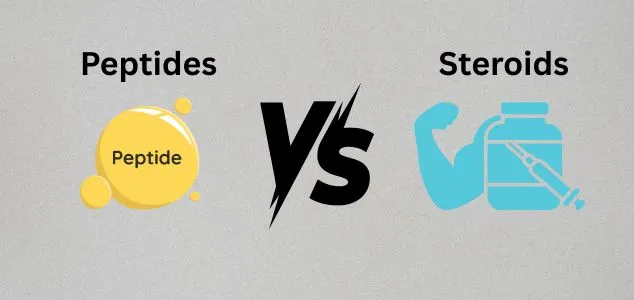
Peptides and steroids are often discussed together because both can influence muscle growth, recovery, performance, and body composition. However, they are fundamentally different compounds that work through distinct biological mechanisms. Peptides are short chains of amino acids that act as signaling molecules, helping regulate processes such as hormone release, metabolism, cell signaling, and recovery. Steroids, on the other hand, are lipid-based compounds derived from cholesterol. In this article, the term “steroids” primarily refers to anabolic-androgenic steroids, which affect androgen activity and influence gene expression.
Understanding these differences provides an important foundation for comparing peptides vs steroids, including how they work, their potential benefits, risks, expected timelines, costs, and when medical supervision matters.
What Are Peptides?
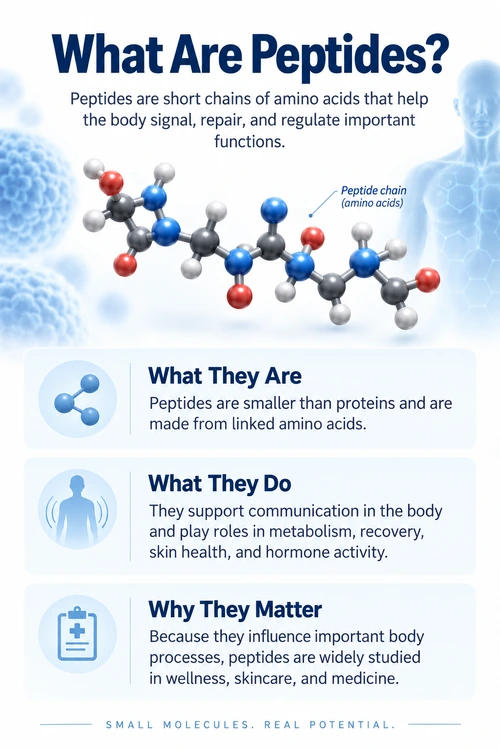
Peptides are short chains of amino acids that act as signaling molecules in the body. Depending on the peptide, they may help regulate hormone secretion, immune activity, metabolism, tissue signaling, appetite, and cell growth.
Many peptides work by binding to receptors and triggering biological signaling pathways rather than acting directly through androgen receptors like anabolic steroids.
Some peptides, such as insulin and glucagon, occur naturally in the human body. Synthetic peptide-based medications are also used in conventional medicine for conditions involving metabolism, hormones, diabetes, and other health concerns.
Compounds such as CJC-1295, ipamorelin, and BPC-157 are also frequently discussed in longevity, recovery, and performance settings, although their clinical evidence and regulatory status differ considerably.
Many peptide-based medications have been FDA-approved for legitimate medical uses. However, that does not mean every compound marketed as a peptide has the same level of evidence, approval, or established safety. Some peptides are well studied, while others remain investigational or have limited long-term human safety data. For patients considering peptide therapy in NYC, treatment should therefore be based on the specific peptide, medical history, symptoms, laboratory findings, treatment goals, available evidence, and appropriate medical supervision.
What Are Anabolic Steroids?
Anabolic-androgenic steroids are lipid-based compounds structurally related to testosterone and other steroid hormones.
They bind primarily to androgen receptors and influence gene expression, protein synthesis, muscle development, recovery, and other androgen-dependent processes.
Certain anabolic steroids have legitimate medical applications, including treatment of specific hormonal deficiencies, muscle-wasting conditions, and other diagnosed medical conditions.
However, anabolic steroids are also commonly misused for bodybuilding, rapid muscle growth, strength, and athletic performance.
Common compounds discussed in this context include testosterone derivatives, oxandrolone, and trenbolone, although their medical approval and legal status differ.
Anabolic steroids can significantly affect:
- Natural testosterone production
- Fertility
- Cholesterol
- Blood pressure
- Cardiovascular health
- Liver function, depending on the compound
- Mood
- Skin and hair
- Reproductive health
Many anabolic steroids are classified as Schedule III controlled substances in the United States, and anabolic agents are prohibited by the World Anti-Doping Agency in competitive sport.
Throughout this article, “steroids” refers primarily to anabolic-androgenic steroids, not corticosteroids such as prednisone or cortisone that are commonly prescribed for inflammation.
Peptides vs Steroids: Key Differences
While both may be discussed in relation to muscle growth, performance, recovery, and body composition, peptides and steroids work through fundamentally different biological pathways.
Peptides act as signaling molecules and influence specific receptors or physiological processes.
Anabolic steroids directly increase androgen activity and affect gene expression, producing much stronger anabolic effects on muscle and strength.
| Comparison | Peptides | Anabolic Steroids |
|---|---|---|
| Biological Nature | Short chains of amino acids | Lipid-based steroid compounds |
| Mechanism | Act through specific receptors and signaling pathways | Bind primarily to androgen receptors and influence gene expression |
| Muscle Growth | Certain peptides may indirectly support lean mass, hormone signaling, or recovery | Can substantially increase muscle protein synthesis and muscle mass |
| Hormonal Impact | Depends on the specific peptide | Can suppress natural testosterone production |
| Side Effects | Vary according to peptide, dose, evidence, and sourcing | May cause significant systemic hormonal, cardiovascular, and reproductive effects |
| Administration | Many are injected subcutaneously, although administration varies | Oral, injectable, or transdermal depending on the medication |
| Body Composition | Some may influence appetite, metabolism, GH signaling, or lean mass | Can increase or preserve lean mass but may also cause metabolic and hormonal changes |
| Recovery | Some peptides are used or investigated for recovery-related pathways | Can improve muscular recovery through anabolic activity |
| Legality | Depends on the specific peptide | Many anabolic steroids are controlled substances in the U.S. |
| Sports Status | Many performance-related peptides are prohibited | Anabolic steroids are prohibited by WADA |
| Long-Term Evidence | Strong for some approved therapies, limited for many investigational compounds | Risks of anabolic steroid misuse are well documented |
Are Peptides Steroids?
No. Peptides are not steroids. Peptides are chains of amino acids, while steroids have a completely different chemical structure. People often confuse the two because both may be discussed in relation to muscle growth, recovery, performance, and body composition, and some are administered by injection.
The key difference is how they work. Peptides work through signaling. Depending on the compound, a peptide may influence hormone release, metabolism, appetite, tissue signaling, or another biological pathway. Certain compounds such as CJC-1295 and ipamorelin influence pathways associated with growth hormone release. Anabolic steroids increase androgen activity directly. They bind to androgen receptors and can strongly increase muscle protein synthesis, producing faster increases in muscle size and strength. Some compounds such as BPC-157 are investigated for potential tissue-related effects, but human clinical evidence remains limited and they should not be described as proven injury treatments. So while peptides and steroids may sometimes be used or discussed for similar goals, they remain different classes of compounds with different mechanisms, benefits, risks, evidence, and regulatory considerations.
Peptides vs Steroids for Muscle Growth
When muscle growth is the primary goal, anabolic steroids produce faster and more dramatic changes.
By increasing androgen activity, anabolic steroids can significantly enhance muscle protein synthesis and contribute to noticeable increases in muscle mass and strength.
However, these effects may also come with significant risks.
Steroid misuse may contribute to:
- Suppressed natural testosterone
- Reduced fertility
- Cholesterol abnormalities
- Increased blood pressure
- Cardiovascular complications
- Acne
- Hair loss
- Gynecomastia
- Mood changes
- Liver problems with certain compounds
Peptides for muscle growth work differently because certain compounds may influence growth hormone signaling, sleep, recovery, metabolism, or other factors that support body composition rather than directly producing the same androgen-driven anabolic effect as steroids. Their results are more dependent on the specific peptide being used and should not be presented as equivalent to anabolic steroids. For individuals considering muscle support as part of a broader health or recovery plan, the appropriate approach depends on medical history, laboratory findings, goals, and the evidence supporting the specific treatment.
Peptides vs Steroids for Recovery and Injury Support
Recovery is another major reason peptides and anabolic steroids are frequently compared.
Anabolic steroids may improve workout recovery by increasing protein synthesis and anabolic activity, allowing muscle tissue to recover more quickly between intense training sessions. However, anabolic steroids are not prescribed specifically to repair tendons, ligaments, or soft-tissue injuries. Certain peptides are being investigated for potential roles in tissue signaling, inflammation-related pathways, and recovery. BPC-157, for example, is frequently marketed online for tendon, ligament, muscle, and gastrointestinal repair.
However, human clinical evidence remains limited, and BPC-157 should not be described as a proven medical treatment for injury healing. People dealing with persistent pain, tendon injuries, joint problems, or sports injuries should receive an appropriate diagnosis instead of self-treating with peptides or steroids based on online claims.
Peptides vs Steroids for Fat Loss and Body Composition
Both peptides and anabolic steroids may influence body composition, but they do so through different mechanisms. Peptides for weight loss may influence different physiological pathways depending on the specific therapy, including:
- Appetite
- Satiety
- Glucose regulation
- Metabolic health
- Growth hormone signaling
- Lean mass preservation
It is therefore inaccurate to describe all peptides as direct fat-burning compounds. Some peptide-based medications have established metabolic applications, while other peptides commonly promoted for body composition have less complete clinical evidence. Anabolic steroids may also affect body composition by increasing or preserving lean muscle mass, particularly during periods of calorie restriction.
However, steroids are not straightforward fat-loss medications and may also cause:
- Fluid retention
- Hormonal disruption
- Cholesterol changes
- Elevated blood pressure
- Mood changes
- Acne
- Cardiovascular strain
For people primarily concerned with weight management, metabolic health should be evaluated separately from bodybuilding or performance-enhancement goals.
Peptides vs Steroids for Anti-Aging and Wellness
Peptides are frequently discussed in longevity and anti-aging medicine, but the evidence depends heavily on the specific treatment.
Certain peptide-based therapies may be considered or investigated for goals involving:
- Metabolic health
- Hormonal signaling
- Recovery
- Sleep
- Body composition
- Skin-related biological processes
- General wellness
However, the term peptide covers a very broad range of compounds.
It is not accurate to assume that every peptide has proven anti-aging or longevity benefits.
For patients using peptide therapy within a physician-guided longevity program, treatment should focus on the specific biological pathway being addressed rather than simply choosing a compound because it is marketed as an “anti-aging peptide.”
Anabolic steroids are not considered anti-aging treatments unless a specific hormone-related medication is being prescribed for an appropriately diagnosed condition.
Recreational anabolic steroid use may conflict with long-term wellness goals because of potential effects on cardiovascular health, fertility, hormone regulation, cholesterol, and blood pressure.
Are Peptides Safer Than Steroids?
Peptides should not automatically be considered safer simply because they are not anabolic steroids. Non-prescribed anabolic steroid misuse has a well-established risk profile involving:
- Hormonal suppression
- Fertility problems
- Cardiovascular complications
- Blood pressure changes
- Cholesterol abnormalities
- Reproductive effects
- Other systemic health concerns
The safety of peptide therapy varies much more widely by compound. Some peptide-based medications are well studied and FDA-approved. Other compounds marketed for performance, recovery, or anti-aging have limited human evidence or incomplete long-term safety data.
Whether a peptide represents a lower-risk option therefore depends on:
- The specific peptide
- Clinical evidence
- Dose
- Treatment duration
- Patient health
- Product quality
- Appropriate sourcing
- Medical supervision
The comparison should therefore not simply be “peptides are safe and steroids are dangerous.” A more accurate distinction is that anabolic steroid misuse has substantial well-established risks, while peptide-related risk varies considerably depending on the specific therapy.
Risks and Side Effects
Peptide Side Effects
There is no single side-effect profile that applies to every peptide.
Depending on the particular therapy, possible effects may include:
- Injection-site redness or discomfort
- Headaches
- Fluid retention
- Tingling or numbness
- Appetite changes
- Gastrointestinal symptoms
- Changes in blood glucose
- Hormonal effects
- Other compound-specific reactions
Another major concern is product quality and regulation.
Many performance-oriented peptides sold online are labeled as “research chemicals” and may not meet appropriate standards for human therapeutic use.
Products purchased from unverified sources may create additional risks involving:
- Purity
- Sterility
- Storage
- Concentration
- Correct dosing
- Product identity
Steroid Side Effects
Anabolic steroids have a more established systemic risk profile.
Common side effects may include:
- Acne
- Oily skin
- Hair loss
- Mood changes
- Changes in blood pressure
- Cholesterol abnormalities
More serious risks can involve:
- Suppression of natural testosterone
- Infertility
- Cardiovascular complications
- Gynecomastia
- Liver complications with certain steroids
- Reproductive effects
- Long-term endocrine changes
Women may experience masculinizing effects including:
- Voice deepening
- Facial hair growth
- Scalp hair thinning
- Acne
- Menstrual irregularities
- Changes in libido
Some virilizing changes can be difficult or impossible to reverse.
How Long Do Peptides Take to Work vs Steroids?
There is no universal timeline for either peptides or anabolic steroids. How quickly someone notices an effect depends on:
- The exact compound
- Treatment goal
- Dose
- Route of administration
- Baseline health
- Hormone levels
- Nutrition
- Training
- Sleep
- Duration of treatment
- What outcome is being measured
For peptides, certain symptoms or biological effects may appear before measurable changes in body composition. For example, some growth hormone-related treatments may influence sleep or recovery before noticeable changes in lean mass or body composition occur. Metabolic or body-composition changes may require several weeks or months to properly evaluate. Peptides being investigated for recovery or tissue-related applications do not have one established treatment timeline that applies across all compounds or patients.
Anabolic steroids can produce muscle and strength changes more rapidly because they directly increase anabolic activity. Some users may notice performance or strength-related changes within the first several weeks, although timing varies according to the steroid, dose, training program, diet, and individual response.
Faster results do not mean safer results. Rapid anabolic effects may occur alongside hormonal suppression, cholesterol changes, blood pressure changes, and other physiological effects.
Anavar vs Peptides: A Direct Comparison
Anavar and peptides are often compared by people considering muscle growth or body composition options, but they are different compounds.
Anavar, or oxandrolone, is an anabolic-androgenic steroid that acts through androgen receptors, while peptides are signaling molecules whose effects depend on the specific peptide and biological pathway involved.
Anavar produces stronger and faster anabolic effects.
Peptide-related results vary substantially depending on the compound.
| Comparison | Anavar (Oxandrolone) | Peptides |
|---|---|---|
| Class | Anabolic-androgenic steroid | Amino-acid-based signaling compounds |
| How It Works | Binds to androgen receptors and increases anabolic activity | Depends on the specific peptide |
| Speed of Results | Can produce relatively rapid strength and lean-mass changes | Varies by peptide and goal |
| Primary Use | Has specific medical uses but is also misused for bodybuilding | Depends on the peptide and clinical application |
| Major Risks | Liver strain, cholesterol changes, testosterone suppression, reproductive effects, virilization in women | Vary by compound; may include metabolic, hormonal, injection-related, and product-quality risks |
| U.S. Status | Schedule III controlled substance | Depends on the individual peptide |
| Sports Status | Prohibited by WADA | Many performance-related peptides are prohibited |
How Anavar and Peptides Work
Anavar is a synthetic derivative of dihydrotestosterone. It acts through androgen receptors and increases anabolic activity, contributing to increased muscle mass and strength. Peptides such as CJC-1295 and ipamorelin influence different biological pathways related to growth hormone signaling. Other peptides act through completely different mechanisms. That difference is one of the main reasons peptides and steroids should not be treated as interchangeable.
Anavar vs Peptide Side Effects
Anavar is sometimes described as a “mild” anabolic steroid, but that description can be misleading.
Oxandrolone may affect:
- Liver health
- Cholesterol
- Natural testosterone production
- Fertility
- Reproductive function
Women may also experience virilizing effects such as voice deepening, increased facial hair, acne, or menstrual changes. Peptide side effects vary according to the specific compound.
Some established peptide medications have well-characterized safety profiles, while many performance-oriented or investigational peptides have much less human safety data.
Products purchased online without appropriate medical oversight create additional concerns involving purity, sterility, concentration, and dosing.
Cost Comparison: Peptides vs Steroids
The cost of peptides and steroids varies considerably according to the compound, dosage, medical supervision, laboratory requirements, duration, and how treatment is obtained. Peptide therapy costs depend on factors such as the specific treatment, dosage, treatment duration, consultation requirements, laboratory testing, monitoring, and pharmacy or compounding requirements.
Because peptide therapy can involve very different medications and treatment plans, one broad monthly price does not accurately represent every patient.
Medically prescribed steroid or hormone treatment may also involve:
- Physician visits
- Laboratory testing
- Medication
- Injection supplies
- Follow-up monitoring
Non-prescription anabolic steroids may initially appear cheaper, but products obtained from unregulated sources may be counterfeit, contaminated, or incorrectly dosed.
There may also be additional medical costs associated with managing:
- Hormonal suppression
- Fertility problems
- Cardiovascular complications
- Cholesterol abnormalities
- Liver complications
- Other adverse effects
When comparing peptides and steroids, the true cost involves more than the medication itself.
Medical supervision, appropriate sourcing, laboratory testing, ongoing monitoring, and long-term health risks should all be considered.
Medical Supervision and Safety
Why Lab Work Matters Before Peptides or Steroids
Lab work can be an important step before beginning peptide therapy, steroid treatment, or another hormone-related therapy.
Symptoms such as fatigue, poor recovery, difficulty managing weight, low energy, and changes in body composition can have many possible causes.
These may include:
- Thyroid disorders
- Hormonal abnormalities
- Insulin resistance
- Poor sleep
- Nutrient deficiencies
- Medication effects
- Chronic stress
- Other underlying medical conditions
Without proper evaluation, it can be difficult to know whether a peptide or hormone-related treatment is appropriate.
Depending on the proposed therapy and patient history, a provider may consider markers such as:
- Testosterone
- Estrogen
- IGF-1
- Fasting glucose
- Metabolic markers
- Liver function
- Kidney function
- Cholesterol
- Thyroid markers
- Blood pressure
For medically indicated androgen or hormone treatment, laboratory monitoring may be especially important because these therapies can affect natural hormone production, fertility, cholesterol, blood pressure, and other health markers.
At Dr. Syra Aesthetics & Longevity Institute in Manhattan, peptide therapy begins with a comprehensive consultation and health evaluation. Dr. Syra Hanif and the medical team review the patient’s medical history, symptoms, goals, medications, and appropriate laboratory findings before determining whether peptide therapy may be suitable.
What Should Be Monitored During Treatment?
Peptide therapy should not be treated as a one-time product purchase or a self-directed wellness trend.
Ongoing monitoring may be important, especially when a treatment influences metabolic or hormonal pathways.
Depending on the therapy, a provider may monitor:
Hormonal markers
- IGF-1
- Testosterone
- Estrogen
- Thyroid markers
- Other relevant hormones
Metabolic and cardiovascular markers
- Glucose
- Insulin-related markers
- Cholesterol
- Blood pressure
Organ function
- Liver markers
- Kidney markers when appropriate
Clinical response
- Symptoms
- Sleep
- Energy
- Appetite
- Recovery
- Body composition
- Side effects
Monitoring allows the provider to adjust dosage, change treatment timing, pause treatment, or reconsider whether the therapy remains appropriate.
Not every patient responds the same way.
A treatment that works well for one person may not be appropriate for someone with a different medical history, metabolic profile, medication list, or treatment goal.
Why Buying Peptides or Steroids Online Is Risky
Buying peptides or anabolic steroids from unverified online sources may appear cheaper or more convenient, but it introduces significant safety concerns. Some online products are marketed as “research chemicals” and may not meet standards appropriate for medications intended for human use.
Potential risks include:
- Counterfeit products
- Contamination
- Incorrect dosing
- Poor storage
- Inaccurate concentrations
- Unknown ingredients
- Lack of sterility
Injectable products require particular caution because contamination or improper handling may increase the risk of infection and other complications. Online anabolic steroid use adds additional medical and legal concerns.
Unsupervised steroid use may contribute to:
- Testosterone suppression
- Fertility problems
- Gynecomastia
- Acne
- Mood changes
- Blood pressure changes
- Cholesterol abnormalities
- Liver complications
- Cardiovascular risks
Peptides also require caution.
The fact that a peptide is marketed as “gentler” or “more natural” does not guarantee that a product is safe, accurately dosed, or appropriate for a particular patient.
A medically guided program provides a more structured approach through clinical evaluation, appropriate sourcing, individualized treatment planning, and follow-up monitoring.
Can Peptides Be Stacked With Steroids?
Combining peptides with anabolic steroids can increase complexity and medical risk, particularly when hormone-active or performance-enhancing compounds are used without medical supervision.
The exact risks depend on the substances involved.
Different compounds may affect:
- Endocrine pathways
- Cardiovascular health
- Metabolism
- Blood pressure
- Glucose regulation
- Other physiological systems
Combining multiple compounds may also make side effects and laboratory abnormalities more difficult to identify and manage.
Non-prescribed anabolic steroid use carries additional legal concerns.
Any combination involving hormone-active therapies should only be evaluated by a qualified medical professional after reviewing the patient’s medical history, medications, health risks, and laboratory findings.
Self-directed stacking based on bodybuilding forums or online dosing protocols should be avoided.
Peptides vs Steroids: Which One Is Right for You?
There is no universal winner between peptides and steroids because they are not equivalent treatments.
The more useful question is whether a specific treatment is appropriate for the specific goal and patient’s health.
| Goal | General Consideration |
|---|---|
| Rapid Muscle Growth | Anabolic steroids produce much stronger anabolic effects but carry substantial systemic risks |
| Strength | Steroids produce larger and faster increases |
| Recovery | Certain peptides may influence recovery-related pathways, but evidence varies by compound |
| Body Composition | Both categories may affect body composition through very different mechanisms |
| Weight Management | Certain peptide-based medications may be medically appropriate depending on eligibility |
| Healthy Aging | Requires assessment of hormones, metabolism, sleep, nutrition, activity, and medical history |
| Long-Term Wellness | Evidence, safety, sourcing, medical indication, and monitoring should guide treatment decisions |
For rapid muscle and strength gains, anabolic steroids produce much stronger anabolic effects but also carry significant health risks.
For recovery, body composition, metabolism, or longevity-related goals, certain peptide therapies may be considered when supported by appropriate evidence and medical evaluation.
For long-term health, the goal should not simply be to choose peptides because they appear safer.
The better approach is selecting a treatment based on medical need, evidence, individual risk factors, product quality, and ongoing monitoring.
Quick Reference: Peptide, Steroid, or Something Else?
| Compound | Classification | What It Is |
|---|---|---|
| CJC-1295 | Peptide | GHRH analog |
| Ipamorelin | Peptide | Growth hormone secretagogue |
| GHRP-6 | Peptide | Growth hormone-releasing peptide |
| BPC-157 | Peptide | Synthetic peptide studied primarily in preclinical research |
| Anavar / Oxandrolone | Steroid | Anabolic-androgenic steroid |
| Trenbolone | Steroid | Anabolic-androgenic steroid |
| Cortisone | Steroid | Corticosteroid, not an anabolic steroid |
| RAD-140 / Testolone | Neither | Selective androgen receptor modulator |
| Growth Hormone / HGH | Peptide Hormone | Protein/peptide hormone |
| Epinephrine | Neither | Catecholamine |
Frequently Asked Questions
Is Epinephrine a Steroid or Peptide Hormone?
Epinephrine is neither a steroid nor a peptide hormone. It is a catecholamine derived from the amino acid tyrosine and functions as both a hormone and neurotransmitter.
Is Anavar a Steroid or a Peptide?
Anavar is a steroid, not a peptide. Anavar is commonly associated with oxandrolone, a synthetic anabolic-androgenic steroid derived from dihydrotestosterone. It acts through androgen receptors and produces anabolic effects associated with muscle development. In the United States, oxandrolone is classified as a Schedule III controlled substance.
Is Tren a Peptide?
No. Trenbolone is an anabolic-androgenic steroid, not a peptide. “Tren” is commonly used as shorthand for trenbolone. Trenbolone is not FDA-approved for human use in the United States and is prohibited in competitive sport.
Is BPC-157 a Steroid?
No. BPC-157 is a peptide, not a steroid. BPC-157 is a synthetic peptide that has been investigated for potential tissue-related biological effects. However, human clinical evidence remains limited, and it is not an FDA-approved medication for treating injuries or other medical conditions.
Is CJC-1295 a Peptide or a Steroid?
CJC-1295 is a peptide.
It is a synthetic analog related to growth hormone-releasing hormone signaling and can influence growth hormone secretion.
It does not act primarily through androgen receptors in the way anabolic steroids do.
Is Ipamorelin a Steroid?
No. Ipamorelin is a peptide. Ipamorelin is a growth hormone secretagogue that interacts with the ghrelin receptor pathway and can stimulate growth hormone release. It is therefore classified as a peptide rather than an anabolic steroid.
Can Peptides Build Muscle Like Steroids?
Peptides may support factors associated with muscle development, but they do not produce the same rapid or dramatic anabolic effects as anabolic steroids. Steroids directly increase androgen activity, which can strongly increase muscle protein synthesis and strength. Certain peptides may instead influence growth hormone signaling, recovery, sleep, metabolism, or body composition. The effects depend heavily on the specific peptide.
Are Peptides Legal?
The legal and regulatory status of peptides depends on the specific compound and how it is obtained and used. Some peptide-based medications are FDA-approved prescription drugs. Other peptides may be used or compounded under specific medical circumstances, while some compounds marketed online are unapproved research products. A peptide should therefore not automatically be considered legal, approved, or appropriate for human use simply because it can be purchased online.
Do Peptides Show Up on a Drug Test?
Standard workplace drug tests do not broadly screen for performance-enhancing peptides. Competitive sports testing is different. Anti-doping organizations may use specialized testing for prohibited peptide hormones, growth factors, growth hormone secretagogues, and related substances. Athletes should review the current WADA prohibited list and regulations of their sporting organization before using performance-related medications or compounds.
Can Women Use Peptides or Steroids?
Women may use certain peptide-based therapies when medically appropriate and supervised by a qualified healthcare provider. Suitability depends on the specific peptide, health history, symptoms, goals, medications, and laboratory findings. Anabolic steroids create greater androgen-related risks for women.
Potential side effects include:
- Voice deepening
- Facial hair growth
- Acne
- Scalp hair thinning
- Menstrual irregularities
- Changes in libido
- Other virilizing effects
Some of these changes may be difficult or impossible to reverse. Women considering treatment for muscle support, recovery, body composition, or healthy aging should receive an individualized medical evaluation rather than following online peptide or steroid protocols.
References
https://pmc.ncbi.nlm.nih.gov/articles/PMC12313605/
https://www.ncbi.nlm.nih.gov/books/NBK305894/
https://www.nature.com/articles/s41392-024-02107-5
https://pmc.ncbi.nlm.nih.gov/articles/PMC4026349/
Disclaimer:
Informational only; not medical advice. Controlled substances require a prescription.

Written & Medically Reviewed by
Dr. Syra Hanif, M.D.
Board-Certified Primary Care Physician
Dr. Syra Hanif, M.D., is a board-certified physician specializing in aesthetic medicine, longevity, and preventative wellness. As Medical Director of Dr. Syra Aesthetics & Longevity Institute in NYC, she focuses on aesthetics, healthy aging, and overall wellness.
Read More