




If you are training hard in New York City but still struggling with slow muscle gains, stubborn fat, or longer recovery times, the issue may not be effort; it may be biological signaling. Many performance-driven adults in Manhattan and surrounding boroughs begin exploring peptides when traditional supplements, diet adjustments, and programming changes stop delivering visible results.
Peptides for muscle growth and fat loss are short chains of amino acids that influence growth hormone release, muscle repair, and metabolic regulation. Unlike anabolic steroids, which introduce external hormones, peptide therapy works by stimulating your body’s natural pathways in a more controlled manner. This is why Peptide Therapy NYC is increasingly considered by individuals seeking structured, medically supervised performance optimization rather than experimentation.
Before choosing any protocol, it is essential to understand which peptides support lean mass, which assist with fat reduction, how oral and injectable options differ, and what is legally available in New York. The sections below break this down clearly so you can make an informed decision aligned with your muscle growth goals.
What Are Peptides For Muscle Growth?
Peptides for muscle growth are short chains of amino acids that function as biological signaling molecules to stimulate growth hormone release, enhance muscle protein synthesis, and support tissue repair. In a randomized controlled clinical trial evaluating the growth hormone secretagogue MK 677, participants experienced an average increase of 1.6 kilograms in fat free mass over 12 months compared to placebo, which represented approximately a 2 to 3 percent increase in lean body mass.
Source Nass R et al. Effects of an Oral Ghrelin Mimetic on Body Composition and Clinical Outcomes in Healthy Older Adults. Journal of Clinical Endocrinology and Metabolism.
What are the Types of Peptides for Muscle Building and how does peptide therapy work for muscle building?
- Growth hormone releasing peptides such as CJC 1295 and Ipamorelin
- Growth hormone secretagogues such as MK 677
- Insulin like growth factor peptides such as IGF 1 LR3
- Recovery peptides such as BPC 157 and TB 500
- Fat metabolism supporting peptides such as Tesamorelin
- Connective tissue support peptides such as Collagen peptides
Peptide therapy works by activating receptors that signal the pituitary gland to increase natural growth hormone production. Elevated growth hormone levels increase insulin like growth factor 1 activity, which supports muscle fiber hypertrophy, cellular repair, and protein synthesis.
Unlike anabolic steroids, which introduce external hormones into the body, peptide therapy stimulates endogenous hormone production. Traditional supplements provide nutrient support, while peptides influence hormonal signaling pathways directly, making peptides for muscle growth and fat loss a more targeted physiological strategy when used under medical supervision.
Why Are Peptides Popular For Muscle Growth In NYC?
This question is frequently asked by individuals who train consistently and want to understand why peptide therapy is becoming more visible in New York City. Peptides are popular for muscle growth in NYC primarily because many performance driven adults seek faster recovery, improved lean muscle development, and more efficient fat loss in a highly competitive and results oriented environment. In a city where demanding schedules can affect recovery and consistency, structured peptide protocols are often explored as part of broader performance optimization strategies.
What Are The Best Peptides For Muscle Growth And Recovery?
The best peptides for muscle growth and recovery include CJC 1295, Ipamorelin, MK 677, GHRP 6, IGF 1 LR3, Tesamorelin, and BPC 157, as these compounds target growth hormone signaling, muscle protein synthesis, tissue repair, and metabolic support. Each peptide influences a different biological pathway involved in hypertrophy, recovery, or fat metabolism.
When evaluating the best peptides for muscle growth, it is essential to understand how they are administered, how they function within the endocrine system, and whether they are used individually or in structured combination protocols. Many individuals begin researching peptides after experiencing stalled muscle gains, stubborn fat retention, or prolonged recovery despite consistent resistance training and nutrition discipline. Because response varies based on hormone levels, metabolic health, and training intensity, a personalized consultation with Dr Syra Hanif can help determine which peptide strategy aligns with your specific muscle growth objectives.
Oral vs Injectable Peptides
Injectable peptides for muscle growth such as CJC 1295, Ipamorelin, and GHRP 6 are administered subcutaneously and directly stimulate the pituitary gland to increase endogenous growth hormone release. Oral peptides such as MK 677 function as growth hormone secretagogues by mimicking ghrelin activity, indirectly stimulating growth hormone production through receptor signaling.
Injectable peptides allow more precise growth hormone modulation, while oral options offer convenience but may influence appetite and systemic signaling differently.
Can Peptides Be Used in Combination?
Yes, peptides are often used in combination protocols when the goal is to influence multiple anabolic pathways simultaneously. Growth hormone releasing peptides may be paired with recovery focused peptides to support both hypertrophy and tissue repair. Combination strategies are designed to enhance growth hormone stimulation, insulin like growth factor activation, and connective tissue recovery in a coordinated manner.
| Peptide Type | Oral vs Injectable | Mechanism | Best For | Recovery | Fat Loss Support |
| MK 677 | Oral | Mimics ghrelin to stimulate growth hormone release | Lean mass support and appetite stimulation | Moderate | Moderate |
| CJC 1295 | Injectable | Stimulates growth hormone releasing hormone pathway | Sustained growth hormone elevation | Moderate | Indirect |
| Ipamorelin | Injectable | Selective growth hormone secretagogue | Lean muscle development | Moderate | Mild |
| GHRP 6 | Injectable | Stimulates pituitary growth hormone release | Muscle gain and increased appetite | Moderate | Mild |
| IGF 1 LR3 | Injectable | Enhances insulin like growth factor activity | Muscle hypertrophy | High | Low |
| BPC 157 | Injectable or Oral | Supports tissue repair and angiogenesis | Injury recovery | High | Indirect |
| Tesamorelin | Injectable | Stimulates growth hormone release and reduces visceral fat | Muscle tone and fat reduction | Moderate | High |
MK-677 (Ibutamoren)
MK-677, also known as Ibutamoren, is an oral growth hormone secretagogue. GH stands for Growth Hormone, and MK-677 works by mimicking ghrelin, a hormone that signals the pituitary gland to increase natural growth hormone and insulin like growth factor 1 levels.
Unlike injectable peptides for muscle growth, MK-677 is taken orally, which makes it appealing for individuals who prefer a non injection option.
It is used for supporting lean muscle mass, improving recovery, increasing appetite, and assisting with fat metabolism. Because it elevates growth hormone levels, it may contribute to enhanced protein synthesis and muscle repair when paired with resistance training. Some individuals may experience increased appetite, water retention, mild swelling, or changes in blood sugar control.
If you are experiencing inconsistent progress or side effects from self-directed protocols, a consultation with Dr Syra Hanif can help determine whether MK-677 is appropriate within a medically supervised framework.
CJC-1295
CJC-1295 is a synthetic analog of Growth Hormone Releasing Hormone, abbreviated as GHRH. It stimulates the pituitary gland to release growth hormone over a sustained period. CJC-1295 is administered via subcutaneous injection.
By increasing endogenous growth hormone levels, CJC-1295 enhances muscle protein synthesis, improves recovery time, and supports fat metabolism. It is sometimes used alone or combined with other peptides to optimize growth hormone pulses. Possible side effects can include injection site irritation, flushing, headaches, or temporary fluid retention. If muscle gains have plateaued despite disciplined training, a structured evaluation with Dr Syra Hanif can help determine whether growth hormone pathway modulation is appropriate.
Ipamorelin
Ipamorelin is a selective Growth Hormone Releasing Peptide, abbreviated as GHRP. It stimulates growth hormone release while having minimal impact on cortisol and prolactin levels compared to older peptides in the same class. It is administered by subcutaneous injection.
Ipamorelin is used for lean muscle development, improved recovery, and body composition support. It may be used alone or in combination with CJC-1295 to create a more consistent growth hormone release pattern. Side effects are mild but may include dizziness, injection site reactions, or temporary water retention. If slow recovery or persistent soreness is limiting training intensity, Dr Syra Hanif can evaluate whether Ipamorelin fits within your performance strategy.
GHRP-6
GHRP-6 stands for Growth Hormone Releasing Peptide 6. It is an injectable peptide that stimulates the pituitary gland to increase growth hormone secretion. It also interacts with ghrelin receptors, which can increase appetite in some individuals.
GHRP-6 is commonly associated with muscle gain support, enhanced recovery, and improved nutrient utilization. However, because it can increase appetite and may influence cortisol or prolactin levels, some individuals may experience water retention, increased hunger, or mild tingling sensations. If you are attempting to increase size but are uncertain whether appetite stimulation will help or hinder your goals, a consultation with Dr Syra Hanif can clarify whether GHRP-6 aligns with your muscle growth objectives.
What Is the Best Peptide Combination for Muscle Mass?
The best peptide combinations for muscle mass are CJC 1295 and Ipamorelin, as this pairing is structured to enhance natural growth hormone production in a sustained and controlled manner. CJC 1295 supports prolonged growth hormone signaling, while Ipamorelin stimulates selective growth hormone release with minimal impact on cortisol or prolactin levels. Together, they are used to support lean muscle development, improve recovery efficiency, and optimize protein synthesis when combined with consistent resistance training and proper nutrition.
Doctors may recommend combining peptides instead of relying on a single compound because muscle growth depends on coordinated hormonal signaling rather than one isolated pathway. One peptide can extend growth hormone activity, while the other refines release timing and stability, creating a more balanced anabolic environment.
At her Manhattan office, Dr Syra Hanif carefully evaluates training history, body composition goals, metabolic markers, and hormone levels before recommending any combination protocol. If you are experiencing stalled muscle gains, persistent fatigue, or slow recovery despite disciplined effort, a personalized consultation with Dr Syra Hanif can help determine whether a structured peptide combination plan aligns with your muscle mass objectives.
CJC-1295 + Ipamorelin
CJC-1295 combined with Ipamorelin is selected when the goal is structured growth hormone optimization for lean muscle development. CJC-1295 extends growth hormone signaling by acting as a growth hormone releasing hormone analog, while Ipamorelin stimulates controlled growth hormone release with minimal cortisol or prolactin elevation. Together, this pairing supports improved protein synthesis, enhanced recovery, and more consistent anabolic signaling when paired with resistance training.
Because muscle growth depends on hormonal balance and recovery efficiency, this combination is frequently considered when single peptide approaches are not producing desired results. Dr. Syra Hanif assesses hormone balance and recovery patterns before implementing this strategy to ensure it supports muscle mass goals without unnecessary risk.
BPC-157 + TB-500
BPC-157 combined with TB-500 is primarily focused on tissue repair and recovery rather than direct muscle hypertrophy. BPC-157 supports angiogenesis and tissue healing, while TB-500 assists in cellular migration and recovery processes. Although this combination does not directly stimulate growth hormone pathways, it may indirectly support muscle growth by improving recovery speed, reducing inflammation, and allowing more consistent training frequency.
This pairing is considered when tendon strain, joint discomfort, or recurring soft tissue limitations interfere with muscle building progress. If pain, slow recovery, or repeated minor injuries are preventing you from training effectively, Dr Syra Hanif can assess whether a recovery focused peptide protocol aligns with your performance and muscle development objectives.
Tesamorelin
Tesamorelin is a growth hormone releasing hormone analog that stimulates endogenous growth hormone production. It is primarily associated with reducing visceral fat while supporting lean body mass maintenance. By increasing growth hormone output, Tesamorelin may contribute to improved body composition, particularly in individuals seeking fat reduction alongside muscle definition.
Because fat distribution and hormonal response vary significantly among individuals, Tesamorelin is typically considered within a broader metabolic and hormonal evaluation. If stubborn abdominal fat is limiting muscle definition despite consistent training, Dr Syra Hanif can determine whether growth hormone pathway optimization with Tesamorelin may support your body composition goals.
Sermorelin
Sermorelin is another growth hormone releasing hormone analog that stimulates the pituitary gland to increase natural growth hormone production. It is discussed in the context of anti aging and hormone optimization while also supporting lean muscle maintenance and recovery.
Rather than introducing synthetic growth hormone, Sermorelin works by encouraging the body to produce its own hormone supply. If age related hormone changes, fatigue, or slower recovery are affecting your ability to maintain muscle mass, Dr Syra Hanif can evaluate whether Sermorelin therapy aligns with your muscle and longevity goals.
IGF-1 LR3 & GHRP-6/2
IGF-1 LR3 and GHRP-6 or GHRP-2 are sometimes considered together to support muscle growth and recovery through complementary mechanisms. IGF-1 LR3 enhances insulin-like growth factor signaling, which plays a direct role in muscle cell hypertrophy and protein synthesis. GHRP-6 or GHRP-2 stimulates growth hormone release from the pituitary gland, contributing to an anabolic environment.
This combination may be considered when the goal is to address both growth hormone stimulation and downstream muscle building signaling.
However, appetite stimulation and hormonal fluctuations may occur with certain GHRPs, which makes proper assessment important. If you are struggling to increase lean mass despite structured nutrition and strength training, Dr Syra Hanif can evaluate whether this pathway focused strategy is suitable for you.
Collagen Peptides
Collagen peptides support connective tissue health rather than directly stimulating muscle hypertrophy. Collagen is a structural protein found in tendons, ligaments, and joint tissues. Adequate connective tissue strength is essential for progressive overload and injury prevention, both of which are critical for long term muscle growth.
Individuals who experience joint discomfort or tendon strain during heavy training may benefit from connective tissue support strategies. If joint limitations are slowing your strength progression or affecting training intensity, Dr Syra Hanif can help determine whether collagen support should be integrated into your overall muscle development plan.
What Are the Top Oral Peptides for Muscle Growth?
The top oral peptides for muscle growth include MK-677 (Ibutamoren), oral BPC-157, and Collagen Peptides, as these are most explored by individuals looking for non injectable options to support lean muscle development and recovery. When discussing oral peptides for muscle growth, it is important to understand that their mechanisms and effectiveness can differ from injectable protocols.
Which Peptides Are Best for Muscle Growth by Gender?
Men
The best peptides for muscle growth in men are CJC-1295, Ipamorelin, Tesamorelin, and BPC-157 for repair. These peptides for men are considered when the objective is lean muscle development, optimized growth hormone signaling, enhanced recovery, and fat reduction.
CJC-1295 and Ipamorelin stimulate endogenous growth hormone production to support protein synthesis and tissue repair. Tesamorelin may be evaluated when visceral fat reduction and muscle definition are priorities. BPC-157 supports recovery and soft tissue repair when training intensity is high.
Because hormone balance and metabolic response vary significantly, the best peptides for men’s muscle growth should be selected based on clinical evaluation rather than trends. For deeper discussion, you can explore our internal guide on peptides for men.
Women
The best peptides for women’s muscle growth are CJC-1295, Ipamorelin, Tesamorelin, and Collagen peptides. These peptides for women are generally evaluated when the focus is lean muscle tone, improved recovery, and balanced body composition without excessive hormonal disruption.
CJC-1295 and Ipamorelin support controlled growth hormone signaling, while Tesamorelin may be considered when abdominal fat distribution limits visible definition. Collagen peptides contribute to connective tissue resilience and joint support during resistance training.
Because estrogen balance, recovery patterns, and metabolic response differ, peptide selection for women requires individualized assessment to ensure alignment with overall health and long term stability.
Are Peptides Legal In New York?
Peptides are legal in New York when they are FDA approved or prescribed and dispensed through licensed medical providers and compliant pharmacies. New York follows federal FDA regulations, which means only peptides that meet regulatory standards can be legally used in clinical practice.
Some peptides, such as Tesamorelin, have FDA approval for specific medical conditions and require a prescription. However, many peptides commonly discussed for muscle growth, including CJC 1295, Ipamorelin, MK 677, BPC 157, and GHRP 6, are not FDA approved for therapeutic use and cannot legally be marketed for bodybuilding or performance enhancement.
| Peptide | FDA Approved | Prescription Required | Notes |
| CJC-1295 | No | No | Not approved for human therapeutic use |
| Ipamorelin | No | No | Not approved for clinical use |
| MK-677 (Ibutamoren) | No | No | Investigational compound, not FDA approved |
| GHRP-6 | No | No | Not approved for medical use |
| IGF-1 LR3 | No | No | Research analog, not FDA approved |
| BPC-157 | No | No | Experimental peptide, not FDA approved |
| TB-500 (Thymosin Beta-4 fragment) | No | No | Not approved for human use |
| Tesamorelin | Yes | Yes | FDA approved for HIV-associated lipodystrophy |
| Sermorelin | Historically approved | Yes | Previously approved for pediatric GH deficiency; availability varies |
| Collagen Peptides | Yes (dietary supplement category) | No | Classified as dietary supplement ingredient |
How Dr. Syra Aesthetics Supports Peptide Therapy for Muscle Growth in NYC
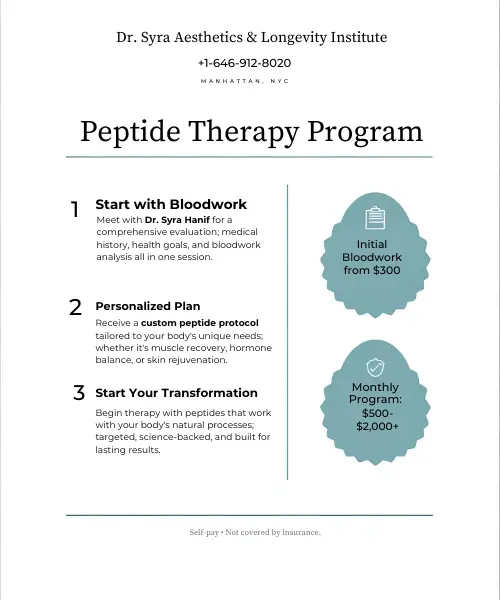
At Dr. Syra Aesthetics & Longevity Institute, peptide therapy to support muscle development, recovery, and metabolic function is provided through a structured, physician-supervised process grounded in medical evaluation and laboratory assessment. Rather than standardized or pre-set protocols, treatment recommendations are determined based on each patient’s training level, recovery capacity, hormone profile, body composition, and overall health status.
Personalized Treatment Plans
Peptide therapy is prescribed only after a comprehensive medical consultation and review of laboratory findings. Your protocol is based on clinical assessment of performance goals, metabolic markers, recovery patterns, and relevant health history. Whether the objective is supporting lean muscle development, improving recovery capacity, or optimizing metabolic function, recommendations are individualized and medically indicated.
Comprehensive Lab Monitoring
Prior to initiating therapy, detailed bloodwork establishes baseline hormone levels and metabolic indicators. Ongoing laboratory monitoring allows for appropriate dose adjustments and ensures therapy remains clinically appropriate over time. This structured oversight supports both safety and measurable progress.
Regulated and Compliant Sourcing
Peptides are obtained exclusively through regulated medical channels and sourced from FDA-registered compounding pharmacies operating in compliance with federal and New York State regulations. Each preparation undergoes quality testing for purity, potency, and sterility standards. This ensures therapy is traceable, dispensed through licensed medical providers, and aligned with established medical guidelines.
Safe and Structured Medical Oversight
All peptide therapies are prescribed with careful attention to safety, appropriate dosing, and long-term health considerations. Follow-up visits are scheduled to assess response, review laboratory markers, and make adjustments when medically necessary. Peptide therapy is initiated only after physician evaluation and may not be appropriate for all individuals. Outcomes vary based on overall health status, lifestyle factors, and adherence to medical guidance.
We serve clients throughout Manhattan, Brooklyn, Queens, the Upper East Side, and Midtown, providing physician-directed peptide therapy services across New York City.
What to Expect During Your Peptide Therapy Consultation
Peptides are short chains of amino acids that function as signaling molecules within the body, influencing specific cellular processes. Because the body naturally produces peptides, therapy involves administering medically appropriate compounds to support or modulate certain physiological pathways under clinical supervision.
Initial Consultation
Your appointment begins with a comprehensive medical consultation and laboratory evaluation. Dr. Syra Hanif reviews your medical history, current symptoms, training regimen, performance goals, hormone levels, and relevant biomarkers to determine whether peptide therapy is clinically appropriate.
Treatment Determination
Based on your evaluation and laboratory findings, a peptide protocol may be prescribed if medically indicated. This may involve a single peptide or a combination approach depending on your goals and health profile. Certain growth hormone–releasing peptides may be considered to support recovery and metabolic function, while other peptides may be recommended in alignment with body composition or wellness objectives. All treatment decisions are based on clinical judgment and ongoing monitoring.
How Much Does Peptide Therapy Cost in NYC?
The specific peptide prescribed
Whether a single-agent or combination protocol is indicated
Dosage requirements and frequency
Method of administration
Ongoing laboratory monitoring and follow-up visits
Because peptide therapy is a physician-directed medical service rather than a standardized product, final cost varies according to individual medical needs and treatment complexity, we recommend starting with a free consultation call at +1-646-912-8020 or visiting us at 492 6th Avenue, New York, NY 10011.
All peptide therapy services are self-pay and not covered by insurance. Fees reflect physician oversight, regulated sourcing, laboratory monitoring, and individualized medical care.
What Are the Benefits of Peptides for Bodybuilding?
The benefits of using peptides for bodybuilding include supporting lean muscle growth, accelerating recovery between workouts, enhancing protein synthesis, optimizing natural growth hormone signaling, and assisting with fat metabolism when combined with structured resistance training. Certain peptides stimulate endogenous growth hormone release, which supports muscle repair, tissue regeneration, and anabolic balance necessary for progressive muscle development.
Beyond muscle hypertrophy, peptides may contribute to improved sleep quality, stronger connective tissue support, enhanced joint resilience, and better overall recovery capacity.
Unlike traditional supplements that provide nutrients alone, peptides act on specific biological signaling pathways that influence hormonal responses. When integrated into a medically guided performance strategy, peptides can support a more structured and targeted approach to bodybuilding rather than relying solely on training intensity and nutrition adjustments.
Who Should and Shouldn’t Consider Peptides?
Below is a structured comparison to help clarify who may consider peptide therapy for muscle growth and who should avoid or delay treatment pending medical evaluation.
| Category | May Consider Peptide Therapy | Should Avoid or Require Medical Clearance |
| Training Status | Individuals consistently engaged in resistance training seeking improved recovery or lean mass support | Sedentary individuals not actively training |
| Muscle Growth Plateau | Those experiencing stalled muscle gains despite structured nutrition and programming | Individuals expecting peptides to replace training or nutrition |
| Recovery Challenges | Athletes with prolonged soreness or delayed recovery between sessions | Individuals with unmanaged chronic medical conditions |
| Age Related Hormone Changes | Adults experiencing reduced recovery capacity or lower growth hormone markers | Pregnant or breastfeeding women |
| Body Composition Goals | Individuals targeting lean mass increase with controlled fat reduction | Individuals with active malignancy or untreated endocrine disorders |
| Injury Recovery | Those seeking connective tissue support alongside rehabilitation | Individuals purchasing unregulated or non prescribed peptide products |
Peptide therapy should always be considered within a medically supervised framework. Proper evaluation helps determine whether peptide use aligns with overall health status, hormone balance, and performance goals before initiating any protocol.
How Long Do Peptides Take to Work?
Peptides begin influencing hormone signaling within days, but noticeable changes in muscle growth, recovery, or body composition generally take about 4 to 8 weeks of consistent use alongside structured resistance training and proper nutrition. Visible lean muscle development often requires several months, as muscle hypertrophy depends on progressive overload, recovery quality, and overall metabolic response rather than peptide use alone.
Peptides For Muscle Growth Before And After
Before starting peptide therapy, realistic expectations are essential, as peptides are not instant muscle building agents but compounds that may support physiological processes involved in muscle repair, growth hormone signaling, and recovery when combined with consistent resistance training and proper nutrition.
In the first few weeks, individuals may notice subtle improvements such as enhanced recovery or reduced post workout soreness, while visible changes in muscle definition and body composition typically require 8 to 12 weeks or longer depending on training intensity, diet, and individual metabolic response.
Fat loss and muscle gain do not occur at identical rates, as reductions in body fat may become measurable earlier through changes in waist circumference or body composition analysis, whereas lean muscle hypertrophy develops gradually with sustained progressive overload and adequate recovery.
Yes, the effects of peptides generally diminish after discontinuation because they stimulate biological processes such as growth hormone release rather than permanently altering muscle tissue. Once use is stopped, hormone levels typically return to baseline, and continued muscle maintenance depends on ongoing training, nutrition, and overall lifestyle.
Are Peptides Safe for Muscle Growth?
Peptides can be safe for muscle growth when prescribed, properly dosed, and medically supervised, but safety depends on the specific peptide, individual health status, and monitoring. Unregulated or improperly sourced peptides carry higher risks, including contamination, incorrect dosing, or unwanted hormonal side effects.
Are Peptides a Steroid?
No, peptides are not steroids. The difference between peptides and steroids are; Peptides are short chains of amino acids that signal the body to stimulate natural hormone production, whereas anabolic steroids are synthetic hormones that directly introduce external androgens into the body and alter endocrine function.

About The Author
Dr. Syra Hanif M.D.
Board Certified Primary Care Physician
Dr. Hanif is the Director of Aesthetic Medicine. She is a board-certified physician in Aesthetic Medicine who specializes in using non-surgical alternatives in order to enhance one's appearance through Botox and fillers.
Read More