


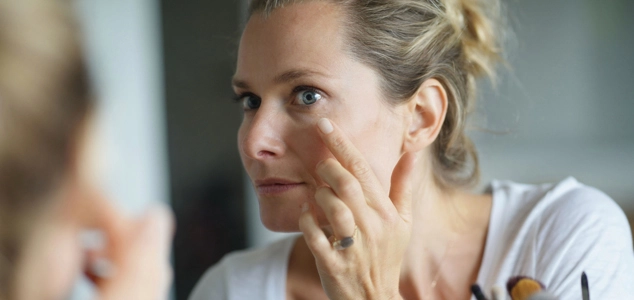
Botox aftercare is simple: avoid rubbing or massaging the injected areas, use gentle pressure around the treatment sites, and give the treatment time to begin working. You do not need to spend the rest of the day afraid to smile, wash your face, or move normally.
Some traditional aftercare rules are also more precautionary than proven. A 2025 multicenter study followed 5,014 patients receiving upper-face botulinum toxin A injections with only a short post-treatment precaution period. The researchers did not find evidence that limiting extended restrictions increased complications or reduced patient satisfaction, although the study was observational and did not compare patients randomly against a stricter aftercare group (Santorelli et al., 2025).
A separate review of common Botox aftercare instructions found that many routinely repeated rules, including avoiding exercise, lying down, bending over, massage, and flying, had little direct published evidence behind them (Patel, 2018).
That does not mean aftercare is unnecessary. It means different precautions have different levels of evidence, and a single minor mistake after treatment does not automatically mean your Botox has been ruined.
Botox Aftercare at a Glance
| After Botox | What to Do |
| Touching your face | Light contact is generally different from rubbing or massage |
| Rubbing or massage | Avoid deliberate rubbing or massage of injected areas |
| Exercise | One dermatology guideline recommends waiting at least 2 hours before strenuous activity |
| Lying down | Follow your injector’s instructions; the traditional 3 to 4-hour upright rule has limited direct evidence |
| Makeup | Apply gently without pressing or rubbing treated areas |
| Washing your face | Wash gently rather than scrubbing |
| Facial massage | Postpone direct massage during the early post-treatment period |
| Normal expressions | Smiling, talking, and normal facial movement are generally acceptable |
| Final results | Do not judge your result immediately; Botox develops over several days |
Professional dermatology guidance specifically advises avoiding rubbing or massage and waiting 2 hours before strenuous physical activity. Other restrictions, particularly longer exercise or positioning rules, vary more between injectors because the supporting evidence is less definitive.
What Should You Do Immediately After Botox?
The first few hours after Botox are mainly about avoiding unnecessary manipulation of the injected muscles rather than avoiding normal life.
- Avoid Rubbing or Massaging the Treated Area
Do not deliberately massage, rub, or repeatedly press the areas that were injected.
Botox Cosmetic is injected directly into selected muscles. FDA prescribing information emphasizes that safe and effective treatment depends on appropriate dose selection, administration technique, and knowledge of the relevant facial anatomy.
A professional dermatology aftercare guideline also advises avoiding rubbing and massage immediately after treatment.
That does not mean every touch is dangerous.
For example, imagine your forehead was treated at 2:00 p.m. At 2:45 p.m., you briefly touch your forehead while moving your hair. That is not mechanically equivalent to spending 5 or 10 minutes firmly massaging the injected muscles.
Light contact and sustained manipulation are different actions.
- Keep Pressure Gentle
You may need to touch your skin to wash your face, apply moisturizer, put on makeup, or adjust your glasses.
The practical goal is not to avoid all contact. It is to avoid forceful or repeated pressure directly over freshly treated areas.
Dermatology guidance allows makeup after treatment but recommends applying it without pressing or rubbing it into the skin.
- Follow the Instructions for Your Specific Treatment
Aftercare can differ depending on:
- the muscles treated
- the number of injection sites
- the dose used
- your facial anatomy
- whether another cosmetic procedure was performed during the same appointment
These details matter because toxin spread is influenced strongly by the treatment itself.
A randomized study examining botulinum toxin diffusion found that higher injection volume at lower concentration produced a larger affected area (Hsu et al., 2004). Other reviews identify injection technique, dose, concentration, injection site, and anatomy as important variables in toxin diffusion.
So your Botox result depends on much more than whether you accidentally bent over once after leaving the clinic.
Botox Aftercare Timeline: First 24 Hours and Beyond
- The First 2 Hours
During the first 2 hours, keep the treated areas relatively undisturbed.
One current dermatology guideline recommends waiting at least 2 hours before strenuous exercise, heavy lifting, or another activity that significantly raises heart rate.
If your appointment finishes at 3:00 p.m., that recommendation would place strenuous exercise after approximately 5:00 p.m. Your own injector may recommend waiting longer depending on the treatment.
You can otherwise perform many normal activities without treating your face as though it cannot be touched.
- The First 2 to 4 Hours
Many patients have heard of the 4-hour Botox rule.
It usually means:
- remain upright
- do not lie flat
- avoid bending over for prolonged periods
Remaining upright for around 3 to 4 hours remains a commonly used clinical precaution.
But the number should not be interpreted as a proven biological threshold.
Patel’s review of post-treatment advice found no published evidence demonstrating that avoiding lying or bending down improves botulinum toxin outcomes. More recent observational evidence has also questioned whether prolonged positioning restrictions are necessary. (Patel, 2018; Santorelli et al., 2025).
If your injector gives you a 4-hour instruction, follow it. But accidentally lying down briefly should not automatically be interpreted as treatment failure.
- The First 24 Hours
During the first day, continue avoiding unnecessary rubbing or massage.
Some injectors also recommend postponing:
- strenuous workouts
- facial massage
- facials
- treatments that place pressure over the injected muscles
Exact waiting periods vary because research has not established one universal 24-hour rule for every post-Botox activity. The 2025 study of 5,014 upper-face patients specifically challenges the assumption that extended restrictions are necessary after every uncomplicated botulinum toxin treatment.
- Days 2 to 4
At this stage, the more relevant question becomes:
“Is my Botox working yet?”
OnabotulinumtoxinA does not produce its full effect immediately.
A clinical study of glabellar-line treatment found that Botox had a rapid onset of approximately 1 to 2 days based on physician and patient assessments (Beer et al., 2011).
FDA prescribing information similarly states that chemical denervation of injected glabellar muscles typically begins 1 to 2 days after treatment and increases in intensity during the first week.
That means being able to raise your eyebrows normally six hours after your appointment is not evidence that the treatment failed.
What Should You Avoid After Botox?
- Avoid Rubbing or Massaging the Injection Areas
Deliberate rubbing and massage are among the most consistently recommended immediate precautions.
The reason is straightforward: Botox is intentionally placed into selected muscles, so vigorously manipulating the same area immediately afterward provides no benefit and may theoretically alter local diffusion. Professional dermatology guidance therefore advises avoiding rubbing and massage.
Interestingly, direct clinical evidence quantifying how much post-treatment massage changes outcomes remains limited. Patel’s review found no published evidence proving that avoiding massage changes treatment results.
That distinction is useful:
Avoid massage as a sensible precaution, but do not assume one accidental touch ruins your Botox.
- Avoid Strenuous Exercise Immediately After Treatment
You do not need to avoid movement altogether.
A professional dermatology guideline advises waiting at least 2 hours before:
- weight training
- running
- intense cycling
- strenuous gym workouts
- heavy lifting
- other activities that substantially increase heart rate
Some injectors use longer periods, including the remainder of the day or approximately 24 hours. Direct evidence demonstrating that a 24-hour restriction produces better cosmetic outcomes than a shorter restriction remains limited.
- Avoid Immediate Facial Massage
A facial that includes firm kneading or massage creates much more mechanical pressure than simply washing your skin.
Waiting until the immediate post-treatment period has passed is therefore reasonable. Some clinical guidance recommends postponing facial massage for at least 24 hours, especially when the treatment involves pressure directly over the injection sites.
Your injector may recommend a different interval depending on what was treated.
- Be Cautious With Alcohol on Treatment Day
Some clinicians recommend skipping alcohol on the day of Botox because bruising may be more noticeable after injections.
This should not be confused with the claim that alcohol has been proven to deactivate Botox or make it migrate. A specific universal alcohol cutoff has not been established in the Botox aftercare studies reviewed above.
If you bruise easily or take medication that affects bleeding, discuss this with your physician rather than changing prescribed medication on your own.
The FDA prescribing information specifically instructs patients to tell their doctor if they take antiplatelet drugs or anticoagulants.
Can You Lie Down or Sleep After Botox?
Many injectors advise staying upright for several hours after Botox, but accidentally lying down does not automatically mean that your treatment has migrated.
The traditional recommendation is commonly 3 to 4 hours upright.
However, the research behind that rule is weaker than the confidence with which it is sometimes repeated.
A published review found no evidence showing that avoiding lying down or bending improves treatment outcomes, while the 2025 study of more than 5,000 upper-face patients found favorable outcomes using only a short precaution protocol.
What Is the 4-Hour Rule After Botox?
The 4-hour rule is best understood as a conservative precaution, not a timer after which Botox suddenly becomes permanently fixed.
If your physician tells you to remain upright for 4 hours, follow that advice because they know:
- where you were injected
- how much was used
- your anatomy
- whether another procedure was performed
But the existing evidence does not support telling patients that lying down at 3 hours and 45 minutes will automatically cause a complication.
Can You Sleep on Your Side After Botox?
There is no established clinical trial showing that one specific sleeping position produces better cosmetic Botox results.
Once the positioning period recommended by your injector has passed, normal sleep is generally the practical goal. Avoid intentionally pressing the freshly treated part of your face firmly into a pillow if it can easily be avoided.
What If You Accidentally Lay Down?
Suppose you receive forehead Botox at 1:00 p.m.
At 2:30 p.m., you forget and lie on your sofa for 20 minutes.
You remember the traditional rule and immediately worry that your Botox has migrated.
Current evidence does not show that this one event automatically ruins your treatment. Resume the aftercare instructions you were given and do not massage the area in an attempt to “fix” it.
Can You Exercise After Botox?
Yes. Exercise does not need to be stopped for days after routine cosmetic Botox, but strenuous activity should not be resumed immediately.
One professional dermatology recommendation uses a minimum waiting period of 2 hours before strenuous physical activity.
Your injector may recommend a longer interval.
Does Exercise Make Botox Migrate?
There is limited clinical evidence showing that normal exercise causes clinically meaningful Botox migration.
A review specifically examining post-treatment recommendations found no published evidence supporting strenuous exercise avoidance as a method of preventing unwanted toxin spread.
Research on toxin diffusion instead identifies variables such as:
- injection volume
- toxin concentration
- dose
- injection technique
- injection site
- local anatomy
as important factors influencing the area affected by botulinum toxin.
So the more accurate advice is:
Follow the short exercise restriction your injector provides, but do not assume that one workout automatically pushes Botox into another muscle.
What If You Work Out Too Soon?
If you accidentally start a workout during your advised waiting period, stop strenuous activity and resume it later.
Do not repeatedly manipulate your face or try to determine the treatment result immediately.
Botox activity develops over several days, so what your forehead looks like immediately after the workout tells you very little about the final outcome. (Beer et al., 2011).
Can You Wash Your Face or Shower After Botox?
Yes. You can wash your face after Botox.
The important issue is how much pressure you use, not whether water touches your skin.
Botox Cosmetic is given by intramuscular injection, meaning the medication is placed into selected muscles rather than sitting on the surface of your skin. Water therefore cannot simply wash the injected medication away.
When washing your face:
- use gentle hand pressure
- avoid aggressive scrubbing
- do not deeply massage the injected muscles
- pat the skin rather than vigorously rubbing it dry
Clinical aftercare guidance similarly permits facial washing while advising patients to avoid rubbing treated areas.
Can You Shower After Botox?
A normal shower is different from prolonged exposure to intense heat combined with aggressive facial rubbing.
There is no strong Botox-specific evidence establishing an exact shower temperature or universal number of hours that every patient must wait after treatment. Follow any heat-related instructions given by your injector rather than assuming that water itself interferes with the injected toxin.
Can You Wear Makeup After Botox?
Yes. Makeup can generally be worn after Botox as long as it is applied gently.
Professional dermatology guidance allows makeup after the procedure while specifically cautioning against pressing or rubbing it into treated areas.
For example, if you have Botox at 12:00 p.m. and dinner at 7:00 p.m., you do not necessarily need to attend dinner without makeup.
Instead of aggressively rubbing foundation across your forehead, apply it with light pressure.
The issue is not the makeup itself. The concern is unnecessary mechanical pressure on recently injected areas.
When Can You Resume Skincare After Botox?
Routine skincare and facial manipulation are not the same thing.
A gentle cleanser or moisturizer involves far less pressure than:
- gua sha
- vigorous facial rolling
- deep manual massage
- aggressive cleansing devices
Because Botox-specific trials have not established universal waiting periods for ingredients such as retinoids or exfoliating acids, it would be inaccurate to claim that every patient must avoid them for exactly 24 or 48 hours to prevent toxin migration.
If your injection sites feel tender or irritated, using a simpler routine until the skin settles may be more comfortable.
What About Gua Sha and Facial Rollers?
These tools involve repeated mechanical manipulation.
For that reason, they should be treated more like facial massage than ordinary skincare. Since rubbing and massage are commonly avoided during the immediate post-treatment period, wait until the interval recommended by your injector before returning to these techniques.
When Can You Get a Facial or Massage After Botox?
A facial can mean very different things.
One may involve gentle cleansing and a mask. Another may include:
- deep facial massage
- mechanical devices
- lymphatic manipulation
- repeated pressure around the forehead and brows
Clinical guidance commonly recommends waiting at least 24 hours before a facial or massage that manipulates the injected area, particularly if bruising or swelling is present.
The actual procedure matters more than the word “facial.”
If your aesthetic treatment involves substantial pressure over the muscles that received Botox, tell the treating professional when the injections were performed.
What Happens If You Accidentally Break a Botox Aftercare Rule?
A minor aftercare mistake does not automatically mean your Botox is ruined.
This is one of the most important points for patients to understand.
In the 2025 multicenter study, 5,014 patients receiving upper-face botulinum toxin treatment followed only a short precaution protocol. Of the patients who returned for follow-up, the researchers reported no increase in complications that would support the routine need for prolonged restrictions. Because the study was retrospective, it cannot prove that every post-treatment activity is risk-free, but it challenges the idea that extensive restrictions are always necessary. (Santorelli et al., 2025).
If You Accidentally Touch Your Forehead
Brief contact is different from massage.
Stop repeatedly touching the area and continue normal aftercare. Do not assume that one touch changed the location of the injection.
If You Bend Over
If you bend down once to pick up your phone, put on your shoes, or grab something from the floor, that does not prove your treatment has migrated.
A review of post-treatment recommendations found no published evidence showing that avoiding bending down improves Botox results.
If You Lie Down Too Soon
Resume the positioning instructions your injector gave you.
Do not massage the area or try to manipulate Botox back into place. Current evidence does not support treating a brief accidental lie-down as predictable treatment failure.
If You Exercise Too Soon
Stop strenuous activity if you are still within your recommended restriction period.
Then allow the Botox to develop normally. There is little direct evidence that one accidental period of exercise causes toxin migration, although professional recommendations still advise a short waiting period after injections.
Can Botox Migrate After Treatment?
Botulinum toxin can affect nearby muscles, but “Botox migration” is often used too broadly online.
Botox Cosmetic works as an acetylcholine-release inhibitor and neuromuscular-blocking agent. It temporarily reduces communication between nerves and selected muscles, decreasing the muscle activity responsible for certain dynamic wrinkles.
If toxin activity extends far enough into an unintended neighboring muscle, an unwanted muscular effect can occur.
However, this is influenced significantly by how the treatment is performed.
FDA prescribing information states that safe Botox Cosmetic use requires:
- correct dose selection
- proper administration
- knowledge of neuromuscular anatomy
Research also shows that injection volume can affect diffusion. In a prospective randomized study, injections using larger volume at lower concentration produced a wider area of effect.
What Factors Affect Botox Spread?
Relevant treatment factors include:
Dose → amount of active toxin delivered
Volume → area through which the injected solution can distribute
Injection location → which muscles receive the effect
Injection technique → precision of placement
Anatomy → location, size, and depth of the target muscles
Research on facial anatomy emphasizes that understanding the position and depth of individual muscles is essential to accurate aesthetic botulinum toxin treatment.
This is why the expertise of the injector matters considerably.
At Dr. Syra Aesthetics & Longevity Institute, Botox treatments are performed by Dr. Syra Hanif, a board-certified physician, with treatment individualized to facial anatomy and aesthetic goals.
Botox Aftercare Myths vs What Research Shows
Myth: You Cannot Touch Your Face After Botox
You do not need to avoid all facial contact.
Professional guidance distinguishes rubbing and massage from necessary light contact. Makeup, for example, can be applied as long as it is not aggressively rubbed into treated areas.
Myth: Lying Down Once Will Ruin Botox
There is no good evidence showing that briefly lying down automatically ruins cosmetic Botox.
Remaining upright for several hours is still commonly recommended, but a published review found no evidence supporting lying-down restrictions, and newer observational data have questioned the need for prolonged precautions.
Myth: Exercise Definitely Makes Botox Migrate
This has not been demonstrated convincingly in clinical research.
A short exercise restriction remains reasonable and is included in dermatology guidance, but direct evidence linking exercise with clinically meaningful toxin migration is limited.
Myth: You Must Make Facial Expressions for Botox to Work
Facial movement has actually been studied.
A randomized crossover study involving 22 women with forehead and glabellar wrinkles found that facial exercises following botulinum toxin injections appeared to speed the early onset of visible improvement by roughly 1 day. However, by 2 weeks, outcomes were similar whether participants performed the exercises or not (Alam et al., 2019).
So normal facial expressions are fine, but deliberate facial exercises are not required for Botox to work.
What Side Effects Are Normal After Botox?
Mild temporary effects can occur after injections.
Possible post-treatment effects include:
- injection-site discomfort
- mild swelling
- bruising
- headache
- temporary weakness in an unintended nearby muscle
FDA clinical trial data provide useful context because the rates differ depending on the treatment area.
Headache
In clinical trials involving forehead lines, headache occurred in 9% of Botox Cosmetic-treated patients compared with 5% receiving placebo.
Eyelid or Brow Drooping
The FDA prescribing information reports:
- eyelid ptosis: 3% in glabellar-line trials
- brow ptosis: 2% in forehead-line trials
- eyelid edema: 1% in lateral canthal-line trials
These rates come from specific controlled trials and should not be interpreted as the exact risk for every treatment area, dose, or patient.
When Should You Contact Your Botox Provider?
Contact your injector if you develop:
- eyelid or eyebrow drooping
- unexpected weakness around the treatment area
- significant asymmetry
- symptoms that are worsening rather than settling
- persistent eye symptoms
- a treatment response that concerns you after it has had time to develop
Eyelid ptosis, brow ptosis, facial weakness, and eye-related effects are recognized adverse reactions in FDA Botox Cosmetic prescribing information.
Do not judge final symmetry immediately after your appointment. Botox begins taking effect over the first several days, and FDA prescribing information states that the effect intensifies during the first week.
When Should You Seek Urgent Medical Care?
Seek immediate medical attention if you develop difficulty breathing, swallowing, or speaking after Botox.
BOTOX Cosmetic carries an FDA boxed warning because botulinum toxin effects can, in some circumstances, spread beyond the injection site. Symptoms have been reported hours to weeks after injection and can include swallowing or breathing difficulty.
Urgent symptoms may include:
- trouble breathing
- trouble swallowing
- difficulty speaking
- generalized muscle weakness
- double or blurred vision
- significant eyelid drooping associated with other neurologic symptoms
The FDA specifically instructs patients to seek immediate medical attention if respiratory, speech, or swallowing difficulties occur.
These warning symptoms are very different from mild localized swelling or tenderness at an injection site.
When Does Botox Start Working?
Botox usually starts producing visible changes within the first several days rather than immediately after treatment.
FDA prescribing information states that treatment of glabellar muscles typically begins producing chemical denervation within 1 to 2 days, with the effect becoming stronger during the first week.
Beer and colleagues similarly reported a 1 to 2-day onset following onabotulinumtoxinA treatment of moderate-to-severe glabellar lines. (Beer et al., 2011).
When Should You Judge Your Results?
Do not judge the treatment based on how your face moves:
- 30 minutes after treatment
- that evening
- the following morning
Early changes develop progressively.
FDA glabellar-line trials showed 82% of treated subjects reporting at least moderate improvement by day 7, compared with 9% receiving placebo.
For glabellar lines, the FDA labeling reports that the treatment effect lasts approximately 3 to 4 months, although individual treatment response can vary.
If you want to see examples of how Botox results can vary by area and patient, Syra Aesthetics also provides Botox before-and-after photos.
Frequently Asked Questions About Botox Aftercare
Can You Bend Over After Botox?
Briefly bending over does not mean your Botox has automatically migrated. A review of post-treatment recommendations found no published evidence supporting avoidance of bending down as necessary for better Botox outcomes. Follow your own injector’s instructions if they recommend a temporary restriction.
Can You Wear a Hat After Botox?
There is no established Botox-specific clinical study defining a universal waiting period for hats. If the hat fits tightly over a freshly treated forehead, avoiding prolonged pressure during the early post-treatment period is a reasonable precaution.
Can You Fly After Botox?
Research reviewing post-treatment advice found no published evidence supporting a requirement to avoid flying for 24 hours after botulinum toxin injections. Your travel plans may still need to account for another treatment performed at the same appointment or your individual medical circumstances.
Can You Smile or Frown After Botox?
Yes. Normal facial expressions are fine after Botox. A small randomized study even found that deliberate facial exercises could produce an earlier visible response, although results were no different by 2 weeks. Normal smiling and frowning therefore do not need to be avoided or deliberately repeated as part of routine aftercare.
What Is the Most Important Botox Aftercare Rule?
Avoid unnecessary rubbing or massage of freshly treated areas and follow the specific instructions provided by your injector.
The larger picture is equally important: Botox outcomes depend substantially on dose, injection location, volume, technique, and facial anatomy, so patients should not assume that one ordinary movement after treatment determines the entire result.

Written & Medically Reviewed by
Dr. Syra Hanif, M.D.
Board-Certified Primary Care Physician
Dr. Syra Hanif, M.D., is a board-certified physician specializing in aesthetic medicine, longevity, and preventative wellness. As Medical Director of Dr. Syra Aesthetics & Longevity Institute in NYC, she focuses on aesthetics, healthy aging, and overall wellness.
Read More