




Many individuals struggle with weight loss despite consistent efforts with diet and exercise. In these cases, medically supervised, non-surgical weight loss can provide a more structured and effective approach.
At Dr. Syra Aesthetics & Longevity Institute, non-surgical weight loss programs are designed to address the underlying causes of weight gain through personalized, medically guided treatment plans focused on long-term results.
Non-surgical options include medications, minimally invasive procedures, and structured lifestyle programs, each offering a different pathway to improving weight and metabolic health. A consultation can help determine which treatment approach is most appropriate based on your individual goals, health profile, and timeline.
How to Choose the Right Approach
Not all weight loss treatments serve the same purpose, and the most suitable option depends on factors such as your current weight, metabolic health, and desired outcomes.
- Some patients benefit from gradual, medication-based approaches
- Others may require more structured or procedural options
- In many cases, combining treatments provides the most effective long-term results
Because of these differences, most patients benefit from a personalized evaluation rather than selecting a treatment on their own.
What is non-surgical weight loss?
Non-surgical weight loss refers to medically supervised methods that reduce body weight without surgical intervention. It includes prescription medications, endoscopic procedures, and structured lifestyle programs delivered by trained clinicians. In NYC, this approach often centers on obesity medicine and metabolic care, focusing on gradual fat reduction, improved health markers, and sustained weight management without operative risks.
At Dr. Syra Aesthetics & Longevity Institute, non-surgical weight loss programs are designed to focus on long-term metabolic health, combining medical expertise with individualized treatment plans tailored to each patient.
Non-surgical weight loss works by targeting appetite regulation, gastric volume, and metabolic pathways. GLP-1 and GIP-based medications reduce hunger signals and slow gastric emptying, leading to lower caloric intake. In the STEP 1 trial, semaglutide produces an average weight reduction of 14.9% over 68 weeks compared to 2.4% with placebo, indicating significant clinical impact on body weight regulation.
This approach allows patients to achieve gradual, sustainable results under medical supervision, ensuring both safety and long-term effectiveness.
How Non-Surgical Weight Loss Treatments Work?
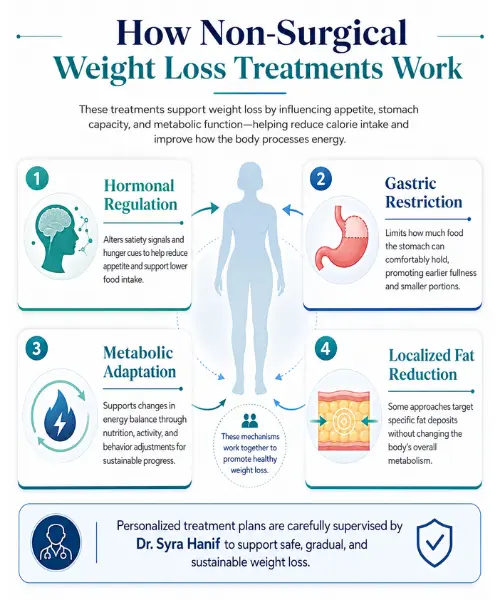
Non-surgical weight loss treatments work by influencing hormonal signaling, gastric capacity, and metabolic regulation to reduce overall energy intake and improve how the body processes calories. These mechanisms target the physiological drivers of weight gain rather than relying only on willpower or short-term dietary restriction.
Hormonal regulation affects appetite control by altering satiety signals and hunger cues, which leads to reduced food intake. Gastric restriction limits the volume of food the stomach can hold, promoting early fullness and smaller portions. Metabolic adaptation supports changes in energy balance through adjustments in nutrition, activity levels, and behavioral patterns. Some approaches also target localized fat deposits without affecting systemic metabolism.
Under the supervision of Dr. Syra Hanif, these mechanisms are carefully integrated into personalized treatment strategies to ensure safe, gradual, and sustainable weight loss.
What are the best non-surgical weight loss options in NYC?
The best non-surgical weight loss options are GLP-1 medications, endoscopic procedures, lifestyle-based programs, and non-invasive body contouring treatments. GLP-1 medications such as semaglutide and tirzepatide target appetite and metabolic pathways. Endoscopic sleeve gastroplasty offers structural restriction without surgery. Medically supervised lifestyle programs combine diet, exercise, and behavioral support. Body contouring methods reduce localized fat but do not treat obesity or produce systemic weight loss.
Each of these options serves a different role in weight management. At Dr. Syra Aesthetics, treatment plans are carefully tailored based on your metabolic profile, weight loss goals, and preference for medical or procedural approaches.
| Treatment | Mechanism | Avg Weight Loss | Timeframe | Best For |
| GLP-1 / Weight Loss Injections | Hormonal (appetite + gastric delay) | ~10%–20% total body weight | 3–12+ months | Individuals with BMI ≥27–30 seeking systemic weight loss without procedures |
| Endoscopic Procedures (ESG, Balloon) | Mechanical (stomach restriction) | ~10%–15% total body weight | 3–6 months initial | Patients wanting stronger results than medication without surgery |
| Lifestyle Programs | Metabolic + behavioral | ~5%–10% total body weight | 6–12 months | Early-stage weight loss or foundation for other treatments |
| Body Fat Reduction (CoolSculpting etc.) | Fat cell destruction (localized) | ~20%–25% fat per treated area | 1–3 months per session | Individuals near goal weight targeting specific fat areas |
Rather than relying on a single method, many patients benefit from a combination of treatments designed to improve both short-term results and long-term sustainability.
Weight Loss Medications (GLP-1 Based)
GLP-1 medications are pharmacological treatments that regulate appetite and metabolic signaling to reduce caloric intake and body weight. These agents act on incretin hormones, enhancing satiety and delaying gastric emptying, which leads to reduced hunger and lower energy consumption.
For many patients seeking a non-invasive, medically supervised approach, GLP-1 therapies are often considered a first-line option due to their effectiveness and flexibility.
Weight Loss Medications are administered as subcutaneous injections, on a weekly basis (e.g., semaglutide, tirzepatide). Treatment is continuous and requires clinical monitoring for dose adjustment and side effects. In terms of performance, GLP-1 and GIP therapies are among the most effective non-surgical options, producing average weight loss between 10% and 20% of total body weight, depending on the compound and adherence. They are more effective than lifestyle programs alone but comparable or slightly lower than surgical outcomes.
Patients can expect gradual and sustained weight reduction, along with improvements in blood glucose and metabolic markers. Results vary based on baseline BMI, adherence, and concurrent lifestyle changes. Initial effects begin within weeks, with significant weight loss observed over 3 to 6 months and peak results around 12 to 18 months. Long-term use is often required to maintain results.
Costs of weight loss medications are monthly, ranging from $800 to $1,500 without insurance, depending on the medication and provider. Insurance coverage varies widely and often requires prior authorization. Ideal candidates include individuals with BMI ≥30, or ≥27 with comorbidities such as diabetes or hypertension. The most appropriate treatment depends on how much weight needs to be lost, how quickly results are desired, and whether a non-invasive or procedural approach is preferred.
What are the weight loss medication eligibility criteria?
Weight loss medication eligibility criteria is having a body mass index (BMI) of 30 or higher, or a BMI of 27 or higher with at least one weight-related health condition such as type 2 diabetes, hypertension, or high cholesterol, along with a history of unsuccessful weight loss through lifestyle changes like diet and exercise, being of appropriate age (generally 18 years or older, or in some cases 12 years and older under medical supervision), not having medical contraindications such as pregnancy or certain serious health conditions, and being able to undergo medical evaluation and ongoing monitoring.
Which injection is best suited to my goals?
The most appropriate injection depends on factors such as your weight loss goals, medical history, and how your body responds to treatment. Options like semaglutide or tirzepatide are commonly used, but a clinician will determine which is most suitable based on your individual profile.
How soon might I begin to notice changes?
Some individuals begin to notice reduced appetite and early weight changes within the first few weeks. More visible and sustained results typically develop over a few months, with continued improvement over time when treatment is maintained.
Are weight loss medications better than procedures?
Weight loss medications are not universally better than procedures; they are better suited for individuals seeking gradual, non-invasive treatment, while procedures like ESG offer stronger and faster results. The choice depends on desired effectiveness, tolerance for intervention, and long-term commitment.
Endoscopic Weight Loss Procedures
Endoscopic weight loss procedures are minimally invasive interventions that reduce stomach volume using internal suturing techniques without external incisions. Endoscopic Weight Loss Procedures create mechanical restriction to limit food intake and promote early satiety. The most common method, Endoscopic Sleeve Gastroplasty (ESG), is performed through the mouth using an endoscope under sedation or general anesthesia. Sutures are placed inside the stomach to reduce its size without surgical removal of tissue.
ESG results in 10% to 20% total body weight loss, making it more effective than lifestyle programs alone and comparable to high-end pharmacological treatments. It offers stronger restriction than medications but less than surgical sleeve gastrectomy.
Is ESG safer than bariatric surgery?
ESG is safer than bariatric surgery because it is less invasive and does not involve surgical incisions, but it still carries procedural risks. Surgery, while more invasive, may be more appropriate for severe obesity due to its higher effectiveness.
Medically Supervised Lifestyle Programs
Medically supervised lifestyle programs are structured interventions that combine nutrition, physical activity, and behavioral therapy under clinical guidance to achieve weight reduction. These programs target energy balance and long-term habit formation rather than anatomical or pharmacological changes.
These weight loss programs nyc form the foundation of all effective weight loss strategies and are often combined with medical treatments to enhance long-term success.
These programs involve regular consultations with healthcare providers, dietitians, and coaches. They may include meal planning, exercise prescriptions, and behavioral counseling, often supported by ongoing monitoring and adjustments.
Performance is lower compared to medications and procedures, with average weight loss ranging from 5% to 10% of total body weight. However, they form the foundation of all weight loss strategies and enhance outcomes when combined with other treatments.
Patients can expect gradual weight loss and improvement in lifestyle habits. Results depend heavily on consistency, adherence, and program intensity. Weight loss begins within weeks, but meaningful results require several months of sustained effort. Long-term success depends on continued adherence and behavioral reinforcement.
Costs vary widely, from $100 to $500 per month, depending on program structure and provider involvement. Some programs may be partially covered by insurance. The most appropriate treatment depends on how much weight needs to be lost, how quickly results are desired, and whether a non-invasive or procedural approach is preferred.
Non-Invasive Body Fat Reduction Treatments
Non-invasive body fat reduction treatments are device-based procedures that target and reduce localized fat deposits without affecting overall body weight or metabolism. Non-Invasive Body Fat Reduction Treatments use technologies such as cryolipolysis, laser, or radiofrequency to destroy fat cells.
Non-Invasive Body Fat Reduction Treatments are performed in outpatient settings using external devices applied to specific areas of the body. Sessions last 30 to 60 minutes and may require multiple visits for optimal results.
Performance is limited to localized fat reduction, with fat layer reduction of 15% to 25% per treated area. Non-Invasive Body Fat Reduction Treatments do not produce significant total body weight loss and are not suitable for obesity management.
Patients can expect contour improvement in targeted areas rather than systemic weight reduction. Results vary based on the treatment area and number of sessions.
Changes begin to appear within a few weeks, with full results visible over 2 to 3 months. Maintenance may require additional sessions. Costs are per session, ranging from $600 to $1,500 per area. Multiple sessions increase total cost.
What is the safest non-surgical weight loss option?
The safest option depends on individual health status, but medically supervised treatments such as GLP-1 medications and structured lifestyle programs are considered low-risk when properly monitored. Safety varies by patient profile, so clinical evaluation is essential before starting any treatment.
Safety varies by individual, which is why a thorough medical evaluation is essential to determine the most appropriate and low-risk treatment approach.
Can you combine treatments?
Yes, treatments can be combined to improve outcomes, such as using medications alongside lifestyle programs or after procedures like ESG. Combination approaches are often more effective because they address both physiological and behavioral factors.
What are the benefits of non surgical weight loss?
Non-surgical weight loss offers a lower-risk, flexible approach to reducing body weight without undergoing surgery. It provides multiple clinical and practical advantages that support gradual, medically guided weight reduction while allowing adjustments based on individual response and long-term goals.
- Lower risk profile compared to surgical interventions, with no major incisions or permanent anatomical changes
- Reduced recovery time, allowing faster return to daily activities
- Flexible treatment options, including medications, procedures, and structured programs
- Personalized care plans that can be adjusted based on progress and response
- Systemic health improvements, such as better blood glucose control and reduced cardiovascular risk
- Gradual and controlled weight loss, which supports safer physiological adaptation
- Non-permanent approach, allowing modification or discontinuation when needed
- Supports long-term behavior change, including dietary habits and physical activity
- Can be combined with other treatments to enhance effectiveness
- Accessible without surgery, making it suitable for individuals not eligible or not ready for surgical options
When guided by an experienced provider, these benefits are maximized through personalized planning and ongoing monitoring.
Who is a good candidate for non-surgical weight loss?
Who should skip non-surgical weight loss options?
Non-surgical weight loss is not appropriate in certain clinical and practical situations where the expected outcomes or requirements do not align with the treatment approach.
- Individuals with very high BMI (≥40 or ≥35 with comorbidities) who require rapid or substantial weight reduction
- Patients needing immediate results, as non-surgical methods provide gradual weight loss over time
- Individuals with medical contraindications, based on health history, metabolic conditions, or risk factors
- Cases where metabolic response is limited, reducing effectiveness of gradual interventions
These factors highlight that non-surgical weight loss is not universally suitable and depends on clinical profile, treatment goals, and ability to maintain long-term commitment. These considerations highlight the importance of individualized evaluation before beginning any treatment plan.
Which Non-Surgical Weight Loss Option Is Right for You?
Choosing the right non-surgical weight loss option depends on clinical factors such as BMI, health conditions, and the level of weight reduction required, along with personal preferences for treatment type and timeline. Each category of medications, procedures, lifestyle programs, and body contouring serves a different role and should be matched to the individual’s metabolic profile and goals.
| Treatment Option | Best Suited For |
| GLP-1 / GIP-Based Medications | Individuals with mild to moderate weight loss goals or metabolic conditions such as type 2 diabetes |
| Endoscopic Procedures (e.g., ESG) | Individuals with higher BMI or those requiring more significant weight loss without surgery |
| Medically Supervised Lifestyle Programs | Individuals seeking gradual, structured change or in early stages of weight management |
| Non-Invasive Body Contouring | Individuals near their target weight seeking reduction in localized fat areas |
Medications offer ease of use and flexibility but require long-term adherence, ESG provides stronger results with a one-time intervention, lifestyle programs demand consistent behavioral effort, and body contouring focuses only on appearance. The most suitable option depends on balancing effectiveness, commitment level, and desired outcomes.
Each treatment option serves a different role, and the most effective approach depends on individual factors such as BMI, health conditions, and treatment goals.
Some individuals may benefit from medication-based approaches, while others may require procedural options or a combination of treatments for optimal results.
Because responses to treatment vary, a personalized evaluation is essential to determine the safest and most effective strategy. A consultation with Dr. Syra Hanif provides a comprehensive evaluation to determine the safest and most effective treatment strategy based on your individual needs.
How to Choose the Right Non-Surgical Weight Loss Clinic in NYC?
To choose the right non-surgical weight loss clinic in NYC, evaluate factors such as medical expertise, treatment options, personalization, safety protocols, pricing transparency, and long-term support. A qualified clinic operates under medical supervision, uses evidence-based approaches, and tailors treatment plans to an individual’s health profile rather than offering standardized solutions.
- Check medical credentials and experience in weight management and metabolic care
- Look for multiple treatment options, not a single-service approach
- Evaluate personalization, including assessment of BMI, health conditions, and goals
- Ensure pricing transparency, with clear breakdown of costs and no hidden fees
- Confirm ongoing support, including follow-ups, monitoring, and adjustments
- Avoid red flags, such as guaranteed results, lack of medical evaluation, or generic treatment plans
Choosing the right clinic involves prioritizing clinical quality, individualized care, and structured support over convenience. A consultation with Dr. Syra Hanif provides a comprehensive evaluation to determine the most appropriate and effective treatment strategy based on individual needs.
What to Expect During Non-Surgical Weight Loss Treatment At Dr. Syra Aesthetics & Longevity Institute?
Step 1 – Initial Consultation & Evaluation
Dr. Syra Hanif begins with a detailed weight loss consultation where BMI, medical history, metabolic health, and lifestyle patterns are assessed. This medical evaluation determines the most appropriate treatment approach rather than applying a standard plan.
How quickly can I begin treatment after evaluation?
In many cases, treatment can begin shortly after the consultation, once eligibility is confirmed and a plan is established. Timing may vary depending on the chosen approach and any necessary preliminary assessments.
Step 2- Treatment Process by Option
The treatment process varies depending on the selected approach. Medication-based plans involve weekly dosing with gradual adjustments based on response. Procedural options like ESG follow a defined pathway, including preparation, recovery, and dietary progression. Lifestyle-based care includes structured nutrition, activity planning, and behavioral support. Each approach is designed to deliver controlled, progressive results rather than rapid or unsupervised changes.
Will my treatment plan change over time?
Yes, treatment is typically adjusted based on your progress, tolerance, and goals. This may include dose adjustments, adding supportive therapies, or transitioning to a maintenance plan once target results are achieved.
Step 3 – Follow-Up and Monitoring
Ongoing monitoring plays a central role in treatment success. Regular or weekly follow-ups allow for tracking progress, adjusting protocols, and addressing plateaus or side effects. Under experienced supervision, treatment evolves over time to maintain results and reduce the risk of weight regain
How often will I need follow-up visits?
Follow-ups are commonly scheduled every few weeks at the beginning, then spaced out as your treatment stabilizes. The exact frequency depends on your response and the type of program you are enrolled in.
What are the Risks, Side Effects & Limitations of non surgical weight loss?
Non-surgical weight loss treatments are generally considered safe when performed under proper medical supervision, but like any medical approach, they carry potential risks, side effects, and limitations that should be understood in advance.
Side effects vary depending on the treatment type:
- GLP-1 medications may cause nausea, gastrointestinal discomfort, or changes in appetite, particularly during the initial adjustment phase
- Endoscopic procedures (ESG) may involve temporary discomfort, nausea, or procedural risks associated with sedation
- Lifestyle programs carry minimal medical risk but require consistent adherence for effectiveness
- Body contouring treatments may result in temporary swelling, redness, or mild discomfort in treated areas
In addition to side effects, there are important limitations to consider:
- Results are gradual rather than immediate, requiring time and consistency
- Long-term success depends on adherence to treatment and lifestyle changes
- Some treatments require ongoing maintenance or follow-up care
- Not all patients respond equally due to differences in metabolism and health status
Because risks and outcomes vary between individuals, a medical evaluation is essential to determine which approach is both safe and appropriate.
How Much Weight Can You Lose with Non-Surgical Weight Loss?
Expected weight loss in non-surgical treatments refers to the average percentage of total body weight reduced over a defined period under clinical guidance. Results vary significantly depending on the treatment type, baseline BMI, adherence, and metabolic factors, so outcomes should be interpreted as ranges rather than fixed values.
| Treatment Option | Average Weight Loss | Timeframe | Notes |
| GLP-1 Medications | ~10% – 20% total body weight | 6 – 18 months | Highest non-surgical weight loss; results are gradual and depend on adherence and metabolic response |
| Endoscopic Procedures (e.g., ESG) | ~10% – 15% total body weight | 6 – 12 months | Faster initial reduction due to mechanical restriction |
| Medically Supervised Lifestyle Programs | ~5% – 10% total body weight | 6 – 12 months | Outcomes depend heavily on consistency and adherence |
| Body Contouring Treatments | No significant total weight loss | 1 – 3 months per session | May reduce fat thickness by ~15% – 25% per treated area; does not affect overall body weight or metabolism |
Outcomes depend on multiple factors, including treatment adherence, baseline weight, metabolic response, and whether interventions are combined. Variability is expected, and no treatment guarantees a specific amount of weight loss. Results vary significantly between individuals, and realistic expectations are best established during a medical consultation.
How long do non surgical weight loss result last?
Results last as long as the treatment and supporting lifestyle changes are maintained. Without continued adherence or follow-up care, weight regain can occur, especially after stopping medications or reducing behavioral support.
Are All “Non-Surgical Weight Loss” Treatments the Same?
No, non-surgical weight loss treatments are not the same. It differs in mechanism, purpose, and outcome. Some treatments target systemic weight reduction and metabolic health, while others focus only on localized fat or appearance. This distinction is essential because similar labels can represent fundamentally different interventions.
Non-surgical options include both medical obesity treatments and cosmetic procedures, but they operate on separate pathways. GLP-1 medications and ESG influence appetite, metabolism, or stomach capacity to produce measurable weight loss, whereas body contouring treatments act locally on fat tissue without affecting overall body weight or metabolic function.
Understanding these differences is critical when selecting the right treatment, as each option addresses different aspects of weight and body composition.
Weight Loss vs Fat Loss vs Body Contouring
Weight loss refers to a reduction in total body weight, which includes fat mass, water weight, and in some cases lean mass. Fat loss specifically targets a decrease in body fat percentage while preserving lean tissue. Body contouring refers to localized fat reduction or reshaping of specific areas without meaningful change in total body weight.
Medical Obesity Treatment vs Cosmetic Procedures
Medical obesity treatments are clinically supervised interventions designed to reduce body weight and improve metabolic health. These include GLP-1 medications, GIP-based therapies, and endoscopic procedures such as ESG, which target systemic processes like appetite regulation and gastric capacity.
Cosmetic procedures, such as non-invasive body contouring, focus on aesthetic improvement rather than treating obesity. These treatments target localized fat deposits using device-based methods and are performed in aesthetic clinics rather than medical weight management programs.
Does insurance cover non-surgical weight loss in NYC?
Insurance coverage varies depending on the treatment and plan, with medications sometimes partially covered while procedures like ESG and body contouring are usually out-of-pocket. Coverage often requires medical eligibility and prior authorization.

Written & Medically Reviewed by
Dr. Syra Hanif, M.D.
Board-Certified Primary Care Physician
Dr. Syra Hanif, M.D., is a board-certified physician specializing in aesthetic medicine, longevity, and preventative wellness. As Medical Director of Dr. Syra Aesthetics & Longevity Institute in NYC, she focuses on aesthetics, healthy aging, and overall wellness.
Read More