


Global interest in Botox has nearly doubled since 2016, driven by preventative use, younger demographics, and expanding access worldwide.
Interest in cosmetic treatments continues to expand worldwide, but few procedures have seen growth as consistent as Botox. To better understand how global demand has evolved, we analyzed Botox search data across 38 countries over an eight-year period, from 2016 to 2024.
Because Botox procedures are not uniformly reported across countries, search behavior offers a reliable way to measure public interest, awareness, and intent at scale. The results show a clear long-term trend: global Botox search demand has nearly doubled.
Methodology
This analysis examines year-over-year Botox-related search demand across 38 countries between 2016 and 2024 using data from Ahrefs. Annual search volumes were aggregated using localized equivalents of the term “Botox,” accounting for language and regional variations where applicable.
Search demand was used as a proxy for public interest because global reporting of Botox procedure volumes is inconsistent or unavailable in many countries. Search behavior reflects awareness, intent, and repeated consideration, making it a useful indicator for comparing trends across markets.
Growth rates represent average annual change calculated year over year, and projections to 2030 are directional estimates based on historical search trends rather than precise forecasts.
Ahrefs aggregates search volume data from multiple search engines and countries, enabling consistent cross-market comparisons over time.
Key Takeaways
- Global Botox search demand increased from approximately 2.91 million searches in 2016 to 5.78 million in 2024
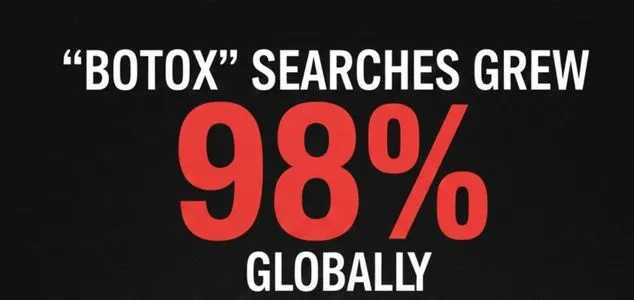
- Total global growth equals a 98% increase over eight years
- The fastest growth occurred in Asia and Eastern Europe, not in traditionally dominant Western markets
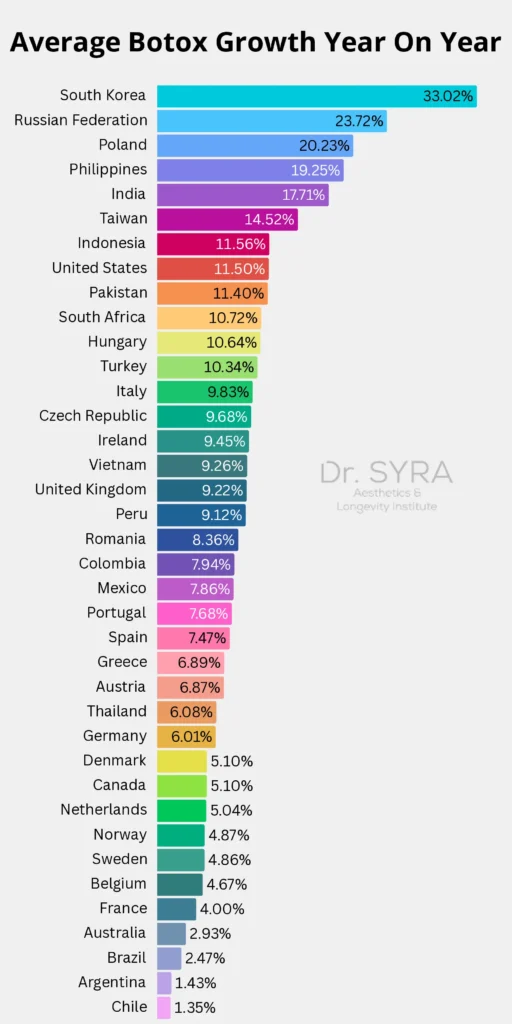
- South Korea recorded the highest average annual growth rate at 33.02%
- The United States ranked 8th globally, reflecting continued expansion despite market maturity
- No country showed a sustained long-term decline in Botox search demand
Expert Insights and Testimonials Of Dr. Syra Aesthetics & Longevity Institute

Key Findings
Botox Demand Has Surged By 98% Globally Since 2016
Aggregated Botox-related search volume across 38 countries increased from approximately 2.91 million searches in 2016 to 5.78 million searches in 2024. This represents a 98% increase globally, adding roughly 2.87 million additional annual searches over the eight-year period.
This growth substantially exceeds population growth over the same timeframe, indicating that rising interest is driven by increased per-capita engagement rather than demographic expansion alone. The absence of long-term decline in any country suggests that global Botox interest reflects sustained behavioral change rather than temporary trends.
Regional Trends
- Asia shows the strongest concentration of high-growth markets, led by South Korea (33.02%), Philippines (19.25%), India (17.71%), Taiwan (14.52%), and Indonesia (11.56%), indicating that multiple Asian countries are experiencing double-digit annual growth in Botox search demand.
- Eastern and Central Europe demonstrate rapid expansion, with Russian Federation (23.72%), Poland (20.23%), Hungary (10.64%), and Czech Republic (9.68%) all posting strong year-over-year increases, suggesting rising awareness and adoption across the region.
- North America reflects mature-market growth, with the United States ranking 8th globally at 11.50% average annual growth. While slower than emerging markets, this still represents sustained double-digit expansion on top of an already high baseline level of interest.
- Emerging markets outside Asia and Europe also show notable growth, including Pakistan (11.40%) and South Africa (10.72%), reinforcing that rising Botox interest is not limited to one geographic region.
Countries With the Highest Increase in Search Demand Since 2016
South Korea
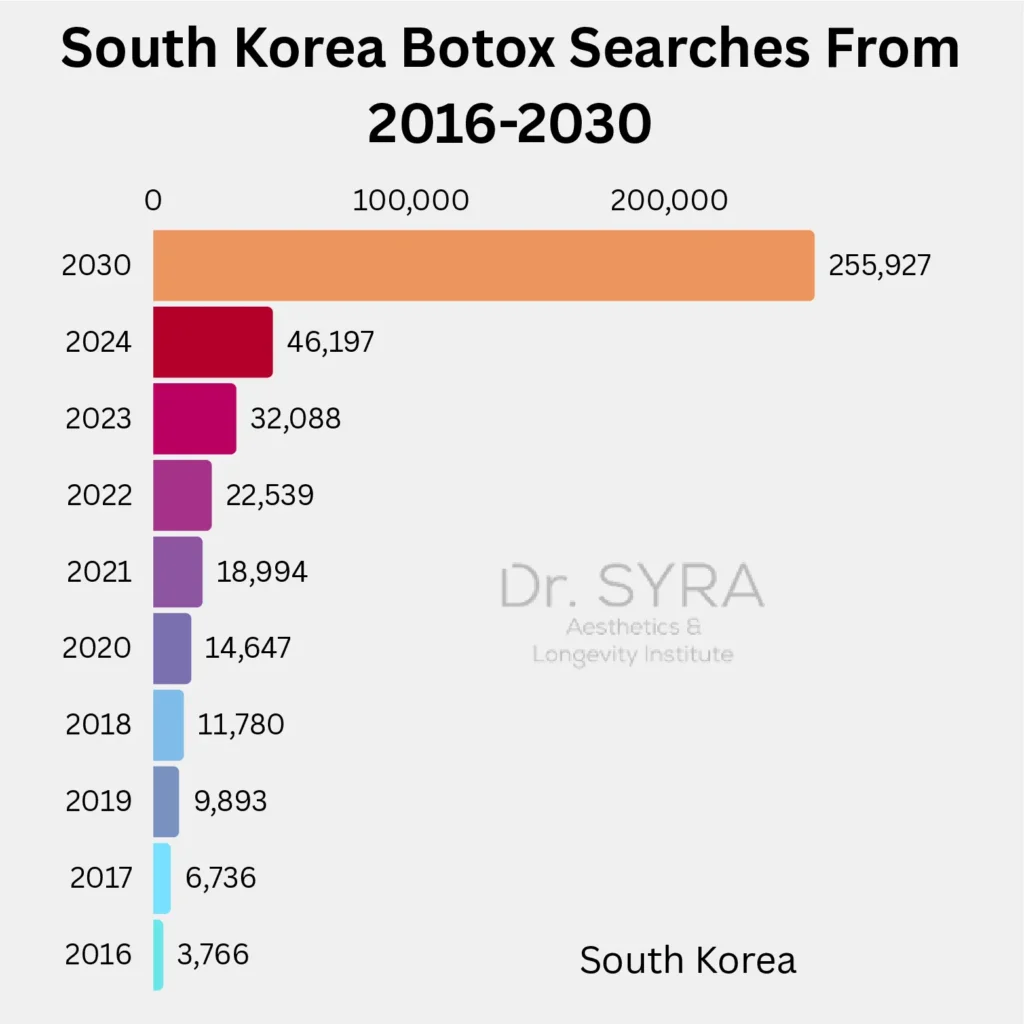
South Korea recorded the highest increase in Botox search demand among all 38 countries, with an average annual growth rate of 33.02%. Annual searches increased from 3,766 in 2016 to 46,197 in 2024, representing more than a twelvefold increase.
This growth reflects South Korea’s deeply embedded beauty culture, high provider density, and early adoption of cosmetic innovation. The country frequently acts as an early indicator of broader global aesthetic trends. Based on historical growth, annual search demand is projected to reach approximately 255,927 by 2030.
Russian Federation
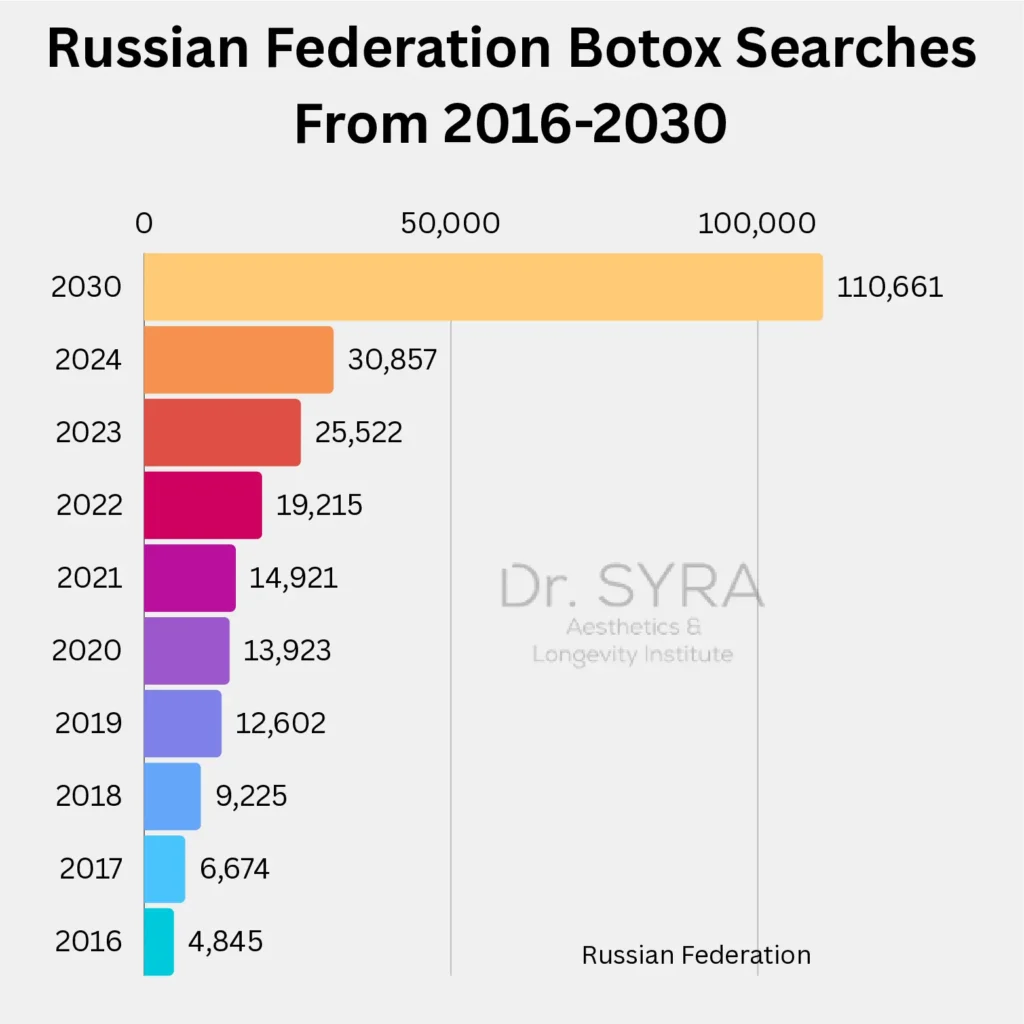
The Russian Federation ranks second, with an average annual growth rate of 23.72%. Search volume increased from 4,845 searches in 2016 to 30,857 in 2024. Growth is largely driven by urban centers where access to aesthetic clinics and digital beauty content is highest.
Despite economic volatility, sustained search growth suggests Botox research has become normalized rather than discretionary. By 2030, annual Botox searches are projected to reach approximately 110,661.
Poland
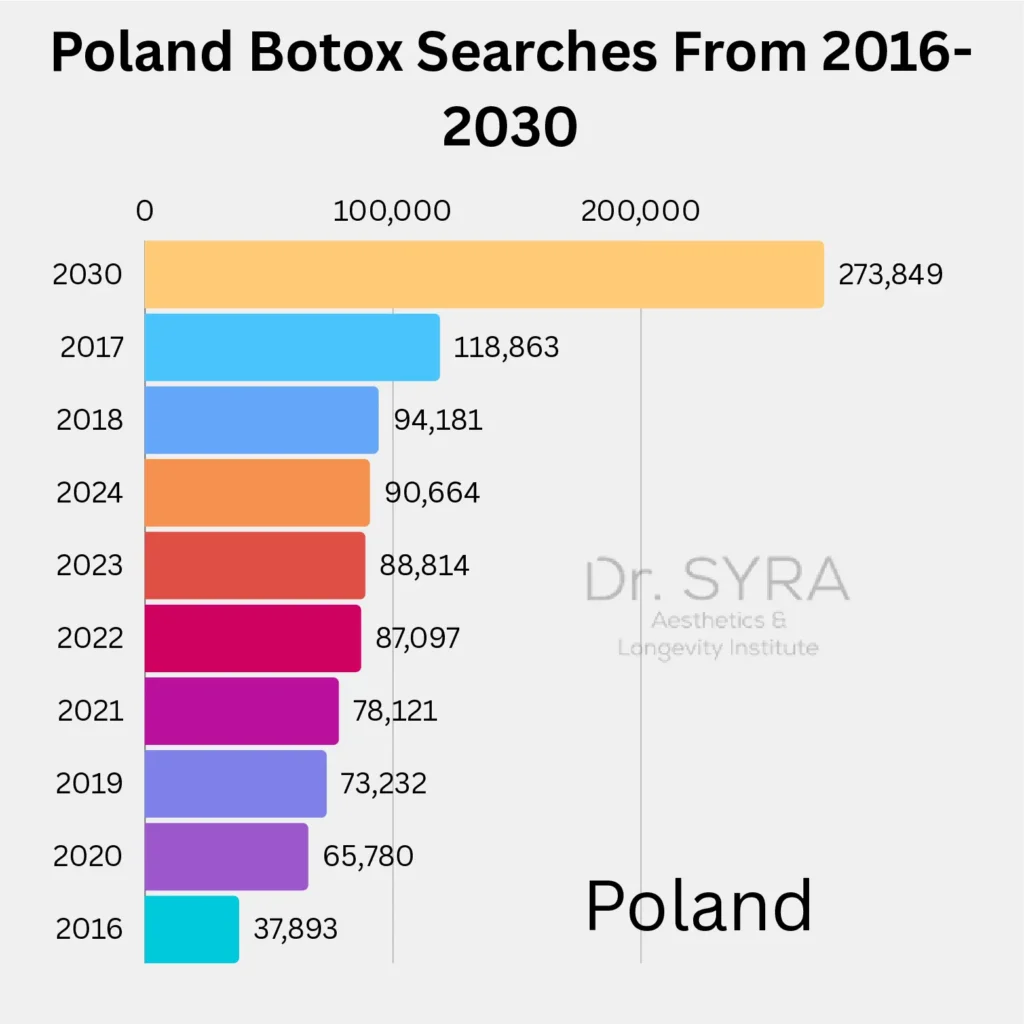
Poland ranks third, with an average annual growth rate of 20.23%. Searches rose from 37,893 in 2016 to 90,664 in 2024. This growth reflects rising disposable income, expanded clinic availability, and increasing alignment with Western European beauty norms.
Poland’s trajectory mirrors patterns likely to emerge across Central and Eastern Europe over the next decade. Search demand is projected to reach approximately 273,849 annually by 2030.
United States Spotlight: Mature Market, Sustained Growth
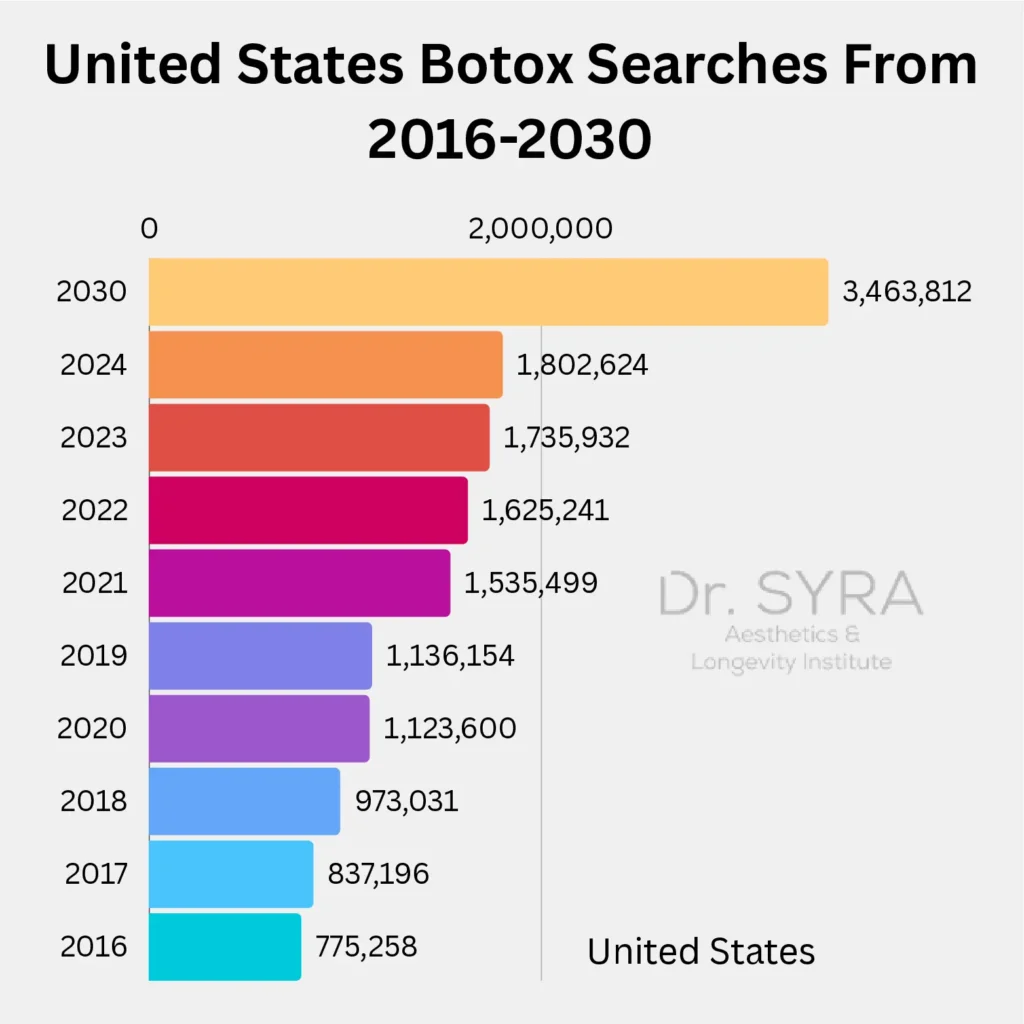
The United States represents one of the most mature Botox markets globally, yet search demand continues to grow at a meaningful pace. With an average annual growth rate of 11.50%, the U.S. ranked 8th among the 38 countries analyzed, indicating continued expansion rather than saturation.
Unlike emerging markets where growth reflects rising awareness, U.S. search behavior is driven by repeat consideration, maintenance research, and provider comparison. High baseline familiarity means growth is fueled by frequency rather than first-time discovery, reinforcing Botox’s role as a routine aesthetic and therapeutic treatment.
In major metropolitan areas such as New York City, demand is further concentrated by high provider density, competitive clinic landscapes, and digitally informed consumers who actively compare credentials, techniques, and outcomes. This environment contributes to sustained search activity even in an already established market.
In markets like Manhattan, where aesthetic treatments are widely accessible and highly competitive, search behavior reflects informed, repeat-driven demand rather than exploratory interest.
Access the Full Dataset
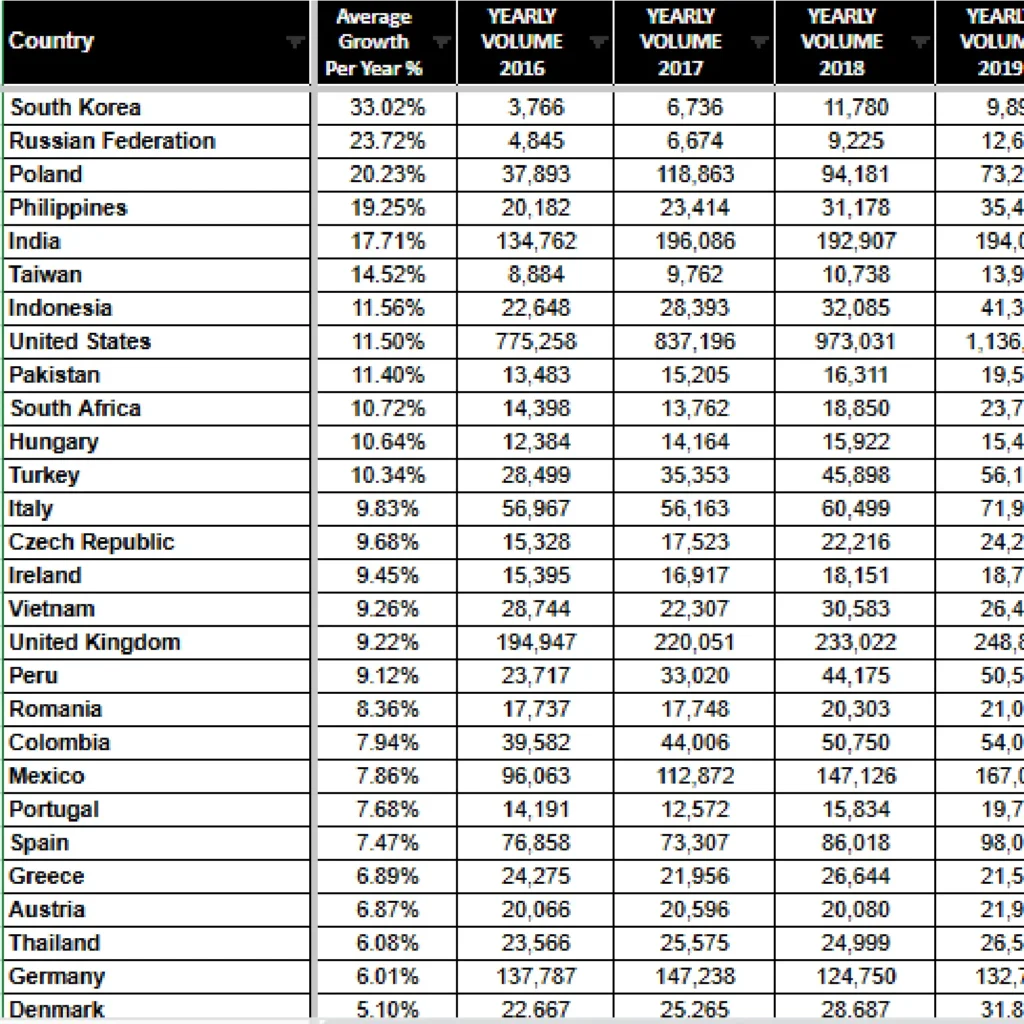
To support transparency and independent analysis, the full country-level dataset used in this study is available for download. The spreadsheet includes year-by-year Botox search demand from 2016 to 2024 across all 38 countries analyzed, along with calculated growth rates.
The dataset allows researchers, journalists, and analysts to explore trends, compare markets, and validate the findings presented in this report.
Download the full Excel dataset
What’s Driving the Surge in Botox Searches
The sustained rise in Botox search demand across all 38 countries is driven by multiple reinforcing factors that affect how frequently, how early, and how repeatedly individuals research Botox. Search behavior reflects intent, comparison, and reassurance-seeking all of which have intensified over time.
Increased visibility driving pre-treatment research
As Botox has become more visible through media, influencers, and everyday conversation, stigma has declined while informational demand has increased. Rather than triggering one-time curiosity, greater visibility leads individuals to research Botox earlier and more frequently before treatment decisions. The absence of long-term decline across all countries suggests that visibility supports sustained search behavior rather than temporary spikes.
Repositioning as preventative care expanding the search audience
The framing of Botox as a preventative treatment has expanded interest beyond older demographics. Younger individuals increasingly research Botox years before their first procedure, contributing to higher search volume without immediately translating into treatment. This pattern helps explain especially strong growth in markets with younger populations and established beauty cultures, such as South Korea and the Philippines.
Medical framing increasing trust-based research
Presenting Botox as a clinical intervention targeting muscle activity rather than aging signs shifts search behavior toward safety, dosage, and provider evaluation. This medical framing encourages repeat research and comparison, supporting steady growth in both emerging and mature markets.
Ongoing consideration driven by professional and social contexts
As appearance becomes increasingly tied to professional presentation and social relevance, Botox research shifts from isolated curiosity to ongoing evaluation. Users repeatedly search for treatment timing, outcomes, and maintenance intervals, contributing to sustained growth even in mature markets such as the United States.
Greater accessibility increasing comparison frequency
Expanded access through med spas, flexible pricing, and shorter appointment formats increases not only adoption but also research intensity. Consumers compare providers, pricing, and treatment options more frequently, leading to higher search volume per individual rather than growth driven solely by new users.
Predictable outcomes reinforcing repeat search behavior
Because Botox produces consistent, short-term results, users continue searching after initial adoption to refine maintenance schedules, dosage, and complementary treatments. This reinforces Botox as a recurring research topic rather than a one-time decision.
What Are the Benefits of Botox Treatment?
Botox reduces the appearance of fine lines and dynamic wrinkles by relaxing targeted facial muscles, creating a more rested appearance without significantly altering facial features. Because results are subtle and customizable, many individuals feel they still look like themselves, contributing to high satisfaction and repeat use.
Its preventative use encourages earlier research, often years before treatment, expanding the audience engaging with Botox-related content. The non-surgical and temporary nature of Botox lowers psychological barriers, making individuals more comfortable researching it even when undecided.
Beyond cosmetic use, Botox has well-established therapeutic applications, including treatment for chronic migraines, jaw clenching and TMJ, excessive sweating, and muscle tension. These medical uses introduce new audiences to Botox-related searches and support sustained interest even in markets where cosmetic awareness is already high.
Because results are predictable but temporary, Botox becomes a maintenance treatment rather than a one-time decision. This drives continued research around timing, dosage, and provider selection, reinforcing long-term growth in search demand.
What is the Future of Botox Demand
The future of Botox points toward continued mainstream adoption, driven by shifting attitudes around aging, beauty, and self-care. What was once considered a niche cosmetic procedure is now widely normalized, especially among younger adults using Botox preventatively rather than reactively. Interest is expanding across demographics, including increased uptake among men, while demand is moving toward subtle, natural-looking results instead of dramatic changes. At the same time, ongoing innovation in formulations, longer-lasting treatments, and more precise injection techniques is making Botox more appealing, accessible, and customizable.
Beyond aesthetics, Botox’s role in medical and therapeutic care is expected to grow, with continued research into new uses for pain management, migraines, muscle disorders, and other conditions. Digital education and search behavior will play a larger role in shaping patient decisions, pushing clinics to prioritize transparency, safety, and personalized consultations. As accessibility increases through new pricing models and global clinic expansion, regulation and ethical standards will also tighten, reinforcing trust and professionalism. Overall, Botox is evolving from a cosmetic trend into a long-term, integrated component of both beauty and healthcare.

About The Author
Dr. Syra Hanif M.D.
Board Certified Primary Care Physician
Dr. Hanif is the Director of Aesthetic Medicine. She is a board-certified physician in Aesthetic Medicine who specializes in using non-surgical alternatives in order to enhance one's appearance through Botox and fillers.
Read More