


Zepbound currently produces the greatest average weight loss in a direct comparison of FDA-approved weight-management medications. In SURMOUNT-5, tirzepatide reduced body weight by 20.2% at 72 weeks, compared with 13.7% for semaglutide among adults without type 2 diabetes.
GLP-1 medications attract growing attention across the United States because they regulate appetite and produce weight loss beyond lifestyle intervention alone. A 2025 KFF poll found that 18% of U.S. adults had used a GLP-1 medication and 12% were currently taking one for weight loss or another health condition.
Clinical trial rankings identify average weight-loss outcomes, but they do not select the correct treatment for an individual. Dr. Syra Aesthetics’ medical weight loss program in NYC begins with an evaluation that connects medication efficacy, FDA indication, safety profile, health conditions, and long-term access to an individualized treatment plan before any medication is prescribed.
Which GLP-1 Medication Is Most Effective for Weight Loss?
Zepbound is the most effective standard-dose GLP-1-based medication for average weight loss. The 72-week SURMOUNT-5 trial directly compared maximum tolerated tirzepatide and semaglutide doses, recording 20.2% average weight loss with tirzepatide and 13.7% with semaglutide.
Tirzepatide activates glucose-dependent insulinotropic polypeptide (GIP) and glucagon-like peptide-1 (GLP-1) receptors. Semaglutide and liraglutide activate the GLP-1 receptor. Brand names determine the FDA-approved use. Zepbound, Wegovy, and Saxenda treat chronic weight management. Mounjaro and Ozempic treat type 2 diabetes and do not carry weight-management indications under those brand names.
Zepbound also treats moderate-to-severe obstructive sleep apnea (OSA) in adults with obesity. Wegovy injection also treats noncirrhotic metabolic dysfunction-associated steatohepatitis (MASH) with F2–F3 liver fibrosis in adults.
| Decision attribute | Zepbound | Wegovy | Ozempic | Mounjaro | Saxenda |
| Active ingredient | Tirzepatide | Semaglutide | Semaglutide | Tirzepatide | Liraglutide |
| Receptor action | GIP + GLP-1 | GLP-1 | GLP-1 | GIP + GLP-1 | GLP-1 |
| Weight-loss approval | Yes | Yes | No | No | Yes |
| Primary FDA use | Weight management; OSA | Weight management; CV risk; MASH | Type 2 diabetes; CV and kidney outcomes | Type 2 diabetes | Weight management |
| Representative loss | 20.2% | 13.7% | Not comparable | Not comparable | 8.0% |
| Evidence context | Direct 72-week trial | Direct 72-week trial | Diabetes studies | Diabetes studies | Separate 56-week trial |
| Format | Injection | Injection | Injection | Injection | Injection |
| Frequency | Weekly | Weekly | Weekly | Weekly | Daily |
| Starting dose | 2.5 mg weekly | 0.25 mg weekly | 0.25 mg weekly | 2.5 mg weekly | 0.6 mg daily |
| Maintenance dose | 5, 10, or 15 mg | 1.7 or 2.4 mg | 0.5, 1, or 2 mg | 5 to 15 mg | 3 mg daily |
| Approved age | Adults | Adults and ages 12+ | Adults | Adults and ages 10+ | Adults and ages 12+ |
| Best-aligned use | Greatest average loss; obesity with OSA | Obesity with CVD or MASH; adolescent obesity | Type 2 diabetes with CV or kidney disease | Type 2 diabetes | Daily treatment; adolescent obesity |
| Main limitation | No pediatric weight-loss indication | Less loss than Zepbound in SURMOUNT-5 | No weight-loss indication | No weight-loss indication | Daily injection; lower average loss |
Zepbound and Wegovy results come from the same head-to-head trial. Saxenda’s 8.0% result comes from a separate trial with different participants and a shorter duration. Ozempic and Mounjaro produce weight loss during diabetes treatment, but their diabetes studies do not create an equal weight-management comparison.
How Do GLP-1 and GIP Support Weight Loss?
GLP-1 weight-loss medications reduce calorie intake primarily by decreasing appetite and increasing satiety. GLP-1 receptor activation also slows gastric emptying, particularly early in treatment, while glucose-dependent effects on insulin and glucagon help regulate post-meal glucose. Tirzepatide adds GIP receptor activity to GLP-1 receptor activation.
GLP-1, or glucagon-like peptide-1, is a gut-derived hormone released after eating. Medications such as semaglutide and liraglutide mimic GLP-1 signaling by activating GLP-1 receptors. Signaling in appetite-regulating regions of the brain reduces hunger and increases fullness, which can lower overall energy intake.
Semaglutide and liraglutide are peptide analogs engineered to reproduce this hormone signal. Their receptor-specific effect on appetite illustrates how some peptide-based weight-loss medications influence weight regulation through hormone signaling rather than directly “burning fat.”
Tirzepatide activates both GIP and GLP-1 receptors. Its dual agonism adds GIP-mediated signaling to the appetite, glucose, and metabolic effects associated with GLP-1 receptor activation.
Weight loss occurs primarily because sustained appetite reduction helps lower energy intake. These medications are used alongside nutrition, physical activity, and ongoing medical management rather than as direct fat-burning agents.
Semaglutide: How Do the Semaglutide Brands Wegovy and Ozempic Differ?
Semaglutide is a GLP-1 receptor agonist sold as Wegovy for chronic weight management and Ozempic for type 2 diabetes. Both brands contain the same active ingredient, but they have different FDA indications, maintenance doses, clinical evidence, and prescribing purposes.
Semaglutide reduces appetite and calorie intake through GLP-1 receptor signaling. Wegovy injection starts at 0.25 mg once weekly for 4 weeks. The dose increases to 0.5 mg, 1 mg, and 1.7 mg at 4-week intervals. Standard maintenance dosing begins at week 17 and uses 1.7 mg or 2.4 mg once weekly.
Ozempic also starts at 0.25 mg once weekly for 4 weeks. The dose increases to 0.5 mg and reaches 1 mg or 2 mg when additional glucose control is required. Ozempic’s maximum approved dose is 2 mg weekly. Wegovy’s standard recommended weight-management dose is 2.4 mg weekly.
Wegovy carries FDA indications for chronic weight management, cardiovascular risk reduction in adults with established cardiovascular disease and excess weight, and noncirrhotic metabolic dysfunction-associated steatohepatitis (MASH) with F2–F3 fibrosis. Ozempic carries indications for type 2 diabetes and specific cardiovascular and kidney outcomes in adults with type 2 diabetes.
Wegovy and Ozempic are not combined because both contain semaglutide. In STEP 1, semaglutide 2.4 mg plus lifestyle intervention produced 14.9% average weight loss after 68 weeks, compared with 2.4% for placebo plus lifestyle intervention.
Tirzepatide: How Do the Tirzepatide Brands Zepbound and Mounjaro Differ?
Zepbound and Mounjaro contain the same active ingredient, tirzepatide, and use the same six dose strengths, but they differ primarily in their FDA-approved indications. Zepbound is approved for long-term weight reduction in eligible adults and for moderate-to-severe obstructive sleep apnea in adults with obesity, while Mounjaro is approved to improve glycemic control in adults and children age 10 years and older with type 2 diabetes.
Because both brands contain tirzepatide, they share the same dual GIP and GLP-1 receptor mechanism. Tirzepatide affects appetite, gastric emptying, and glucose-dependent insulin and glucagon signaling. The brands therefore differ more by approved clinical use than by active drug mechanism.
Both treatments begin at 2.5 mg once weekly for 4 weeks, followed by 5 mg once weekly. Further increases can occur in 2.5 mg steps after at least 4 weeks on the current dose when clinically appropriate.
Zepbound uses 5 mg, 10 mg, or 15 mg once weekly as recommended maintenance doses for weight reduction and long-term maintenance, while its obesity-related sleep-apnea indication uses 10 mg or 15 mg. Mounjaro may also produce weight loss, but its FDA-approved use is glycemic control in type 2 diabetes; its maximum dose is 15 mg once weekly in adults and 10 mg once weekly in pediatric patients age 10 years and older.
Because Zepbound and Mounjaro both contain tirzepatide, using them together would duplicate the same active ingredient; Zepbound labeling specifically states that coadministration with another tirzepatide-containing product is not recommended.
SURMOUNT-1 describes the weight-loss effect of tirzepatide itself, not a biological difference between the Zepbound and Mounjaro brands. At 72 weeks, adults with obesity or overweight without diabetes had mean weight reductions of 15.0% with 5 mg, 19.5% with 10 mg, and 20.9% with 15 mg, compared with 3.1% with placebo.
Liraglutide: When Does Liraglutide Sold as Saxenda Fit Weight-Loss Treatment?
Liraglutide is a once-daily GLP-1 receptor agonist sold as Saxenda for chronic weight management. Saxenda produces less average weight loss than weekly tirzepatide or semaglutide but provides an FDA-approved option for adults and eligible adolescents aged 12 years or older.
Saxenda starts at 0.6 mg once daily during week 1. The dose increases to 1.2 mg during week 2, 1.8 mg during week 3, 2.4 mg during week 4, and the 3 mg adult maintenance dose from week 5. Adults discontinue Saxenda when weight loss remains below 4% of baseline body weight after 16 weeks of treatment.
Saxenda’s daily schedule creates a different adherence decision from weekly Wegovy and Zepbound. In the SCALE Obesity and Prediabetes trial, liraglutide 3 mg produced 8.0% average weight loss after 56 weeks, compared with 2.6% for placebo.
How Do Newer GLP-1 Options Like Wegovy HD, Wegovy Tablets, and Foundayo Compare?
Wegovy HD provides higher-dose weekly semaglutide, Wegovy tablets provide daily oral semaglutide, and Foundayo provides daily oral orforglipron. All 3 treat chronic weight management in adults, but their active ingredients, administration rules, dose escalation, and trial results differ.
Wegovy HD contains 7.2 mg of semaglutide in a weekly injection. The FDA approved it in March 2026 for certain adults who require additional weight reduction after standard Wegovy dosing. In STEP UP, the treatment-policy analysis recorded 18.7% average weight loss with semaglutide 7.2 mg at 72 weeks, compared with 15.6% for 2.4 mg and 3.9% for placebo. The trial-regimen analysis recorded 20.7%, 17.5%, and 2.4%, respectively.
Wegovy tablets contain oral semaglutide. Dosing uses 1.5 mg daily for days 1–30, 4 mg for days 31–60, 9 mg for days 61–90, and 25 mg daily from day 91. Each tablet is taken in the morning on an empty stomach with up to 4 ounces of water. Food, beverages, and other oral medications follow after at least 30 minutes. The 64-week FDA study recorded 13.6% average weight loss with Wegovy tablets, compared with 2.4% for placebo.
Foundayo contains orforglipron, a nonpeptide GLP-1 receptor agonist taken once daily with or without food. Dosing starts at 0.8 mg, increases to 2.5 mg after at least 30 days, and reaches 5.5 mg after another 30 days. Additional 30-day steps include 9 mg, 14.5 mg, and the 17.2 mg maximum. In adults without diabetes, the 72-week FDA trial recorded 11.1% average weight loss with 17.2 mg, compared with 2.1% for placebo.
These newer-option percentages come from separate clinical trials. They do not establish a direct ranking between Wegovy HD, Wegovy tablets, Foundayo, and Zepbound.
What Are the Benefits of GLP-1 Medications for Weight Loss?
GLP-1 medications support weight loss by reducing hunger, increasing fullness, lowering calorie intake, and helping people maintain a calorie deficit over time. Clinical trials also show meaningful reductions in body weight and waist circumference when treatment is combined with nutrition and physical activity.
GLP-1 receptor activity changes appetite signaling, so people often feel satisfied with less food and experience less hunger between meals. This reduction in energy intake is the main mechanism through which GLP-1 medications produce weight loss. In the STEP 1 trial, semaglutide 2.4 mg produced an average 14.9% reduction in body weight at 68 weeks, while SURMOUNT-1 recorded average reductions of 15.0% to 20.9% with tirzepatide at 72 weeks, depending on dose.
Weight reduction can also decrease waist circumference and improve several cardiometabolic measures associated with excess weight. Because GLP-1 medications reduce appetite and help sustain lower calorie intake, their effects can make them an appropriate medication-based component of non-surgical weight loss in NYC alongside nutrition, physical activity, behavioral changes, and other medically appropriate weight-management strategies.
Which GLP-1 Is Most Effective for Weight Loss by Medical Condition?
Tirzepatide produces the greatest average weight loss for general obesity and obesity with type 2 diabetes. Wegovy provides condition-specific benefits for cardiovascular disease and MASH, while Zepbound provides the FDA-approved option for obesity with moderate-to-severe obstructive sleep apnea.
| Medical condition | Best-aligned option | Reason |
| Obesity without type 2 diabetes | Zepbound | Tirzepatide produced 20.2% average loss versus 13.7% with semaglutide in SURMOUNT-5. |
| Overweight with hypertension or dyslipidemia | Zepbound | It carries a weight-management indication and produces the greatest head-to-head average loss. |
| Obesity with type 2 diabetes | Tirzepatide | Zepbound carries the weight indication; Mounjaro carries the diabetes indication. Brand selection follows the treatment purpose. |
| Obesity with moderate-to-severe OSA | Zepbound | It carries an FDA indication for obstructive sleep apnea in adults with obesity. |
| Excess weight with established CVD | Wegovy | It reduces cardiovascular death, nonfatal heart attack, and nonfatal stroke in this indicated population. |
| Type 2 diabetes with CKD | Ozempic | It carries kidney and cardiovascular outcome indications for adults with both conditions. It is not a weight-management brand. |
| Noncirrhotic MASH with F2–F3 fibrosis | Wegovy injection | It carries a liver-disease indication for adults with moderate-to-advanced fibrosis. |
| Obesity at age 12 or older | Wegovy injection or Saxenda | Both carry adolescent obesity indications. Product-specific BMI and weight requirements apply. |
The table identifies FDA-indication alignment, not 1 universal prescription. A condition-specific benefit does not prove that the same product produces the greatest weight loss for every patient with that condition.
What Are the Requirements to Qualify for GLP-1 Treatment?
Adults may qualify for GLP-1 weight-loss treatment with a BMI of 30 or higher, or a BMI of 27 or higher with at least 1 weight-related condition. Meeting the BMI threshold starts the eligibility assessment; age, diagnosis, medical history, current medications, contraindications, and product-specific requirements determine whether treatment is appropriate.
BMI, or body mass index, relates weight to height and serves as 1 clinical screening measure. For adult chronic weight management, initial eligibility commonly includes:
- A BMI of 30 or higher.
- A BMI of 27 or higher with at least 1 weight-related condition, such as hypertension, dyslipidemia, type 2 diabetes, cardiovascular disease, or obstructive sleep apnea.
- Meeting any additional indication-specific requirements for the medication being considered, such as age, diagnosis, or a qualifying weight-related condition.
Meeting a BMI threshold does not automatically mean a GLP-1 medication should be prescribed. BMI, weight-related diagnoses, age, medical history, current medications, previous treatment, and safety considerations collectively determine whether a patient meets the complete weight-loss medication eligibility criteria and which medication, if any, is appropriate.
Who Does Not Qualify for GLP-1 Treatment?
GLP-1 weight-loss medications do not fit patients with a personal or family history of medullary thyroid carcinoma, multiple endocrine neoplasia syndrome type 2, or serious hypersensitivity to the product. Pregnancy, severe gastroparesis, and concurrent GLP-1 therapy also prevent treatment.
Medullary thyroid carcinoma (MTC) is a cancer arising from thyroid C cells. Multiple endocrine neoplasia syndrome type 2 (MEN 2) is an inherited disorder that increases the risk of endocrine tumors. The compared semaglutide, tirzepatide, liraglutide, and orforglipron products carry boxed warnings and contraindications related to MTC and MEN 2.
Patients do not use GLP-1 weight-loss medication in these situations:
- Personal or family history of MTC.
- MEN 2.
- Previous serious hypersensitivity to the active ingredient or another product component.
- Pregnancy or active pregnancy planning.
- Concurrent treatment with another product containing the same active ingredient or another GLP-1 receptor agonist.
- Severe gastroparesis, a condition that substantially delays stomach emptying.
A history of pancreatitis, gallbladder disease, kidney disease, diabetic retinopathy, an eating disorder, or breastfeeding requires an individualized medical assessment. These factors do not create 1 universal contraindication across every GLP-1 medication. Ordinary thyroid disorders, including hypothyroidism and Hashimoto’s disease, are not the same as MTC or MEN 2.
What Are the Side Effects and Warning Signs of GLP-1 Medications?
GLP-1 medications most often cause digestive side effects, including nausea, diarrhea, vomiting, constipation, and abdominal discomfort. Serious warning signs include persistent severe abdominal pain, repeated vomiting, dehydration, facial swelling, breathing difficulty, severe hypoglycemia, or symptoms of gallbladder disease.
Digestive reactions occur most frequently during treatment initiation and dose escalation. Slower dose escalation, smaller meals, adequate fluid intake, and clinician-directed dose adjustments address tolerability without changing the prescription independently.
| Reaction type | Examples and response |
| Common digestive effects | Nausea, diarrhea, vomiting, constipation, abdominal pain, indigestion, reflux, and belching require monitoring and symptom management. |
| Dehydration risk | Repeated vomiting or diarrhea can reduce fluid volume and impair kidney function. Persistent symptoms require medical review. |
| Gallbladder warning | Upper-right abdominal pain, fever, or jaundice requires gallbladder evaluation. |
| Pancreatitis warning | Persistent severe abdominal pain, including pain extending to the back, requires immediate evaluation and treatment discontinuation when pancreatitis is suspected. |
| Hypoglycemia risk | Risk increases when treatment is combined with insulin or an insulin secretagogue, including a sulfonylurea. |
| Hypersensitivity warning | Facial swelling, breathing difficulty, anaphylaxis, or angioedema requires emergency care. |
| Procedure warning | GLP-1 treatment delays gastric emptying. Patients inform the anesthesia team before surgery or deep sedation. |
The thyroid boxed warning comes from thyroid C-cell tumors observed in rodent studies. The human relevance remains unknown. The actual contraindication applies to personal or family MTC history and MEN 2, not every thyroid diagnosis.
Which Is Better for Weight Loss, a GLP-1 Shot or a Pill?
GLP-1 shots provide the strongest average weight-loss result in current direct-comparison evidence, while GLP-1 pills provide needle-free daily treatment. The better route is the one that matches the patient’s indication, expected result, administration routine, tolerability, and long-term adherence.
Injectable options include weekly Zepbound, Wegovy, Wegovy HD, Ozempic, and Mounjaro, plus daily Saxenda. Oral weight-management options include Wegovy tablets and Foundayo. Ozempic and Mounjaro remain diabetes brands despite their injectable formats.
Wegovy tablets require an empty stomach, up to 4 ounces of water, and a 30-minute wait before food, drinks, or other oral medication. Foundayo is taken with or without food. Weekly injections avoid daily oral-administration rules but require correct storage and injection technique.
Trial percentages do not create an equal route comparison because the studies enrolled different populations and used different designs. Current evidence records 20.9% average loss with Zepbound 15 mg at 72 weeks, 18.7% with Wegovy HD at 72 weeks under the treatment-policy analysis, 13.6% with Wegovy tablets at 64 weeks, and 11.1% with Foundayo 17.2 mg at 72 weeks.
How Much Weight Can You Lose With GLP-1 Treatment, and How Long Does It Take?
GLP-1 treatment begins with a low starting dose and progresses toward maintenance over several weeks. Measurable weight reduction develops during dose escalation, while the largest pivotal-trial averages occur after 56 to 72 weeks of continued medication, lifestyle intervention, and clinical monitoring.
| Treatment timeline | What happens during treatment |
| Before treatment | A medical evaluation confirms the indication, BMI, health history, medications, contraindications, and baseline measurements. |
| Days 1–14 | Medication exposure begins. Early care focuses on digestive tolerance, hydration, food intake, and warning symptoms. |
| Weeks 1–4 | Wegovy starts at 0.25 mg weekly, Zepbound at 2.5 mg weekly, Saxenda at 0.6 mg daily, Wegovy tablets at 1.5 mg daily, and Foundayo at 0.8 mg daily. |
| Weeks 5–8 | Wegovy reaches 0.5 mg weekly, Zepbound reaches 5 mg weekly, Saxenda reaches 3 mg daily, Wegovy tablets reach 4 mg daily, and Foundayo reaches 2.5 mg daily. |
| Weeks 9–12 | Wegovy reaches 1 mg weekly. Zepbound reaches 7.5 mg during full escalation. Wegovy tablets reach 9 mg daily. Foundayo reaches 5.5 mg daily. |
| Weeks 13–16 | Wegovy reaches 1.7 mg weekly. Zepbound reaches 10 mg during full escalation. Wegovy tablets reach the 25 mg maintenance dose after day 90. |
| Weeks 17–20 | Standard Wegovy reaches 1.7 mg or 2.4 mg maintenance dosing. Zepbound reaches 12.5 mg during full escalation. |
| Week 21 onward | Zepbound reaches the 15 mg maximum during full escalation. Maintenance dosing follows response and tolerability. |
| Months 6–12 | Weight, waist circumference, blood pressure, glucose markers, symptoms, and adherence establish the ongoing response. |
| Weeks 56–72 | Pivotal studies record 8.0% average loss with Saxenda at 56 weeks, 14.9% with standard Wegovy at 68 weeks, and 20.9% with Zepbound 15 mg at 72 weeks. |
| Long-term treatment | Continued treatment supports weight maintenance while the medication’s appetite-regulating effects remain active. |
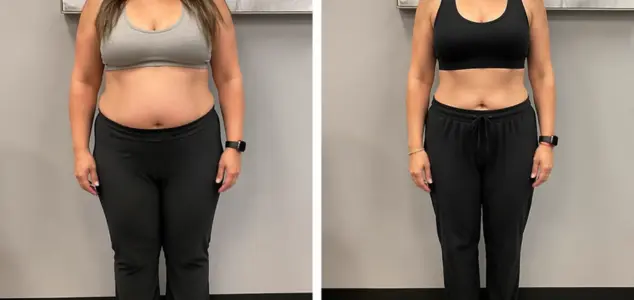
Before-and-after results require the same timeframe, pose, lighting, clothing, and measurement method for a useful comparison. Scale weight, waist circumference, body composition, blood pressure, glucose markers, and treatment tolerance provide a more complete result than photographs alone.
What Happens When You Stop GLP-1 Treatment?
Stopping GLP-1 treatment removes its ongoing appetite-regulating effect. Hunger and calorie intake increase, and clinical trials record substantial weight regain after withdrawal. A structured transition plan addresses nutrition, activity, resistance training, monitoring, and alternative treatment before medication ends.
GLP-1 medications do not produce a classic withdrawal syndrome. Their effects on appetite, fullness, blood glucose, and gastric emptying decline as the medication leaves the body.
The STEP 1 extension found that participants regained 11.6 percentage points, equal to about two-thirds of their previous semaglutide weight loss, during 1 year without treatment. Several cardiometabolic improvements also moved toward baseline. SURMOUNT-4 recorded a 14.0% weight increase from week 36 to week 88 among participants switched from tirzepatide to placebo, while continued tirzepatide produced another 5.5% reduction during the same period.
Weight regain is not a personal failure. Obesity is a chronic disease, and medication controls biological drivers while treatment continues. The discontinuation plan starts before the final dose and establishes measurable nutrition, activity, resistance-training, and follow-up targets.
Does GLP-1 Weight Loss Include Muscle Loss?
Yes. GLP-1-related weight loss includes fat mass and lean mass. Tirzepatide body-composition data attribute approximately 75% of lost weight to fat mass and 25% to lean mass, although lean mass includes water, organs, bone, connective tissue, and muscle.
The SURMOUNT-1 DXA substudy found that tirzepatide reduced total fat mass and lean mass while improving the overall fat-to-lean ratio. A STEP 1 semaglutide analysis recorded a 19.3% reduction in total fat mass and a 9.7% reduction in lean body mass. Lean mass increased as a proportion of total body weight because fat loss was greater.
Adequate protein intake and progressive resistance training support lean-mass retention during weight loss. Body-composition measurements, strength performance, physical function, and dietary intake provide more useful monitoring than scale weight alone.
How Much Do GLP-1 Medications Cost, and Does Insurance Cover Them?
The cost of GLP-1 medication ranges from approximately $199 to $1,349 per month before insurance. Physician-supervised treatment with medical evaluation and follow-up ranges from approximately $300 to $1,700 per month when medication is included; laboratory costs remain separate when required.
Insurance coverage depends on the medication, health plan, and FDA-approved indication for which it is prescribed. Plans may cover Ozempic or Mounjaro for type 2 diabetes while applying different benefit rules to Wegovy, Zepbound, or Saxenda for chronic weight management. Coverage requirements may include BMI criteria, documented weight-related conditions, previous weight-management efforts, and prior authorization.
The medication selected and the amount covered by insurance therefore directly affect the out-of-pocket cost of weight loss injections in NYC. A medical evaluation determines which injectable medication is clinically appropriate before its insurance coverage, pharmacy price, and total treatment cost can be assessed.
How Do You Choose the Right GLP-1 Medication?
The right GLP-1 medication matches the patient’s FDA indication, target weight reduction, health conditions, contraindications, preferred route, dosing schedule, side-effect tolerance, insurance coverage, and ability to continue treatment. The highest average trial percentage does not determine every individual prescription.
The decision uses 7 practical attributes:
- Treatment indication: Weight management, type 2 diabetes, cardiovascular risk, chronic kidney disease, obstructive sleep apnea, MASH, or adolescent obesity.
- Expected weight reduction: Direct head-to-head evidence places tirzepatide above standard semaglutide for average loss.
- Safety profile: MTC or MEN 2 history, allergy, pregnancy, gastroparesis, pancreatitis history, gallbladder disease, kidney risk, and diabetic retinopathy change treatment selection.
- Administration: Weekly injection, daily injection, or daily tablet.
- Dose escalation: Each medication follows a fixed starting schedule, while maintenance dosing follows response and tolerance.
- Long-term access: Insurance coverage, prior authorization, pharmacy availability, and out-of-pocket cost affect continuity.
- Monitoring needs: Weight, waist circumference, blood pressure, glucose markers, side effects, hydration, nutrition, and body composition guide follow-up.
Dr. Syra Hanif uses these attributes to match the medication to the patient rather than matching every patient to the medication with the largest trial number.
What Happens During a Medical Weight-Loss Consultation With Dr. Syra Hanif?
During a medical weight-loss consultation, Dr. Syra Hanif reviews the patient’s weight history, medical conditions, current medications, previous weight-loss efforts, treatment goals, and relevant safety factors. These findings determine whether medication is appropriate, which option fits the patient, how treatment should start, and what monitoring is required.
Medication comparisons can narrow the available options, but they cannot determine an individual prescription. A medical weight-loss consultation with Dr. Syra Hanif connects the patient’s clinical findings to medication eligibility, treatment selection, starting dose, safety planning, and the follow-up schedule needed to monitor response and tolerability.
How Do You Get an Online GLP-1 Prescription in NYC?
A patient obtains a GLP-1 prescription online in NYC through a healthcare professional licensed in New York who completes a telehealth evaluation, confirms the indication and safety requirements, selects the medication, and sends an electronic prescription to a licensed pharmacy.
The online process includes:
- Schedule a telehealth evaluation: The clinician confirms the patient’s identity, New York location, weight history, medical history, medications, and treatment goals.
- Confirm clinical eligibility: The evaluation applies BMI thresholds, product-specific indications, contraindications, prior treatment information, and relevant laboratory findings.
- Select the medication: The clinician discusses expected weight reduction, route, dose escalation, side effects, insurance coverage, and long-term monitoring.
- Send the prescription: An electronic prescription goes to a licensed pharmacy after approval. A prescription does not guarantee insurance authorization or pharmacy availability.
- Continue follow-up: Scheduled monitoring evaluates weight change, tolerance, nutrition, hydration, symptoms, and dose progression.
Online prescribing does not remove the medical evaluation. Legitimate telehealth treatment uses the same indication, contraindication, prescription, and follow-up standards as an in-office visit.
Frequently Asked Questions
Can 2 GLP-1 medications be used together?
No. Combining Wegovy with Ozempic duplicates semaglutide, while combining Zepbound with Mounjaro duplicates tirzepatide. FDA prescribing information also excludes combining these products with another GLP-1 receptor agonist.
What happens after a missed GLP-1 dose?
Missed-dose instructions depend on the medication. Zepbound or Mounjaro allows 4 days, Ozempic allows 5 days, and Wegovy allows a missed dose when the next injection remains more than 48 hours away. Otherwise, the patient skips the dose and resumes the regular schedule.
Does tirzepatide affect oral birth control?
Tirzepatide reduces the effectiveness of oral hormonal contraceptives during treatment initiation and dose escalation. The FDA directs patients to use a non-oral contraceptive or add barrier contraception for 4 weeks after starting tirzepatide and 4 weeks after each dose increase.
Do GLP-1 medications affect surgery or anesthesia?
GLP-1 medications delay stomach emptying and increase the risk of retained stomach contents during general anesthesia or deep sedation. Patients inform the surgical and anesthesia teams before a planned procedure. The clinical team determines the medication and fasting plan.
Are compounded GLP-1 medications the same as FDA-approved products?
No. Compounded GLP-1 medications do not undergo FDA review for safety, effectiveness, quality, or dosing accuracy. As of May 31, 2026, the FDA recorded 990 adverse-event reports involving compounded semaglutide and more than 730 involving compounded tirzepatide. These reports do not establish causation for every event.
References
Tirzepatide Compared With Semaglutide for Obesity, SURMOUNT-5
Semaglutide 2.4 mg for Weight Management, STEP 1
Tirzepatide Once Weekly for Obesity, SURMOUNT-1
Liraglutide 3.0 mg for Weight Management, SCALE
FDA Wegovy Prescribing Information
FDA Zepbound Prescribing Information
FDA Foundayo Prescribing Information
FDA Mounjaro Prescribing Information
FDA Ozempic Prescribing Information
Saxenda Prescribing Information
Semaglutide Withdrawal and Weight Regain, STEP 1 Extension
Continued Tirzepatide and Withdrawal, SURMOUNT-4
Tirzepatide Body-Composition Analysis, SURMOUNT-1
Semaglutide Body-Composition Analysis, STEP 1

Written & Medically Reviewed by
Dr. Syra Hanif, M.D.
Board-Certified Primary Care Physician
Dr. Syra Hanif, M.D., is a board-certified physician specializing in aesthetic medicine, longevity, and preventative wellness. As Medical Director of Dr. Syra Aesthetics & Longevity Institute in NYC, she focuses on aesthetics, healthy aging, and overall wellness.
Read More