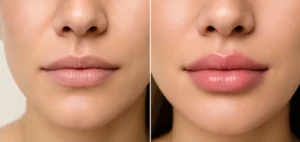



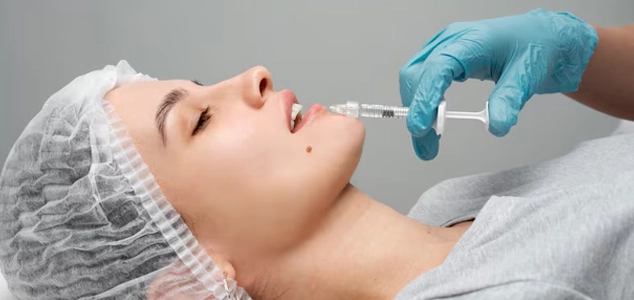
Botox causes brief, mild discomfort that feels like a quick pinch, prick, or sting at each injection point. The sensation lasts only a few moments, while mild tenderness, redness, swelling, or bruising can occur afterward. How Botox feels depends on the treatment area, number of injections, needle size, and individual pain sensitivity. At Dr. Syra Aesthetics & Longevity Institute in Manhattan, Botox NYC treatments take 10–20 minutes and are performed by Dr. Syra Hanif using a fine needle. Topical numbing can also be used when additional comfort is needed, especially for patients who are sensitive to injections or nervous about needles.
Key Points
- Botox pain is brief: Most facial injections feel like a quick pinch, prick, or sting rather than continuous pain.
- Pain varies by treatment area: Forehead, crow’s feet, masseter, and lower-face injections can feel different because the anatomy and injection requirements vary.
- Needle size affects discomfort: A 2024 study of 99 patients and 189 facial treatment regions found lower discomfort scores with smaller-diameter needles.
- Botox treatment is relatively quick: Standard Botox appointments at Syra Aesthetics generally take 10–20 minutes, while masseter Botox takes 5–10 minutes.
- Numbing is available when needed: Topical numbing can be used to improve comfort for sensitive areas or patients with needle anxiety.
- Mild soreness can occur afterward: Temporary tenderness, redness, swelling, or bruising can develop around injection sites.
- Severe pain is not typical: Worsening, unusual, or persistent pain should be discussed with the treating healthcare professional.
Botox Pain: How Much Does Botox Hurt?
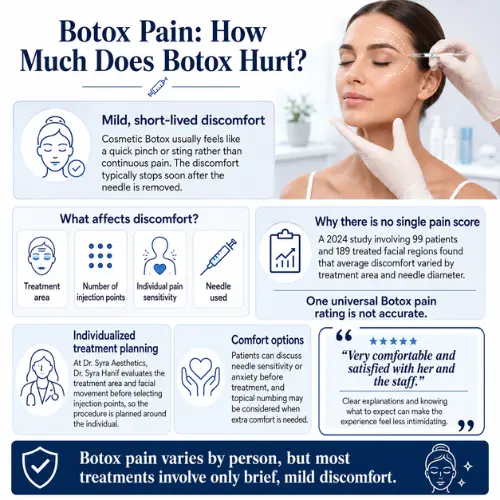
Cosmetic Botox causes mild, short-lived injection discomfort. Most patients describe each injection as a quick pinch or sting rather than continuous pain, and the sensation stops soon after the needle is removed. There is no single pain score that accurately represents every Botox treatment. Discomfort changes according to the area being treated, the number of injection points, individual pain sensitivity, and the needle used. A 2024 study involving 99 patients and 189 treated facial regions found that average discomfort scores varied by both treatment area and needle diameter, showing why one universal Botox pain rating is not accurate.
At Dr. Syra Aesthetics, Dr. Syra Hanif evaluates the treatment area and facial movement before selecting the injection points, so the procedure is planned around the individual rather than following the same pattern for every patient. The clinic also allows patients to discuss needle sensitivity or anxiety before treatment, and topical numbing can be considered when additional comfort is needed. Patient experience also reflects the importance of this personalized approach. One Botox patient reviewing her consultation with Dr. Hanif said she felt “very comfortable and satisfied with her and the staff,” while also noting that Dr. Hanif took time to explain and recommend the treatment. Individual pain experiences vary, but clear communication and knowing what to expect can make the procedure feel much less intimidating.
How painful is Botox for the first time?
First-time Botox does not inherently hurt more than later treatments, but the first appointment can feel more intimidating because the sensation is unfamiliar. Needle anxiety also affects how a person perceives discomfort. Knowing that each injection takes only a short time and understanding what sensations to expect can make the treatment experience easier to anticipate. The first treatment experience includes several separate sensations rather than one continuous feeling:
- The needle briefly enters the skin.
- A short sting or pressure can occur during injection.
- The needle is removed.
- Mild tenderness may remain at individual injection points.
The number of injections depends on the treatment area and individualized treatment plan.
What Does Botox Treatment Feel Like?
Botox feels like a series of quick pinches or small stings. Some people notice brief pressure as the medication is injected, while others mainly notice the needle entering the skin.
The experience can be separated into several sensations.
| Stage | What You May Feel |
|---|---|
| Needle enters the skin | Quick prick or pinch |
| Botox is injected | Brief sting or pressure |
| Needle is removed | Sensation stops quickly |
| Immediately afterward | Mild tenderness or sensitivity |
| Following treatment | Possible redness, swelling, soreness, or bruising |
This distinction matters because the initial needle prick, injection sensation, and post-treatment soreness are not the same type of discomfort.
What Does the Botox Needle Feel Like?
Botox is administered with a thin needle that delivers a small amount of medication into targeted areas. The needle itself generally produces a quick pinching or pricking sensation. Needle diameter also matters. A higher needle gauge represents a smaller needle diameter, and clinical research has found differences in reported discomfort between needle sizes.
What Does the Botox Injection Feel Like?
The injection itself can create a short stinging or pressure sensation after the needle has entered the skin. That sensation ends quickly because only a small amount of medication is delivered at each injection point. Receiving several injections can make the overall procedure feel more noticeable even when each individual injection lasts only a short time.
Botox Treatment Areas: Where Does Botox Hurt More?
Botox discomfort varies between treatment areas. Facial areas differ in skin thickness, sensitivity, muscle size, injection depth, and the number of injections required. There is no reliable rule stating that one cosmetic area always hurts more for every patient.
Pain Level By Treatment Areas
Forehead Botox Pain
Forehead Botox usually produces brief pinching or stinging at each injection point. The discomfort is generally mild, but needle size can noticeably change the experience. A 2024 study measured forehead discomfort on a visual analogue scale and reported average scores immediately after treatment of:
- 3.9 ± 1.6/10 with a 30G needle
- 2.7 ± 1.5/10 with a 33G needle
- 1.7 ± 1.2/10 with a 34G needle
This creates a study-observed average range of approximately 1.7–3.9/10, depending on needle size. These numbers are study-specific and should not be interpreted as the exact pain level every patient experiences.
Frown Line Botox Pain
Botox for frown lines is injected into the glabellar area between and around the eyebrows. Patients typically feel several quick pinches or stings rather than continuous pain. The same 2024 study found average immediate discomfort scores of:
- 4.3 ± 1.7/10 with a 30G needle
- 2.7 ± 1.9/10 with a 33G needle
- 1.6 ± 1.4/10 with a 34G needle
This gives a study-observed average range of approximately 1.6–4.3/10. All differences among the 3 needle sizes were statistically significant. These findings do not mean glabellar Botox always produces a particular pain level. They show that something as specific as needle diameter can measurably change the injection experience.
Crow’s Feet Botox Pain
Pain level: about 3–4/10
Botox around the outer corners of the eyes generally causes several brief pinches or stings. The periocular area can feel more sensitive than some other facial areas, although individual experiences vary considerably. A randomized study of 30 patients receiving periocular botulinum toxin injections found average pain scores of 4.38/10 with a 30G needle and 3.98/10 with a 32G needle. The study involved treatment for blepharospasm rather than cosmetic crow’s feet, so these figures provide useful context for periocular injections but should not be treated as a specific crow’s-feet pain score. For cosmetic crow’s feet, it is more accurate to describe the discomfort as mild to moderate and very brief rather than promise one exact rating.
Masseter Botox Pain
Pain level: about 3–5/10
Masseter Botox can feel different from upper-face Botox because the injections enter the larger jaw muscle. Some patients mainly notice the needle prick, while others notice deeper pressure as the medication is injected. A 2024 study involving 16 adults compared 2 masseter injection techniques. Average pain scores were 3.31/10 with a single-entry technique and 5.19/10 with a traditional 3-point technique, showing that injection technique can substantially influence discomfort. These numbers do not mean masseter Botox always hurts more than forehead Botox. The treatment experience depends on the injection technique, individual sensitivity, and number of injection points.
Mouth and Chin Botox Pain
Pain level: about 2–4/10
Botox around the chin and mouth generally causes a brief pinch or sting at each injection point. The area is highly mobile and can feel sensitive, but the injections use small amounts of botulinum toxin placed at targeted points. Unlike the forehead and glabella, there is not strong area-specific research establishing a reliable 0–10 pain range for cosmetic chin or perioral Botox. For that reason, 2–4/10 should be presented as a practical expectation rather than a clinical pain score. Individual sensitivity remains important, and one injection around the mouth may feel sharper than another without indicating that anything is wrong.
Botox Medical Uses: Does Medical Botox Feel Different?
Medical Botox can create a different treatment experience because some conditions require more injection points or involve more sensitive anatomical areas. This distinction is important when reading online descriptions of Botox pain. A few cosmetic facial injections should not automatically be compared with a medical Botox protocol involving many injection sites. For example, Botox for chronic migraine involves 31 injections into 7 muscle areas across the head, neck, and shoulders. Patients describe each injection as a quick pinch or sting, but the larger number of injections changes the overall experience. Botox used for excessive sweating in the palms or feet also has a different pain context. Numbing is more considered for these sensitive areas.
Botox Pain Factors: What Makes Botox Hurt More or Less?
Botox discomfort depends on the treatment area, number of injections, needle diameter, individual sensitivity, injection technique, and anxiety level. These factors explain why 2 people receiving Botox can describe the experience differently.
Botox Treatment Area
Areas of the face and body differ in sensitivity and anatomy. A forehead injection, masseter injection, and injection into the palm do not create identical sensory experiences. Treatment location therefore needs to be considered before describing Botox as either painful or painless.
Botox Injection Number
The total number of injections affects the overall experience. One needle prick may cause only momentary discomfort, while several injection points create repeated sensations. The required number is determined by the treatment area, indication, muscle anatomy, and individualized treatment plan.
Botox Needle Size
Needle size is one of the most measurable factors associated with Botox injection discomfort. A 2024 prospective study compared 30G, 33G, and 34G needles across 189 facial treatment regions in 99 patients. Smaller-diameter 33G and 34G needles produced lower average discomfort scores than the 30G needle across the forehead, glabella, and temple. The study also reported that discomfort had fallen substantially 15 minutes after treatment. Depending on the treatment area and needle group, average scores at that point were approximately 0.0 to 0.5.
Botox Pain Sensitivity
Pain sensitivity differs naturally between people. A sensation that one person describes as a minor prick can feel more noticeable to another person receiving an otherwise similar injection. For this reason, a universal statement such as “Botox is 2 out of 10 painful” is not medically useful. Published pain scores apply to specific study populations, injection sites, needles, and protocols.
Botox Injection Technique
Injection placement and technique influence the treatment experience. Botox should be administered by an appropriately licensed and trained healthcare professional who understands the anatomy of the treatment area. The goal is accurate placement using the number and location of injections appropriate for the individual treatment plan.
Botox Needle Anxiety
Fear of needles can make the procedure feel more stressful before the first injection even occurs. Patients who feel anxious around needles can tell their provider before treatment. Knowing the planned number of injection sites, discussing available comfort measures, and avoiding watching the injections can make the experience easier to manage.
How Can Botox Injections Feel More Comfortable?
Botox injections can be made more comfortable with measures such as topical anesthetic, cooling, or other sensory techniques when appropriate. The amount of benefit varies by patient and treatment area. Not every cosmetic Botox treatment requires numbing.
Botox Numbing Cream
A topical anesthetic can reduce skin sensation before injections. Numbing may be particularly useful for people who are highly sensitive to needles or when Botox is administered to more sensitive treatment areas. Major medical guidance recognizes topical anesthetic as an available comfort option.
Botox Ice Application
Cooling the skin before an injection is another technique used to reduce discomfort. Ice can temporarily reduce skin sensation, although individual response varies. It should be used according to the provider’s treatment protocol rather than applied excessively.
Botox Vibration
Vibration provides competing sensory stimulation around the injection area and is sometimes used to reduce perceived needle discomfort. Research has produced different results regarding how much benefit vibration provides, so it should be viewed as a possible comfort measure rather than a guarantee of painless treatment.
Botox Anxiety Management
Telling the provider about needle anxiety before treatment is one of the simplest ways to improve the experience. The patient can ask:
- how many injections are planned
- which areas are being injected
- whether numbing is appropriate
- whether a short pause is possible
- what sensations are normal
Clear expectations often make a first Botox session feel less intimidating.
Does Botox Hurt After Treatment?
Botox can cause mild localized discomfort after the injections, including tenderness, soreness, redness, swelling, or bruising at the treatment sites. These effects are different from the brief pinch or sting felt during injection. Pain, swelling, and bruising at the injection site are recognized possible effects of Botox treatment.
A typical sensory sequence is:
During the injection: prick, pinch, or sting
Immediately afterward: localized tenderness or sensitivity
Later: possible mild soreness or bruising
Not every patient experiences each stage.
How Long Does Botox Discomfort Last?
The pain from each Botox injection is brief, while mild tenderness at an injection site can continue afterward. Research helps separate the immediate injection sensation from longer-lasting pain. In the 2024 needle-size study, patients reported very little residual discomfort 15 minutes after treatment. Average scores across the studied forehead, glabella, and temple groups ranged from approximately 0.0 to 0.5 at that point. That does not mean every patient’s soreness disappears within 15 minutes. Bruising or localized tenderness can remain longer, and individual recovery varies.
A more accurate expectation is:
| Time | Possible Sensation |
|---|---|
| During each injection | Brief pinch, prick, or sting |
| First several minutes | Mild localized sensitivity |
| Around 15 minutes | Injection discomfort is often substantially reduced |
| Following hours or days | Tenderness or bruising can occur in some patients |
The presence of bruising can make an injection point remain tender after the initial needle discomfort has disappeared.
Botox Pain Warning Signs: When Is Pain Not Normal?
Severe, worsening, or persistent pain is different from the mild localized discomfort expected after a Botox injection and should be discussed with a healthcare provider. Routine injection-site effects can include:
- mild soreness
- localized tenderness
- redness
- swelling
- small bruises
More concerning symptoms require medical attention, particularly when pain occurs with muscle weakness, vision changes, difficulty speaking, difficulty swallowing, breathing problems, or signs of an allergic reaction. Severe injection-site pain is also a reason to contact the treating provider rather than assuming that all post-Botox pain is normal.
Botox Needle Anxiety: What If You Are Scared of Needles?
Needle anxiety does not prevent someone from discussing Botox, but the provider should know about the fear before treatment begins. The actual needle sensations are brief, but anticipating multiple injections can produce more anxiety than the injections themselves for some first-time patients. Before treatment, patients can ask the provider to explain:
- The number of planned injection points
- The areas being treated
- Whether numbing is necessary
- What each injection is likely to feel like
- What sensations are normal afterward
Patients can also look away from the treatment area and tell the injector when they need a short pause. The goal is not to promise a pain-free procedure. It is to make the experience predictable and manageable.
Botox vs Dermal Fillers: Which Treatment Hurts More?
Botox and dermal fillers produce different injection experiences, so neither treatment has one universal pain score that applies to every patient. Botox generally involves small amounts of medication injected at several targeted muscle points. Dermal fillers involve a different type of injectable product and may be placed at different tissue depths depending on the treatment area and goal. The lips, cheeks, jawline, forehead, crow’s feet, and masseter muscles also have different sensitivity levels. Therefore, comparing “Botox pain” with “filler pain” without specifying the treatment area produces an unreliable answer.
Botox Pain FAQs
Does Botox hurt more with sensitive skin?
Sensitive skin does not automatically mean Botox is more painful. Individual pain sensitivity, treatment area, needle size, and injection technique all influence the sensation.
Can you ask for numbing cream before Botox?
Yes. Patients can discuss topical numbing with their provider before Botox. Numbing is not necessary for every facial Botox treatment, but it can be considered when additional comfort is needed.
Why does one Botox injection hurt more than another?
Different injection sites have different sensitivity, and needle placement or tissue depth can change the sensation. One injection feeling sharper than another does not automatically indicate a problem.
Is a small amount of bleeding during Botox normal?
A tiny amount of bleeding can occur when a needle punctures the skin. Persistent or unusual bleeding should be discussed with the healthcare provider.
Can Botox cause a headache after treatment?
Yes. Headache is a recognized possible side effect after Botox injections, although it does not occur in every patient.
**Disclaimer **
This blog is for informational & educational purposes only and does not intend to substitute any professional medical advice or consultation. For any health-related concerns, please consult with your physician, or call 911.

Written & Medically Reviewed by
Dr. Syra Hanif, M.D.
Board-Certified Primary Care Physician
Dr. Syra Hanif, M.D., is a board-certified physician specializing in aesthetic medicine, longevity, and preventative wellness. As Medical Director of Dr. Syra Aesthetics & Longevity Institute in NYC, she focuses on aesthetics, healthy aging, and overall wellness.
Read More